On the way to family education, many parents are accustomed to asking for children in a word of speech, while neglecting the central educational essence: the teaching of the word. Parents always want their children to be in love with their books, to be grateful, to learn to hold on to them, but instead they brush their hands to get them to read, pick on others and ask for their children's inclusion, and then back off in the face of frustration, hoping that they will be brave. It has always been understood that the best education in the family is never through the mouth, but by the hand, and that the words and actions of parents are a mirror of the child, and that you want to make the child what you want to be, who you are。
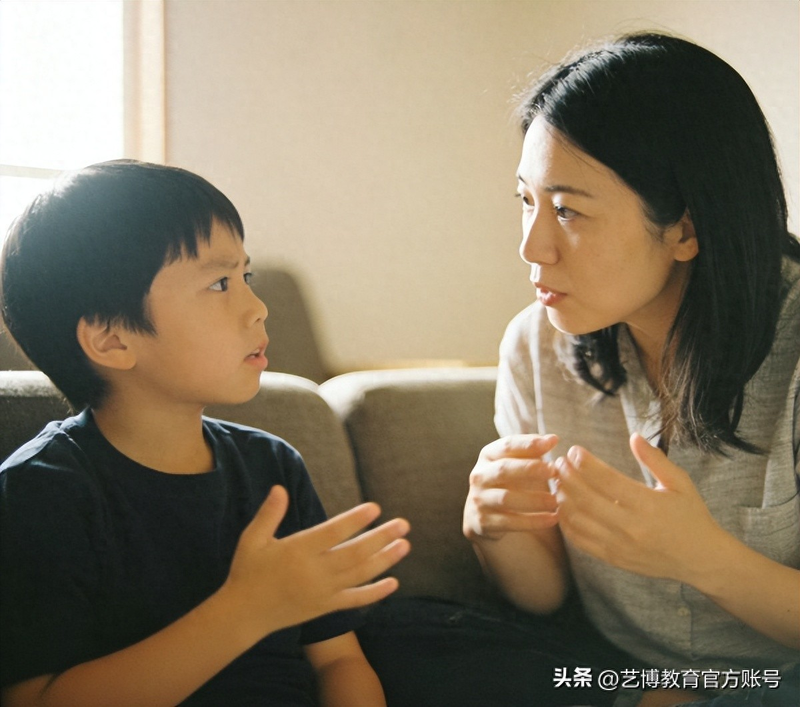
Word teaching is the simplest and most powerful way to educate the family, hidden in the details of life and stronger than any expensive remedial classes and any harsh discipline. Children's imitations are born, and the everyday behaviour of their parents is embedded in the child's upbringing and becomes a code of conduct for their entire lives。
I. The core of family education: responsibility to learn heart
Word is to guide the child in the right language, to build the right perception, to see whether it is right or wrong; and teaching is to serve as an example of what it does, so that children learn to do what they do. The two are mutually reinforcing and one cannot be achieved, except when the word is not learned, where education becomes empty, and when the word is not taught, children may lack clear cognitive guidance。
In parenting guidance, xe has found that children of good character and character often have leading parents behind them. They don't say "you have to work hard," but they work hard and they live hard in front of their children; they do not repeat the words “be good to you”, but they do good to the elders and to others. This is the strength of the teaching of words, which is not a deliberate performance, but a natural day-to-day one that gives children the most profound education。
Ii. The mirror of parents as children: the behaviour of children, hiding their parents
There is a real case of child-rearing where a mother complains that a child does not go to school and goes home with a tablet every day, and that the child cannot change after teaching or even scolding. After communicating with the teacher, it became clear that the mother had never seen a book, either short video or a play, after she had returned from work, and that the study room in the home had been buried. The other parent, who drops his cell phone every night, sits at the desk with the child, reads his/her own book, writes his/her homework, and the child, naturally, develops a habit of reading without parental urge。
This is the truest family education: you have to do it first. You let the child be polite, but you complain loudly and freely in public; you want the child to learn to stand up and do what you do for three minutes; and you ask the child to be honest and keep it, and you always keep it. Such an education is bound to be unconvincing. The golden sentence: in the world of children, there is never as much truth as there is in the teaching of parents as there is in the teaching of words。
Iii. Yebot reminds us of these three things: root
It is not a slogan, but rather a code of life that requires the commitment of parents, and it summarizes three core points that will enable parents to truly integrate into their lives and nurture their children。
Be careful and be a positive role model for children. Parents must always be careful with their words and behaviour, control their negative emotions in front of their children, speak no dirty words, complain no matter what, communicate in a moderate language and face life with a positive attitude. Every little move of yours, the child is in his eyes and in his heart。
Know how to work together and do not do "twin" parents. What children are asked to do is done first. If you want a child to sleep on time, you don't stay up late; if you want a child to be clean, you don't throw things at yourself; if you want a child to learn to share them, you don't have to be too careful. Education can be persuasive only if there is a convergence of knowledge。
Pass warmth with heart, with company. Word teaching is never a cold demand, but a companion of love. Work with children in the household, so that children can learn to take on their responsibilities; face setbacks with children, so that children can learn to be strong; and be thankful with children, so that children can learn to be good. In the process of accompanying them, good quality is passed on to the children。
Iv. Don't let preaching instead of teaching
Many parents understand family education as “correction”, feel they are parents and have the right to demand children, forgetting that education is essentially “impact” and “direction”. A one-size-fits-all preaching will only give children a counter-psychology, and a lead by example will make them infected in submersible and a better person。
When you drop your phone and pick up the book, the child will naturally be interested in the text; when you're nice to others and you're tolerant, you have a big heart. When you confront the difficulties, the children learn to be brave and insistent. This is the magic of preaching, which does not require deliberate instruction, but allows children to grow into warm, good and powerful people in the role of parents。
Conclusion: the best education is for parents to be good for themselves
The path of parenting is also that of parents. The process of educating children is also the process of parents constantly improving themselves. Artistic education has always been a firm belief that preaching is the soul of family education and that no education is more powerful than that of parents。
There is no need to seek to be perfect parents, but to strive to be growing parents. Guide the child in the right language, influence the child in the proper manner, and nurture the child with warm companionship. When you become a better person, it is natural for the child to follow your footsteps towards a better future. This is the best family education for children。