Key takeaways i. Disparities between hierarchical images of women's load groups and core needs
Accurate analysis of the point of pain requires, first and foremost, the identification of different groups and their core demands, which are prerequisites for solving the problem:
1. 1 sub-line entity retailers: pursuing stable supply chain and stock balance
Such groups are dominated by community stores and commercial stores, with the core demand being to ensure the continued supply of core models, to control the risk of stock backlogs and to match the preferences of the local guest group. Their business landscape is fixed, their customer base is relatively stable and their reliance on buy-back rates is high and, in the event of a breakout or dissimilar layout, has a direct impact on client trust。
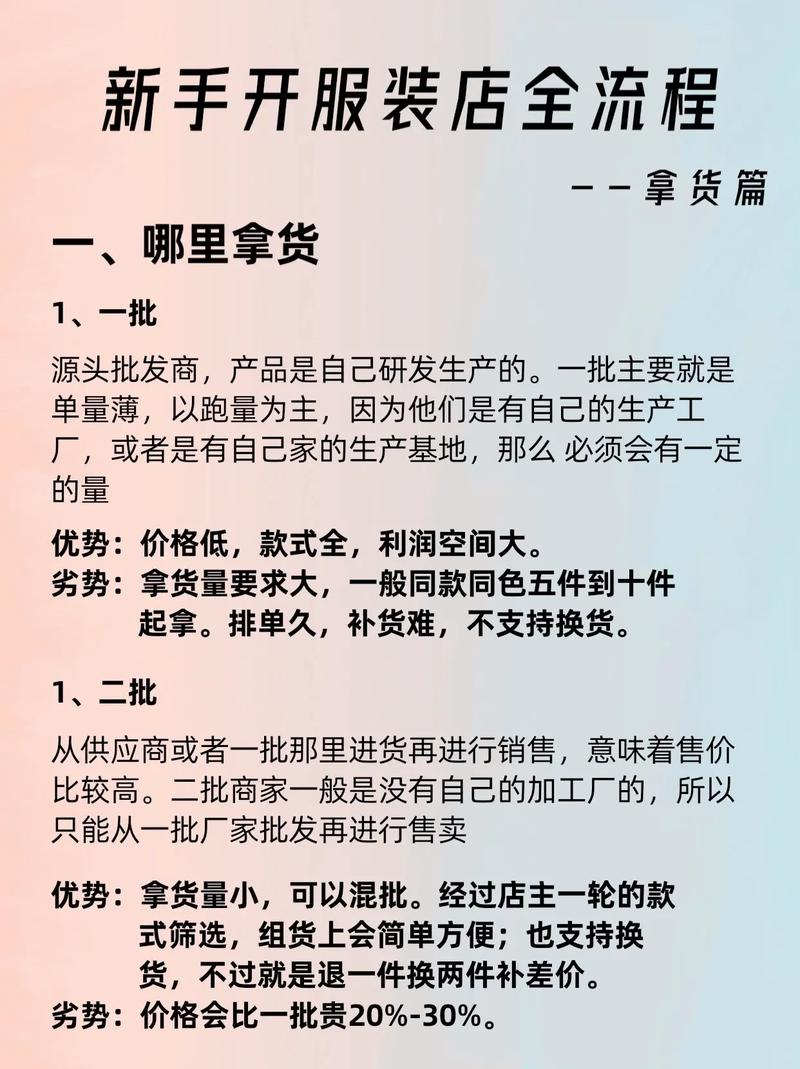
1. 2 two batches: cost control and outreach as core objectives
The second batch is the middle link between a group of wholesalers and final retailers, with the core demand being to obtain lower prices, expand stable end-users and reduce pressure on their own stocks. Their profit space is squeezed up and down, very price-sensitive and requires rapid response to terminal replenishment。
1. 3 entrepreneurs: focus on light assets, quick turnover and explosive sensitivity degrees
These groups are dominated by mobile stalls, night market stalls and core needs are small bulk collections, fast-renewed money, low-cost and flexible replenishments. Their limited financial resources, their weak risk resistance, their reliance on fast-moving implosion units and the speed at which they react to prevailing trends directly determine collection。
Ii. Commonality among the three groups supported by pain points and industry data
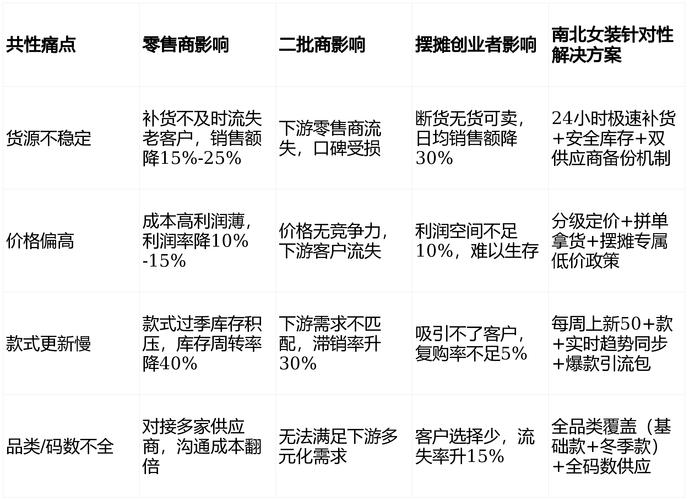
The following three main points of distress are central to the plight of all groups:
2. 1 unstable sources: hot seasons, double crowding of light seasons
The instability of the supply is the “first-time killer” of women's possessions, especially during the boom season:
2. 2 high prices and low transparency: the middle chain consumes profits
The lack of transparency in prices is a common pain to both consumers and retailers, reducing the profit margin directly:
2. 3 unsuited layout and quality: difficulties in returning goods resulting in backlogs
The difference in layout suitability is a painful point that can easily be ignored but has a significant impact, especially in the north-south market:
Iii. Personalization of different groups to take advantage of the pain
In addition to shared pains, different groups face exclusive difficulties due to differences in business patterns:
3. 1 sub-line entity retailers: seasonal coupling faults and slow stock turnover 3. 2 weak bargaining power and lack of insight into end demand
The essence of women's collection is the inefficiency of traditional supply chains and information asymmetry:
Level stabilization: 3-5 steps from plant to terminal, 5-10 per cent increase per segment, with final terminal price being 2-3 times the cost of the plant isolated: lack of data sharing on demand between wholesalers and end operators, production of plants on the basis of experience, resulting in missing standards for supply and demand matching services: lack of uniform standards for re-replacement, replenishment, layout adaptation in the industry, vulnerability of small and medium-sized operators and limited security of interests