In recent days, the iri consulting group, a well-known market research agency in the country, has published the china knowledge mapping industry study. The report states that 2019 is a year of rapid development of knowledge mapping-related technologies, which will be a focus area in the future as a combination of big data and ai. In the field of research, knowledge mapping, by means of automatic capture and industrial chain reasoning, can quickly link the scattered data of point distribution to the chain value. The report notes that knowledge mapping products from the kyoto mathematicals section can help research researchers to reduce the data collection and collation time of the original week to one minute。
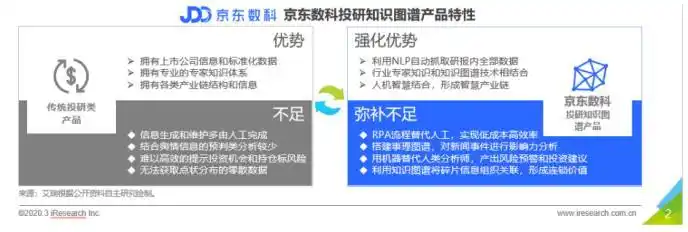
High costs and inefficiencies have been a major pain in traditional research. Manual collection is the main method of collating data in the traditional research industry, which is time-consuming and labour-intensive. About 80 per cent of the indicators in the paper are not directly available from the traditional financial data terminals, and researchers often spend a great deal of time searching for data scattered across the various texts: a small and medium-sized voucher dealer and a researcher in the private sector takes one to two weeks to obtain and collate industry-related data. It is difficult to cover all the data needed for research, even for large vouchers and public collection systems. In response, the kyoto section proposed a cost-effective solution by replacing manual with a rpa process. Using natural language processing techniques and knowledge mapping techniques, the solution extracts big data scattered across different texts, automating industry and business data, forming a financial database, and then presenting it as a chart. This solution, by condensing the one-week data collection and collation time required by industry researchers into one minute, has significantly increased research efficiency, thus helping to improve decision-making efficiency。
In addition to the high cost and inefficiency of traditional research on manual work, there are fewer pre-judgmental analyses combined with intelligence information, which make it difficult to efficiently identify investment opportunities and warehousing risks, and which is another painful aspect of traditional research work. However, the knowledge mapping application in kyoto will allow for the extraction of investment signals or risk signals from news events, an impact analysis of the extent of the events, the probability distribution of conditions from point to point, and a determination of the depth of transmission based on a self-set threshold. Combining the historical data training network structure and the probability distribution of conditions, the analytical logic of the minds of researchers and analysts is expressed in a schematic schematic to form a schematic, thus helping researchers quickly gain access to investment opportunities or identify risks from hold-up, output risk warning and investment advice。
In addition, knowledge mapping techniques in the kyoto numerical section allow for visualization of information and data, the mapping of information and data for user queries and the automatic generation of smart questions and answers. For the first time in the industry, the project resulted in a deep integration of knowledge mapping techniques and industry expertise (industrial chain manual maps). Not only can users visualize the upstream and downstream structure of the industrial chain map, but they can also customize the industrial chain map according to their own understanding and link it to the knowledge mapping database。