This paper will elaborate on the basic concepts of knowledge mapping, including its background, definitions and typical applications。
There's a gift book
I. Background to knowledge mapping
Before we give a definition of the knowledge map, let's discuss separately what knowledge is and what maps are。
What is knowledge
First look at what knowledge is. Readers may ask the question, is it not true that in the age of big data, human beings have big amounts of data, which means that humans can use endless knowledge at all times and everywhere? The answer is no。
Knowledge is the result of human understanding of the objective world in practice, including human beings themselves, and includes facts, information, descriptions and skills acquired in education and practice. Knowledge is the understanding of the upgraded, summarised and condensed systems that humankind has gained from every avenue。
It can therefore be understood that knowledge is the understanding and understanding of human beings as a result of the processing of information and the condensing and summarizing of data and information。
Let us look at the dikw system proposed by rowley in 2007, from data, information, knowledge to wisdom, as illustrated in figures 1-3, as a continuous process。
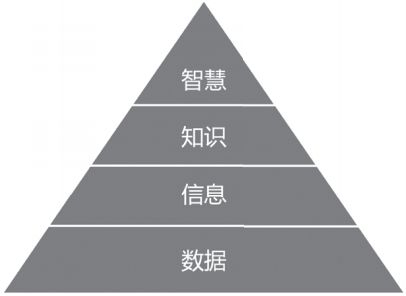
Figure 1-3 dikw system
To give a simple example, 226. 1 cm and 229 cm are objectively isolated data. At this point in time, the data have no meaning and represent only one objective fact. The expression “yo myung's arm displays 226. 1 centimetres” and “yo's body height 229 centimetres” are factual and fall within the category of information。
Knowledge is an abstract and generalization of the information dimension, combining yao myung's height, arms and other attributes, which gives yao myung a sense of how tall yao myung's height is higher than ordinary people. With regard to the final dimension of wisdom, zeleny refers to wisdom as knowing why know-why can be understood by interested readers, which is not discussed in depth。
2. What is a map
So what's the pattern? It's in the english version of the map, and it means "chart." in graphics (a branch of studies in mathematics), it shows the structure of interconnectivity between some things (object) and others。
A chart usually consists of a number of nodes (vertice or node) and the edges (edge) that connect them. The term “graph” was first introduced by james joseph sylvester in 1878. Figure 1-4 is a very simple one and consists of six nodes and seven sides。
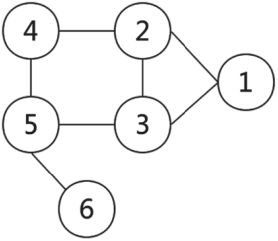
Figure 1-4 examples of 6 nodes and 7 sides
Literally, knowledge mapping is the expression of knowledge in the form of maps. The nodes in the figure represent semantic entities or concepts, and the syntax relationships between the nodes。
We then use some of yao ming's basic information to express it in a language that computers can understand, building a simple knowledge map. For example, it is indicated that yao ming's nationality is china, in which “yo ming” and “china” are two points, whereas the relationship between them is “nationality”。
This is a commonly used symbol-based knowledge expression - resource desCription fRamework, rdf, which expresses knowledge as a triad consisting of the main languages (subject), predicate and object。
Definition of knowledge mapping
The previous section gives a visual description of the knowledge map, which is a semantic network of nodes and sides. So how exactly do we define the knowledge map? Here we can begin by reviewing the evolution of its concept。
The evolution of knowledge mapping concepts is shown in figures 1-5。
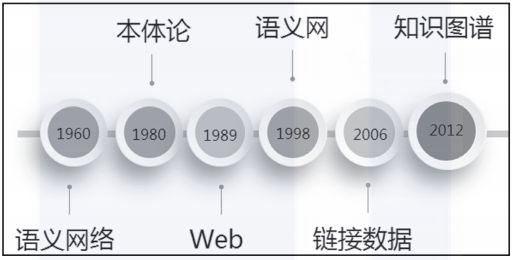
Figure 1-5 evolution of knowledge mapping concepts
The semantic network was presented by richard h. Richens of the cambridge institute of language, and the meaning of semantic networks has been briefly described in the previous text. It is a map-based data structure, a means of knowledge expression that can easily transform the natural language into a map to express and store it, and is applied to natural language processing issues such as machine translation, questions and answers。
By the 1980s, researchers introduced ontology into the computer field as a “formalized description of concepts and relationships”, which was later used to define knowledge systems for knowledge mapping (schema)。
And what really had a profound impact on the knowledge map was the birth of web. Tim berners-lee, published in 1989 in “information management: a proposal”, sets out the vision of web, which should be an information system centred on “links” (l)Linked information system (system) in a graphic way。
Tim believes that the “link-centred” and “map-based approaches” are more useful than tree-based and structured forms of organization, thus contributing to the creation of the world wide web. We can understand that in web each page is a node and that the hyperlink in the web page is a sideline. However, its limitations were obvious, for example, because hyperlinks could only show that the two pages were interrelated and could not express more information。
In 1994, at the first international world wide web congress, tim added that it was not the pages that people searched for, but the data or the thing itself, and that since the machine could not effectively identify semantic information from the web page, it was not enough to simply create links between web pages, but also between objects, concepts, things or data。
Subsequently, in 1998, tim officially introduced the semantic web concept. The semantic network is a semantic network of data interconnections, which is still based on the organization of the diagrams and links, but the nodes in the diagrams are no longer web pages but entities。
By adding “metadata” (m) to documents on the global information networkEta data), which allows computers to easily understand semantic information on a web page, thus making the entire internet a common clearing-house medium. We can interpret semantic networks as web of knowledge or web of things。
In 2006, tim presented linked data (l)The concept of inked data) further emphasizes the link between data, not just the digitization of texts. In the later part, the link open data is also presented (l)The inned open data, lod project is also intended to realize the vision of tim's link data as a semantic network。
Subsequently, in 2012, google commercialized a number of concepts based on semantic networks, and its knowledge mapping concepts have been adopted to date。
As can be seen, the concepts of knowledge mapping are closely related to web, natural language processing (nlp), knowledge expression (kr), database (db), artificial intelligence (ai). So we can look at the mapping of knowledge from several angles。
• from a web perspective, building knowledge maps, like creating hyperlinks between texts, requires creating semantic links between data and supporting semantic searches, thereby changing the way information was retrieved, which can be retrieved in a language more appropriate to human understanding and presented in a graphical manner。
From the point of view of nlp, the construction of knowledge maps requires an understanding of how semantic and structured data can be extracted from unstructured texts。
From the kr perspective, building knowledge maps requires understanding how to use computer symbols to express and process knowledge。
• from an ai perspective, building knowledge maps requires understanding how the knowledge base can be used to support understanding of human languages, including machine translation。
From a db perspective, building a knowledge map requires an understanding of how knowledge is stored。
Thus, knowledge mapping technology is a system engineering process that requires a combination of technologies. A number of leading scholars in the country have also provided definitions of knowledge mapping. A few brief examples are given here。
Prof. Liu yiu of the university of electronic science and technology defined:
The knowledge map is a structured semantic knowledge base, used to describe concepts in the physical world and their interrelationships in a symbolic form, consisting essentially of the “entity-relationship-entity” triads, as well as the entity and its associated attributes-value pairs, through which the entity connects and forms a network of knowledge structures。
Qinghua university's professor shunzi li defines it as:
Knowledge mapping, which presents concepts, entities and relationships in an objective world in a structured manner, presents internet information as a form closer to the world of human awareness and provides an ability to better organize, manage and understand the volume of internet information。
Professor chen hua xuan of zhejiang university understands the knowledge map:
The knowledge mapping, designed to model, identify, discover and extrapolate the complex relationship between things and concepts, is a calculable model of the relationship and has been widely applied in areas such as search engines, smart questions and answers, language understanding, visual landscape understanding and policy analysis。
The definition given by the professor of paint guillin at south-east university is:
Knowledge mapping is essentially a knowledge base known as semantic networks, that is, a knowledge base with a directional structure in which the endpoint of the map represents the entity or concept, while the edge represents the semantic relationship between the entity/concept。
At present, neither academia nor industry has a single definition of knowledge mapping, and the focus of this paper is not to give a theoretically precise definition, but rather to try to explain from an engineering perspective how to construct an effective knowledge mapping. A number of common concepts are listed below。
• entities: correspond to a semantic body, such as yao ming “china”。
• properties: describe the characteristics of one type of entity (e. G. “heavy”: yao myung's height is 229 cm)。
• relationships: the relationship between the synonyms connects entities (e. G. “nationality”: yao ming's nationality is china)。
Some scholars also define attribution as a relationship, which is one of them. However, this paper distinguishes between attributes and relationships as two different concepts。
Typical application of knowledge mapping
We have been exposed to the successful application of knowledge mapping to the search engine. Knowledge maps provide rich structured results for search, reflecting the links between information and knowledge, and can be accessed directly through search。
In addition to the common search engine, knowledge mapping plays an important role in a number of specific areas, such as financial systems with flowering companies, and vinyl-caused enterprise searches。
1. Medical field
In the medical field, in order to reduce the difficulty of discovering new drugs, the openphacts alliance has built a platform for discovery to support pharmacological research and drug discovery by consolidating pharmacological data from various data sources and building knowledge maps。
Ibm waston has been successfully applied to nine major areas of medical care, including chronic diseases, medical images and in vitro testing, through the construction of a medical information system, as well as a set of questions and answers and a search framework, with cancer diagnosis at its core。
The first step in its commercialization was the creation of an oncology solution (waston for oncology), which, by entering thousands of cases and 15 million pages of medical literature at the sloane caitlin cancer centre, can provide individualized treatment programmes for different oncology patients, referred to doctors with medical evidence。
2. Financial investment
In the area of investment research, alpha sense, founded in 2010, created a new financial knowledge engine。
Unlike traditional financial information data platforms, this knowledge engine is not confined to financial data integration and information platforms, but rather provides users with easier access to and processing of materials through the construction of knowledge maps, along with natural language processing and semantic search engines。
Another highly representative financial knowledge engine is kensho. By collecting information from a variety of data sources, building financial knowledge maps and paying attention to the dependence between events and events, as well as to the correlation and reasoning of results, it can provide users with such functions as automated semantic analysis, determination of trends based on specific patterns, etc。
3. Government administration and security
In the area of government management and security, a representative case is palantir, known for helping to capture bin laden through large-scale knowledge mapping。
Its core technology is to collate and analyse structured and non-structured data from different sources and to provide decision-making support to those involved. For example, in the military information analysis system, the integration of multi-source isomeric information, such as spreadsheets, telephones, files, sensor data, dynamic videos, etc., allows for a full-scale real-time monitoring analysis of personnel, equipment, events, etc., to enable dispatchers to first-time capture and prejudge the situation on the battlefield。
In addition to assisting in the capture of bin laden, another well-known achievement of palantir was the recovery of billions of dollars in the case of former chairman of nasdaq, madoff。
4. Electricians
In the electricity sector, alibaba’s ecological accumulation of large volumes of merchandise and transactional data, with commodities, products, brands and bar codes at its core, has built a billion-class knowledge map of commodities that can be used extensively in search, procurement, platform governance, smart questions and answers, while maintaining tens of millions of levels of malicious assault interceptions per day, greatly enhancing consumer experience in shopping。
5. The chat robot area
In the area of chat robots, products with question-and-answer functions, such as siri, microsoft ice, white boy, amber vanity, skycat elf, and miphone are backed by large-scale knowledge mapping。
For example, in amber vanity, besides the general encyclopaedia - “seven years” - there is support for sub-areas, such as amphibious knowledge, food knowledge, constellation knowledge. Figure 1-13 gives an example of a dialogue between men and women following the integration of multiple types of knowledge。
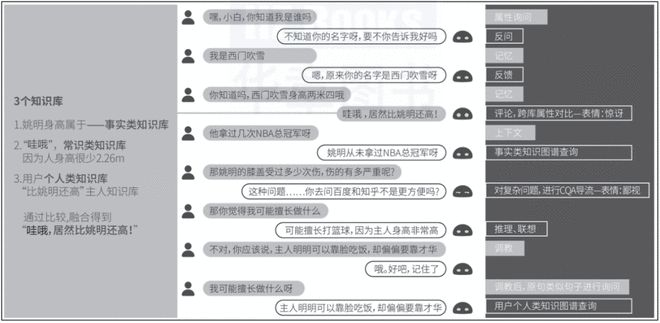
Figure 1-13 example of male white dialogue