


Second, data cleansing is designed to ensure data quality. The data cleansing process includes weighting, correcting, formatting, etc. To ensure that the data processed are accurate and consistent
Next, entity identification refers to the identification of important entities from the text. This step usually relies on natural language processing (nlp) techniques, identifying names, place names, organizational names, etc. Through naming entity identification (ner) algorithms。
Relationship extraction is the extraction of relationships between identified entities. This process also relies on nlp techniques, and common methods include metrology analysis, semantic role labelling, etc。
Finally, the mapping is structured in the form of maps of the entities and relationships identified. Each entity can be seen as a node in the chart, while the relationship between entities can be seen as a sideline in the chart. The data can be stored and searched by researchers through a graphic database (e. G. Neo4j, arangodb, etc.)。
Applications of knowledge graph
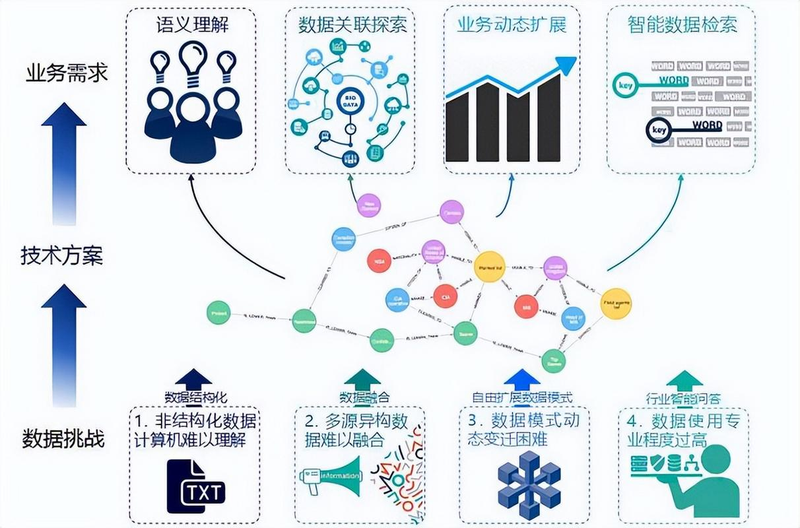
The area of application of knowledge mapping is very broad and covers a wide range of aspects, including search engines, referral systems, smart questions and answers, and social networking。
In the search engine, knowledge mapping can help improve the relevance and accuracy of search results. When the user enters a query, the search engine can use structured information in the knowledge map to provide a richer answer. For example, when searching for “einstein”, the search engine not only returns to the relevant web page, but also displays information about einstein's life, achievements, relevant figures, etc。
In the referral system, knowledge mapping can help the system to better understand user interests and preferences. By analysing the relationship between users and entities, the recommended system could provide more personalized recommendations. For example, in the film recommendations, the knowledge map can link the user's viewing history to the type, director, actor, etc. Of the film, thereby recommending more user-friendly films。
Smart question-and-answer systems are another important application of knowledge mapping. By matching user questions with entities and relationships in the knowledge map, the system can quickly find answers and generate natural language. This technology has been widely used among intelligence assistants (such as siri, alexa, etc.)。
In social networks, knowledge mapping can help users to identify new friends and connect. By analysing relationships and shared interests among users, social networking platforms can recommend potential friends and enhance the social experience of users。
Challenges and the future of knowledge mapping
Callenges and future of knowledge graph
Despite significant achievements in many areas, knowledge mapping still faces many challenges in its development。
First, the diversity and complexity of data make the construction of knowledge maps difficult. There may be inconsistencies in format and duplication of content in data from different sources, which requires researchers to devote more effort to data cleansing and integration。
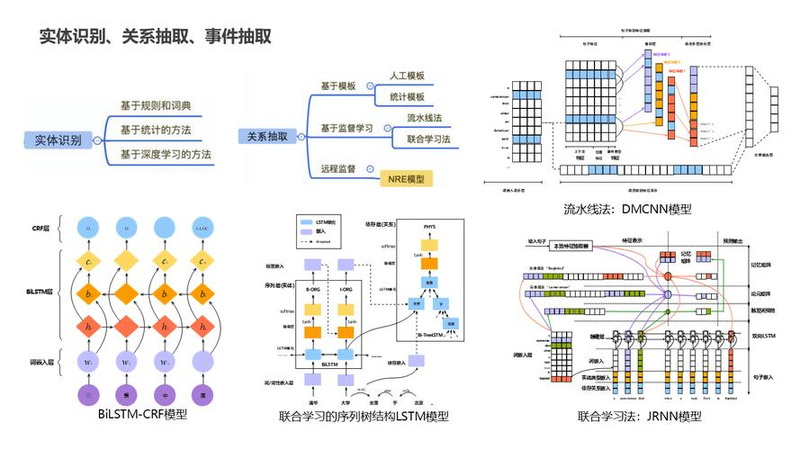
Second, the accuracy of entity identification and relationship extraction remains an urgent issue, m. Bestkaoshi. Com/2013n. Php. Although the existing nlp technology has made significant progress, there are limitations in dealing with complex sentences and vague expressions。
In addition, updating and maintenance of knowledge maps is an important challenge. As information evolves, knowledge maps need to be updated regularly to ensure timeliness and accuracy of their content. This requires researchers to develop efficient automated updating mechanisms。
Looking ahead, knowledge mapping is expected to work in more areas. As artificial intelligence technologies progress, knowledge mapping will be combined with machine learning and in-depth learning to further upgrade their intellectualization. At the same time, the openness and sharing of knowledge maps will also be a trend for future development, facilitating knowledge exchange and cooperation between different fields。
Conclusion
Knowledge mapping, as an emerging form of knowledge expression and management, is changing the way we access and process information. By organizing complex information in graphic form, knowledge mapping not only increases the efficiency of information retrieval, but also provides the basis for the development of smart applications. Despite the many challenges faced in the construction and application process, the prospects for knowledge mapping remain wide as technology progresses. In the future, we look forward to the application of knowledge maps in a wider range of areas that will bring new opportunities and challenges to the development of human society。



