Technology transfer is an international concept and a very complex and specialized area. Technology transfer includes scientific knowledge, technological achievements, scientific information and scientific and technological capabilities. It takes the form of transfers, licences, cooperation, etc., in which licences and cooperation can be subdivided into multiple forms。
From a legal point of view, the transfer of technology is centred on the transfer of intellectual property rights, of which patents are the main element. Given the diversity and diversity of technology transfer content, forms, it is difficult to study and observe technology transfer processes in general conceptual terms。
It is necessary to explore the basic processes of technology transfer and to look at the general patterns and patterns of the basic processes of technology transfer, both domestic and foreign, from a global perspective, in order to promote the scientific and orderlyization of technology transfer services in our country。
From an overview of domestic and foreign technology transfer practices, the technology transfer services process can be broadly grouped into the following four phases:
One. (a) the start-up phase
Two. (b) the docking phase
Three. The negotiation phase
Four. Implementation phase。
Phase i: start-up phase
The start-up phase is the pre- and post-mandate period for technology transfer intermediaries to receive technology export requirements from technology holders, the stage of communication of claims, verification of materials, qualification, preparation of basic materials, and the stage of solid foundation work prior to the formal launch of technology diffusion and transfer. These include adequate communication of requests for information with the client, review of relevant information and relevant qualifications of the commissioning technology, the determination of the relevant intellectual property rights and legal validity, as well as technical evaluation, commercial planning, etc., and, where necessary, feasibility analysis of techniques that are more modeled or completed。
Communication on basic claims
Communication of claims: this is the process by which service providers learn about the basics of the technology of the client and about the basic requirements for the transfer; the process by which service providers are entrusted to know about the content, quality standards and costs of the service; and the process by which service providers and demand agree on the initial commissioning of the project。
Ii. Material and qualification
The information and qualifications submitted by the technology transfer trustees are carefully reviewed to ensure their authenticity and completeness。
3. Intellectual property audits
Intellectual property audits of commissioned technologies are an important part of the process preparation phase, which involves rigorous scrutiny of the intellectual property tenure and legal status of the technology. If the commissioning technology has not yet been patented, it will be reviewed in accordance with the provisions of the law relating to technical secrecy, while assisting clients in developing patent applications and layout strategies。
4. Assessment of technical assessments
In our technology transfer practice and industry management, evaluation and evaluation are used largely as synonyms, without a strict distinction. In terms of terminology, there are delicate differences between the two: the assessment focuses on application in advance, prior to the creation of the item (which is also relevant in the event and after) and on the presentation of reference observations and conclusions, which mostly include a quantitative assessment and a value assessment; and the evaluation covers the whole process before, during and after the evaluation, focusing on more comprehensive and definitive conclusions through systematic analysis。
Our national standards for the regulation of technology transfer services provide that technology transfer services may arrange technical evaluations, as necessary, when developing technology transfer programmes for their clients. The evaluation reference framework is also provided for 21 dimensions of the content of the technical evaluation, in terms of technical value, economic value and implementation risk. There is also an objective need for a value assessment of patented technologies, in addition to a technical evaluation model based on qualitative evaluation, in terms of the operationalization of technology transfer。
In recent years, my government's science, technology and innovation policy orientation has increasingly focused on strengthening the evaluation of science and technology results at the macro, middle and micro levels, using technology assessment as an important link in optimizing the management of science and technology results, supporting scientific decision-making, promoting the transformation of results, and improving the efficiency of technology transfer and innovation services. The system of assessment and evaluation services in the technology transfer industry is also accelerating the creation and expansion。
Phase ii: docking phase
This phase can be broadly divided into three phases: technology diffusion, demand search, supply and demand matching
1. Technology diffusion
Technology diffusion is divided into online and offline extension. Online outreach is generally carried out through different platforms, columns and windows, in a variety of ways and combinations, such as rolling promotions, column presentations, smart referrals, professional engine searches, etc., supported by media campaigns or general awareness campaigns. Online outreach is the dominant mode of technology diffusion in the internet age, as informatization and networking are major trends in technology transfer agencies and are one of the important yardsticks for measuring their professional service capacity. With a certain level of technology and patents, it enters the results bank, enters a normal extension service model, matching and matching dynamic demand in a variety of channels and ways, within the world market。
Underline, there is generally an outreach of events (integrated fairs, thematic fairs, industry summits, trade fairs, fairs, matchmaking sessions, fairs, challenge biddings, seminars, etc.) and events (e. G., outreach activities, tours, exchanges, typical outreach activities). Underlines are more targeted than on-line patterns, and interfaces are richer and deeper. Technical commissionors can take advantage of their participation in off-line outreach activities, market research and expert advice to capture more information and results on technological innovation and market development。
2. Needs search
(1) demand bank matching
Strong technology transfer agencies have a larger, finely screened, sub-industry and category-based and dynamically updated technology demand base. The technology transfer commissioning will begin with search, matching and docking in the demand pool。
(2) demand collection
Online demand call
The increasing number of online means and methods of collection in the internet age, both on and off-line, demonstrates the advantages of efficiency, speed, sensitivity, wide coverage and low cost。
Open call
Online demand collection is carried out mainly through a combination of open demand collection and professional review, communication and screening of needs。
Collaborative shared call
(c) complementarity of sti services supply and demand resources, and expansion and sharing of market demand resources, mainly through collaboration among sti services agencies and between government and industry to leverage market demand resources (e. G. In the form of online platform networking)。
Call for tenders
Open solicitation of technical challenges by opening a challenge tender window on the platform and seeking optimal solutions to the supply side of the technology by tendering。
In-line demand collection
The sub-linear demand collection takes place mainly in two ways:
A. Cooperation with government departments or industry organizations
• to solicit the technological needs of enterprises through governmental or industry organizations working on projects and activities (such as training activities, experts and results at the grass-roots level)。
B. Mobilization through activities
Demand collection is carried out through study tours, exhibitions, etc. (often in parallel with demand and supply matching, such as technical interfaces, technology fairs, project recruitment)。
3. Initial interface between supply and demand。
The interface between supply and demand can be described as a complex, challenging and professional link in technology transfer。
(1) initial docking
Two directions of the docking
A. Demand-side identification of interested technology suppliers through the platform
B. The platform matches the successful and intended demand side of the technology output through demand banks and other demand collections and searches。
Organization of two-way expeditions
Two-way study exchanges are organized between the supply and demand sides。
(2) negotiation of intention
Full communication is made on the claims of export technologies in terms of specific modes of transfer (transfer, licensing, cooperation, etc.), acceptable prices and modes of trade, through complex study, negotiation, communication, etc., in order to arrive at initial cooperative intentions。
Phase iii: negotiation phase
This phase is a process based on the initial intention of the parties to cooperate, through the intermediary services of technical brokers, between the supply and the demand side, after numerous negotiations, negotiations and communications, to finalize all details of the transaction and cooperation, to reach a consensus at all important stages of cooperation and ultimately to arrive at a mutually agreed text of the contract (agreement)。
The complexity of the content and impact elements involved in this phase, as well as the high level of professionalism, are also key stages in determining the success and efficiency of technology transfers. They are closely related to the sophistication, maturity, potential market value, specific tenure and relevant legal status of export technologies, as well as to the willingness to choose and evaluate the mode of technology transfer by the exporter, and are also highly relevant to the combined professional competence and experience of technology brokers (managers). Price and mode of trade negotiations are among the most sensitive and difficult stages of the overall technology trade。
Because of the wide diversity of the content of technology transfer projects (analysing many types from the supply side and the demand side, respectively), the complexity of the implementation of large technology transfer projects, the difficulty of cooperation and coordination, the length of the transfer cycle, the long and complex cycle of the negotiation phase, the need for a high-level technology broker (manager) to manage it, and the involvement of high-level technical, legal, financial and managerial experts。
Phase iv: compliance phase
This stage involves the completion of the final formal contract, the opening of performance and the maintenance and safeguarding of the orderly conduct of performance, in accordance with the contract/agreement text as determined by the parties。
Contracting is a process that is regulated by law and carried out in accordance with standardized procedures and need not be repeated. Compliance is also a more complex process involving supervision of the implementation of the terms of the agreement, coordination of disputes, dispute resolution, follow-up services, etc。
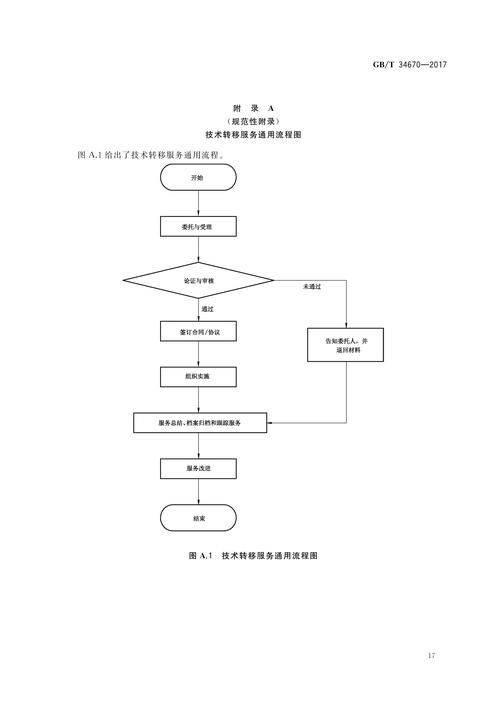
The process of technology transfer (which is narrower than the concept of technology transfer) described in the national standards for the regulation of technology transfer services (known as the national standards) includes, inter alia, commissioning and receiving, study and evaluation, contracting/agreements, organization of implementation, review of services, archiving of information, tracking services, service improvements, dispute resolution (the “visiting and evaluation” of which refers mainly to determining the tenure and legal status of intellectual property rights, and not to technical evaluation)。
For the organization of programmes for the development of technology transfer contract services, the national standards require the following:
1. Provide information for technology transfer stakeholders, which may include surveys of good faith and, where necessary, study tours
2. Arranging technical evaluations, as necessary
3. Assisting and monitoring the implementation of technology transfer contracts
Assistance in the conciliation of disputes in the performance of contracts
Assisting in the implementation of technology transfer
Promote follow-up cooperation on projects at the request of the client。
The performance phase, where default issues such as breach of confidentiality, good faith and complications such as unforeseen factors, force majeure issues may arise, requires an intermediary service to coordinate the proper handling of any performance-related issues during the service cycle and is also a test of the level of specialization of the service。