


Mysql performance optimized 10 key skills and operational strategies
In today's data-driven applications, mysql, as one of the most popular open-source databases, has performances that directly affect the speed of response and user experience of applications. Efficient mysql optimization not only reduces hardware costs but also enhances the stability and scalability of the system. This paper will explore in depth 10 key skills and operational strategies for the optimization of mysql performance and help developers and database administrators systematically upgrade database performance。
Scientific indexing policy
Indexes are one of the most effective means of increasing the speed of queries, but an inappropriate index reduces writing performance and increases storage costs. Core principles include: creating indices for hf queries for where conditions, join associated fields and sorting of order by fields; avoiding indexing of low-segregation fields (e. G., gender, state); following the leftmost prefix matching principle when using composite indices; and avoiding full table scanning by regularly using the `explain ' analytical query implementation plan. For the preparation of intensive tables, the number of indexes should be streamlined。
2. Efficient sql queries optimized
Inefficient sql statements are the main source of performance bottlenecks. Optimistic strategies include: searching only for columns that are required and avoiding the use of `select ' ; rational use of join instead of sub-inquiries and ensuring that join fields are indexed; avoiding functional operation or calculation of fields in the where sub-statement to prevent the index from being invalidated; carefully using `distinct ' , `group by ' and `order by ' to minimize the sorting of large data sets; and using batch processing operations to reduce the number of visits to the database。
Rational database schema design
Good surface design is the cornerstone of high performance. Suitable data types should be selected, such as replacing varchar with int to reduce storage space and accelerate comparison; following a model design to reduce data redundancy, but with a moderate inverse (e. G., adding redundant fields) to reduce join operations in a high and readable environment; using `not null ' binding and providing default values for fields, simplifying search logic and possibly increasing efficiency。
4. Aligning server parameters
Adjusting mysql configuration parameters to server hardware and loads is essential. Key parameters include: `innodb buffer pol size ' (usually set to 70-80 per cent of available memory) for cache table data and indices; `innodb log file size ' , with appropriate redacting log sizes to improve writing performance; `query cache size ' (removed in mysql 8. 0) or the rational configuration of query caches in early versions; and `max conventions ' , to avoid excessive connection consumption of resources。
5. Query caches and application caches
Although mysql 8. 0 removes the built-in query cache, its ideas remain guiding. On the application level, the use of caches such as redis or memcached cache hotspot data, complex query results or session data should be actively pursued. This greatly reduces the pressure on the database. In designing the cache, attention needs to be paid to the cache failure strategy and the treatment of consistency issues。
6. Read-write separation and load balance

When a single database server cannot withstand pressure, a reading and writing separation strategy is used. The builder directs the writing operations from the reproduction structure to the master library, and the reading operations spread to multiple libraries from slave. This has significantly enhanced the readability and availability of the system. An intermediate or application logic can be used to balance the route and load of the request。
7. Division of libraries
For mega-data and high-cosmetic scenarios, the matrix is the ultimate solution for breaking performance bottlenecks. Horizontal tabs (sharing) divide a large table into several physical tables by certain rules (e. G. User idhashi, time range); vertical tabs divide inactive fields or large fields into extended tables. The subdirectories distribute the tables among different database examples. This would greatly spread the pressure from i/o and cpu, but would add to the complexity of application logic。
8. Regular maintenance and monitoring
The database needs to be maintained on a regular basis to maintain optimal performance. Use `optimize table ' or `alter table ' reconstruction table to remove debris; update index statistical information with periodic analysis tables (`analize table ' ) to help optimizers generate better implementation plans. At the same time, a continuous monitoring system has been set up to track key indicators such as qps, tps, slow search numbers, connections, buffer pool hit rate, and to detect potential problems in a timely manner。
Control services and targeting optimization
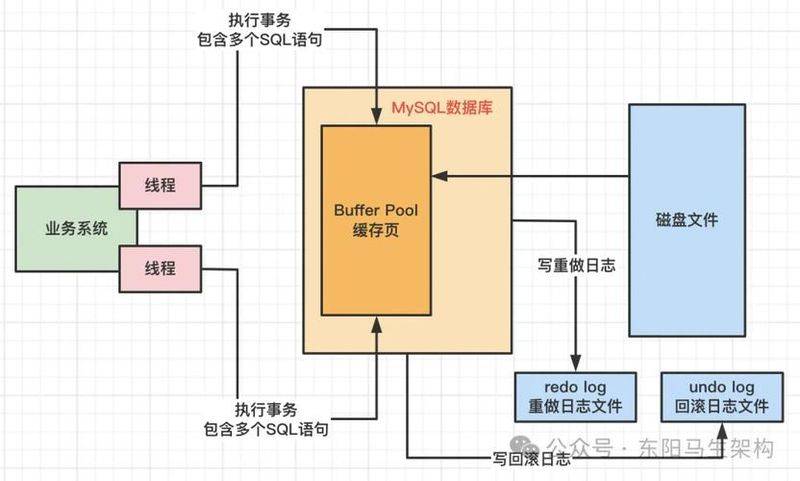
Inadequate business design can lead to severe lock competition and reduced performance. Keep services short and avoid unnecessary network calls or time-consuming operations in services; select the appropriate service segregation level according to the business scene, the higher the level and the lower the performance; for the innodb engine, preference is given to line locks and indexing is designed to reduce the scope of locking. Monitor and deal with the death lock。
10. Use of modern features and tools
Actively introducing new features and powerful tools of mysql. For example, the use of performance models (performance schema) and the system library (sys schema) for in-depth performance diagnostics; consideration of the use of partition tables (partitioning) to improve management efficiency and query performance for trillion scales; and, in mysql 8. 0+, the use of window functions and common table expressions (cte) for more efficient and complex queries. The actual implementation cost of the query is obtained using `explain analize ' (mysql. 8. 18+)。
Mysql performance optimization is an ongoing process, not a permanent one. The 10 techniques and strategies described above cover multiple levels, ranging from design, query, configuration to architecture. In practical applications, a combination of trade-offs and refinements, combined with specific business scenarios, data scales and hardware resources, is required through monitoring, testing and iterative to build a high-performance, high-availability mysql database system。



