On 23 march, the press office of the state council held a press conference on the implementation of the patent conversion initiative (2023-2025)。
At that meeting, the deputy director-general of the national intellectual property agency, hu wenhui, explained that, in the light of practice over the years, there had been a number of obstacles to patent conversion, which could be summed up as “five nos”, i. E. “can't turn”, “can't turn”, and “can't turn” and “can't turn”. Since the launch of the initiative, the national intellectual property agency has been working together with the relevant departments in a concerted and precise manner, focusing mainly on solving the problem of the “five nos”。
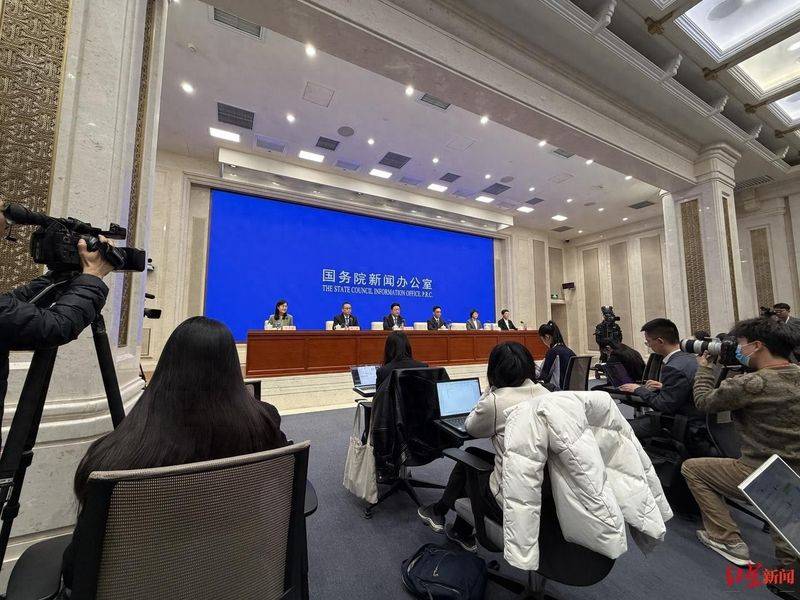
It's a press conference
According to hu wen fai, “cannot switch” is due to the fact that some patent applications are out of line with industrial applications, lack prospects for conversion and insufficient supply of high-value patentable conversions. “resistance to switch” is due to the long cycle of patent conversion, the high degree of uncertainty and risk and the insufficient incentive for scientists to engage in conversion. “father to turn”, due to the fact that due diligence exemptions and fault tolerance mechanisms are not adequate and that those involved in conversion are concerned about the loss of state assets as a result of inappropriate pricing during the patent evaluation process. The fourth is “no transition”, where institutions of higher learning and research generally lack specialized intellectual property institutions and personnel and have insufficient capacity to convert. Fifthly, it is “unhandled”, and now there is a weak interface between supply and demand between institutions of higher learning, scientific institutions and enterprises, and the ecological soundness of the conversion of services patents。
According to hu wenhui, the focus around “failability” is mainly on the development of institutional mechanisms such as pre-opposition evaluation, dynamic inventory, hierarchy management, navigational research and development to establish the quality basis for patent conversion。
In the context of “resistance to change”, the main thrust is to further the empowerment of job science and technology outcomes, to establish sound mechanisms for the distribution of the benefits of intellectual property rights, and to effectively stimulate the internal dynamics of patent conversion and innovation. For example, one university in the central region has adopted the “empower + transfer + agreed proceeds” model, successfully converting 412 patents and incubating 78 businesses with a market value of over $20 billion。
In the context of “deterrence” to explore reforms in the management of separate assets of functional science and technology, introducing a different model for the management of intangible assets, such as intellectual property rights, than for tangible assets in general; at the same time, exploring patent conversion due diligence and exculpatory mechanisms for those who have fulfilled their due diligence obligations and have not taken undue advantage of them would relieve the comrades of their responsibilities if, for example, market risk has led to a failure or failure to meet expectations, thereby effectively eliminating the fear of “deterrence”. For example, in a university in the north-western region, a single management reform of job science and technology has been launched to dispel the fear of researchers about the loss of state-owned assets, turning “neither” into a “positive shift”, and the university now has over 300 patents worth $630 million, yielding more than $3. 2 billion。
In the area of “non-transfer”, the main thrust is to promote specialized technology transfer institutions in institutions of higher learning and scientific research, to foster a pool of technical managers and to provide services related to the transformation of the whole process, such as finding, incubation, evaluation, promotion, trading and finance and law。
In the context of “impairment”, the main thrust is to promote conversion models such as “open licences” “first-to-first-paid” “priorty industrialization + mandate rights” for patent enforcement, to facilitate connectivity of intellectual property operational platforms and accelerate the removal of such “improvement” barriers。
He said that the next step would also be to build on the achievements of the initiative by continuously deepening the reform of institutional mechanisms, optimizing the ecological aspects of transformation, further closing these critical gaps and improving the efficiency and effectiveness of patent conversion。
Red star reporter, fook, intern, chen chul-ya
Edit package standing