In the past three years, the people's court of the haidian district of beijing has dealt with a total of 1381 cases of intellectual property contracts, with an upward trend and a high percentage of disputes resolved by conciliation or mediation. This report selects relevant cases with a view to strengthening intellectual property protection awareness and protection against intellectual property transaction risks through a case-by-case interpretation。
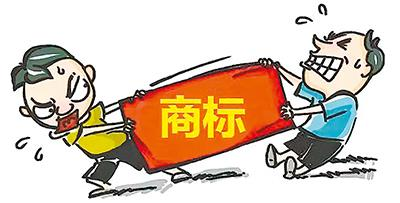
Case 1: refusal to transfer an approximation trademark
In december 2017, company a entered into a transfer agreement with company b for the transfer of six trademarks in its name to company a, which paid the corresponding transfer。
In january 2018, in the course of the parties' submission to the trademark office of an application for the transfer of the six trademarks in question, the trademark office found that three of the “gay” trademarks and four of the “gabo” trademarks that company b had applied for registration on 19 may 2017 constituted similar trademarks and requested company b to assist in the transfer of the nearly-like trademarks within the deadline。
Subsequently, company a repeatedly requested that company b fulfil its obligations to transfer trademarks under the terms of the trademark office, but none of it assisted in the transfer of similar trademarks, thus preventing the successful transfer of the agreed “gang” trademarks. After consultations between the parties, company a appealed to the court for the termination of the trademark transfer agreement and for compensation for its economic losses。
At the hearing, company b agreed to release the trademark assignment agreement, but argued that the agreement between the parties did not provide for a transfer of a similar trademark together, and that the failure to transfer the type of trademark in question was not due to its own failure to fulfil the assignment obligation。
After hearing, the court found that the parties had reached an agreement to transfer six trademarks, including those relating to the “carnation”, while company b had applied to the trademark office on 19 may 2017 for registration to constitute a similar “carb” trademark, and had not informed company a at the time of the signing of the transfer agreement on 1 december 2017, thereby preventing the subsequent transfer of the “carnation” trademark from being objectively transferable and the contractual purpose of the transfer agreement from being fulfilled。
On this basis, it may be held that the failure of company b to fulfil its assignment obligations under the assignment agreement constituted a breach of contract, and it confirmed the release of the assignment agreement and ordered the defendant company b to compensate the plaintiff for the economic loss of more than $450,000 and interest, taking into account the proportion of the “cargo” trademark in the transfer payments made by the plaintiff company a。
The presiding judge stated that, in the course of a trademark transaction, a market subject wishing to transfer a trademark should disclose to the other party, in good faith and on a timely basis, the registration of a similar trademark to be included in the negotiation and negotiation process, together with a similar trademark registered on the same or similar goods, in order to ensure the smooth running of the trademark transfer process and to avoid failure to perform the contract. Prior to the conclusion of the contract of assignment, the transferee of the trademark should also carefully verify whether the assignor has registered a similar trademark and include in the contract provisions to protect against such risks to ensure the successful performance of the contract。

Case 2: failure to publish the contract submission
On 25 march 2016, li signed a publishing contract with a book publishing company in beijing for the publication and distribution of li's work. Following the signing of the contract, li had submitted the manuscript at the agreed time, but the publication company had delayed the publication of the manuscript, which ultimately prevented its publication。
Li then sued the court and asked the book publishing company to continue the contract。
Li claims that after the signing of the contract, it submitted the article under contract, but after receiving it, the book publisher, after numerous reminders, failed to comply with its publication obligations, thereby preventing the publication of the work and requested that it be ordered to continue the contract。
A book publisher argued that the strict publishing policy and the shortage of editors made it difficult to fulfil the contract and that the corresponding liability should not be borne entirely by it。
Subsequently, li requested that the contract be terminated and that the book publishing company compensate it for the loss of royalties. A book publishing company agreed to terminate the contract in question, but found that there was no legal or contractual basis for the alleged loss of royalties。
After hearing, the court found that the plaintiff had delivered the works under contract and that the defendant's failure to fulfil its contractual obligations constituted a breach of contract. Where both parties agreed to the termination, the court confirmed the termination。
Taking into account the circumstances of the breach of contract between the defendant, the parties in respect of the performance of the contract, the methods of calculation of the contractual agreement on royalties, the contractual rates of royalties and the minimum stamps, the number of stamps stated at the parties ' hearings, and the unit price of the stamp, the court decided at its discretion that the defendant's book publishing company would compensate li for the financial loss of $5,000。
The judge later indicated that book publishing did not include only the simple steps of author submission, printing and distribution, but also related issues of publication policy, administrative approval, etc。
On this basis, the publication contract in this case is no longer eligible for further performance. In order to balance the interests of the parties, the contract may be dissolved and the breaching party may be held liable for damages to ensure that the legitimate interests of the compliance party are not lost by the termination of the contract。
The judges reminded that in such cases, the compliance party should choose an effective remedy to resolve the impasse in contract performance. At the same time, when book publishing institutions are unable to comply with their book publishing obligations, they should consult and communicate with their clients in a timely manner in order to properly resolve contractual performance issues in order to prevent disputes from arising。

Case 3: the use of fonts outside the scope constitutes a tort compensation loss
On 1 november 2016, company a was legally transferred by copyright holders to acquire all copyrights, including the "new tic" tea font。
Previously, company b had entered into a cooperation agreement with the original author of the "new tic tac" to authorize the use of the font for the period from 1 september 2016 to 31 december 2021, using a mobile phone application platform ranging from huacheng, mi and oppo。
Having acquired copyright rights, company a found that company b had exceeded its authorized use in the implementation of the agreement by converting the “newty afternoon tea” into “newty afternoon tea heart” and “newty afternoon tea” and “newty afternoon tea music” and “newty afternoon tea with bold”。
Subsequently, company a filed a lawsuit with the court alleging that after it sent notice of the cancellation of the agreement to company b, company b continued to disseminate the “new tid tea body” and the type of font it had been sued through the information network, thereby violating the right of company a to network dissemination and adaptation of the relevant fonts。
The court found that the cooperation agreement between company b and the original author of the “new tic tac” expressly provided that “the author has the right to withdraw the authorization at any time if the authorized person has violated the terms of the cooperation agreement or if the authorized person's fault results in adverse effects on the author and the new author's font”. It follows that company b has acted in fundamental breach of the terms of the cooperation agreement and that company a, as author, is entitled to exercise the right of discharge。
The court also found that company a had sent a notice of release on 27 april 2017 and that company b had responded, so it could be concluded that the cooperation agreement had been lifted. Following the dissolution of the cooperation agreement, company b violated the copyright of company a by disseminating the “new tid afternoon tea body” and the sued fonts through the information network on the platform in question。
The court accordingly ordered the defendant, company b, to cease the infringement immediately and to compensate the plaintiff, company a, for economic losses and reasonable expenses of over 2 million yuan。
The judge later stated that the case was a typical case in which the right-holder had given notice of relief for breach of the agreement between the parties, and the right-holder's continuing use of the author's copyright after the termination of the contract constituted a violation。
The judge reminded that if rights were to be exercised beyond the limits of their scope, the right holder should be contacted in a timely manner and supplementary agreements should be concluded to preserve the evidence to avoid the risk of subsequent litigation。
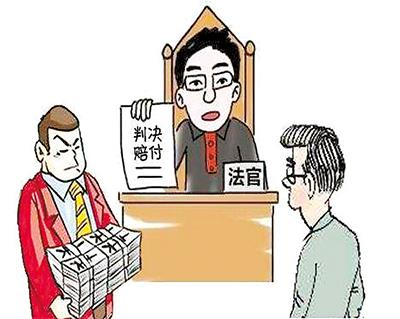
Case 4: prior clarification of liability for breach of contract
In may 2018, a beijing technology company and a sichuan media company signed a " clouding plan - a cooperation agreement on copyright authorization for large online films " , which entered into an agreement on the authorization of a novel to be transformed into a large online film。
In the course of the implementation of the agreement, a sichuan media company failed to complete the script and film production as agreed, and in september 2019 the two parties agreed to terminate the great internet agreement and concluded a breach of the pact and sichuan media corporation paid $200,000 to a beijing technology company。
Following the entry into force of the breach agreement, a sichuan media company refused to pay the default money. A beijing technology company brought it before the courts。
After hearing, the court found that both the “gang agreements” and the breach agreements entered into by the parties were valid. The plaintiff, a beijing science and technology company, had a factual and legal basis for the defendant's claim that a media company in sichuan should pay the default money, and the defendant was sentenced to pay the plaintiff $200,000。
This case was introduced by the presiding judge, and in recent years there has been an upsurge in the number of major web-based films, resulting in a growing number of disputes. The case in question is a performance dispute that arose during the transformation of novels into web-based films。
In a contractual transaction, the parties may expressly agree in the contract, or enter into a separate breach agreement, in order to fully safeguard their interests, so that, in the event of a breach by the counterparty of the transaction, the risk of the transaction may be hedged or offset by a more complete default clause agreed in advance or subsequently agreed upon。
In this case, the defendant did not complete the creation and production of the screenplay of the major film on the internet, reached agreement with the plaintiff on the termination of the agreement, the parties entered into a separate breach agreement on the termination of the contract and the amount of the breach of contract, the time of payment, etc., which was a genuine expression of the intention of the parties, and the court should no longer adjust the amount of the breach of contract in the absence of any other evidence that the amount was manifestly excessive or too low。
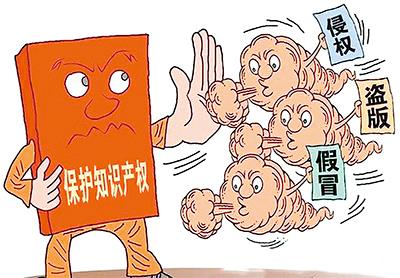
Interpretation: increasing penalties for intellectual property violations degrees
In recent years, the protection of intellectual property rights (iprs) by the state has increased with the further implementation of innovative strategies, and awareness of the protection of iprs has increased。
However, driven by economic interests, a number of market subjects have violated their contracts and arbitrarily violated the trademark rights, patent rights and copyright rights of other enterprises, seriously undermining the legitimate interests of others. This is mainly due to the lack of necessary awareness of the laws and regulations protecting intellectual property rights by some market subjects, the low level of awareness of intellectual property rights, or the lack of good faith on the part of market owners in their attempts to obtain unlawful benefits through speculation and free labour。
Article 42 of the trademark law provides that, if a registered trademark is transferred, the assignor and the assignee shall enter into an assignment agreement and jointly apply to the trademark office. The assignee should guarantee the quality of the goods used in the registered trademark。
In the case of a transfer of a registered trademark, the trademark registrant shall transfer a similar trademark registered on the same commodity or the same or similar trademark registered on a similar commodity。
The trademark office does not approve transfers that can lead to confusion or other adverse effects, notifying the applicant in writing and justifying them。
Article 32 of the copyright act provides that the author of a work shall deliver the work within the agreed period of time. Book publishers shall publish books according to the quality and duration of their publication as contracted。
Article 49 of the act provides that, in violation of copyrights or rights relating to copyrights, the infringer shall be compensated on the basis of the actual loss suffered by the right holder; the actual loss is difficult to calculate and can be compensated on the basis of the wrongs suffered by the infringer. The amount of compensation should also include reasonable expenses incurred by the holder to prevent the violation。
Therefore, there should be more solid and intensive dissemination of intellectual property laws and regulations and a strong awareness of the need to enforce the law and protect intellectual property rights. Further penalties should be imposed for arbitrary violations of the intellectual property rights of others in disregard of the laws and regulations。
Zhang xuyu, hu yong