


The technique of white wine production carries the material and spiritual dual value of chinese farming civilization, ranging from the reproduction of the organism in the cellars to the know-how of the teachers, from the temporal wisdom of food transformation to the genetic code of geographical culture, a living sample of the “living heritage”. However, at a time of change in consumption and cultural transmission, white wine is faced with the triple challenge of transmission of faults, cognitive aberration and dilution of values. The model of integration of “non-minus + research + writing” is not simply a superimposed business, but rather a virtuous ecology of “protective-carrying-value” through the re-engineering, cognitive deepening, and transformation of value into contemporary life of the millennium。
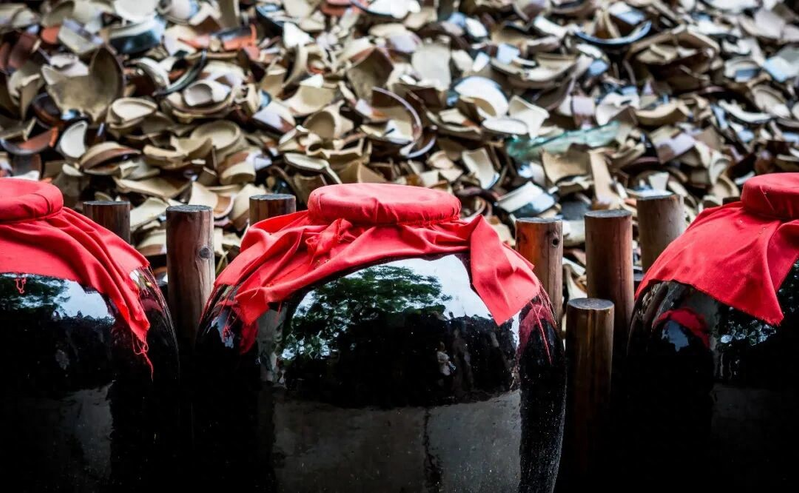
It's not a nuclear thing. It's an anchor of a dynamic culture
The core value of white wine lies in its non-replicable living heritage, as it encompasses both the material carriers of cellars, workshops, etc., as well as non-material elements such as brewing processes, charisma, folklore, etc., and more condensed philosophy and a fine craftsman spirit. It is a prerequisite and a bottom line for research and writing that the departure from the non-remnant is truly alive and will end up in empty piles of cultural symbols。
Policy-level escorts have built the foundations of non-viable life. The state has amended the law on non-retentions, with a central financial investment of more than 11. 38 billion yuan to support non-remains projects, and has promoted the integration of non-remunerations with industry through specialized town-building, special support policies, and a policy system of “legal security, financial support and orientation”. This policy orientation makes it clear that the non-incorporation of white wine requires a path of “protecting and developing together, integrating tradition with modernity” and provides institutional support for research and writing. Business practices are also remarkable, for example, the promotion of white wine brewing, the history of 452 years of uninterrupted use of old cellars in the old cellars of chuzhou, and the creation of a drinking culture area by the grain fluids, which in 2025 brought in millions of visitors。
Studying as a bridge to build a closed circle of technical awareness
The core value of research lies in breaking the cognitive barriers between white wine and the general public, transforming abstract art into a participatory, sensory and understandable process of experience, from “knowledge transfer” to “cultural identity”. Unlike the traditional tour brigade, non-repensive studies aim at “cultural immersion” by making participants witnesses and distributors of the legacy of technology through scenario-building, curriculum design, emotional bonding。
Scene activation is the key to learning. High-quality research landscapes need to be balanced with realism and experience, while preserving the original ecological scene and setting up interactive platforms to visualize abstract art, such as food fermentation, easy hooking and so forth, so that participants can feel the temperature in their own hands. It is also necessary to integrate white wine technology into the cultural elements of the trinational culture, poetry culture, folklore culture, and create “one-stop” study lines that enrich the level of cultural experience。
The specialization of the curriculum system determines the depth and value of research. A good research curriculum is not a simple process of interpretation, but a transformational chain of cultural genes-education scenarios-value output. The integration of white wine brewing processes with non-removable skills, vocational education, through co-industries and development of specialty courses, enables the development of professional skills for the industry and tailors the curriculum to different audiences, allowing different groups to acquire exclusive cultural knowledge in their studies. At the same time, the transfer of technology is made more contagious through the compilation of cultural books, the discovery of celebrity stories and the injection of emotional cores into research. In the past year, for example, the heiner institute and the chinese wine industry have developed an innovative “five-study” learning system, which combines theoretical depth with practical precision and creates a closed circle of growth。
The creation of the wings and the contemporary transformation of the value of technology
If research solves the problem of “detected”, it achieves the extension of the value of “taken away” and “discovered”. At the heart of the white wine legacy is the balance between cultural translation and practical value, both in terms of the deep excavation of non-relict elements and in keeping with contemporary life scenes and aesthetic needs, and in order to avoid falling into the wrong zone of “homogenization”。
The key to cultural translation is to extract transformational symbols from the inside of the technology. There is no place for white wine: the sculpture of the cellars, the form of wine music, the sequence of brewing, the matchmaking, and even the spirit of the human being, can be a source of inspiration for creative design. This transformation is not simply a sign of logo, but rather an integration of cultural content into product functions, such as combining the culture of the tristars with white wine, introducing custom-made creations of alcohol, enabling the rejuvenation of cultural objects and the transfer of technology to each other, integrating mackerel paintings with brewing, and developing visual and practical creations that add value to “one multi-power”. At the same time, the rise of digital innovation has provided new pathways for non-removable transmission, such as the ar cellar roaming system, digital collections, etc., to reach out to the general public in a younger form。
The ultimate value of the creation is the virtuous circle of “consumption-transmission-revolution”. High-quality creative products are not only cultural vehicles, but also communication media, such as consumer purchasing processes, which are essentially cultural identity and consumption; and their use and sharing in everyday life, which in turn is an invisible channel for non-incorporation. This transformation, which has allowed white wine to move from a wine factory to a popular life, from industrial resources to cultural ips, has increased the value added of products, as well as the social impact of technology, and has injected sustained market dynamism into non-genetic heritage。
They do not exist in isolation, but rather in a mutually empowering and synergistic ecosystem. It provides a core cultural core for research and writing, determining the authenticity and uniqueness of content; it provides inspirational sources and user feedback for creativity, making it more relevant to market demand; and it extends the empirical value of research, while at the same time feeding on the preservation and inheritance of legacy, creating a closed circle of “protective development, protection in development”。
The “living now” of the white wine millennium is essentially a dialogue and symbioticism between traditional culture and contemporary life. The “inherited + research + writing” model allows white art to move from closed workshops to an open society, from a single industrial resource to a diverse cultural vehicle. When the millennia fragrance meets the experience temperature of research, when the ancient art is integrated into the contemporary expression of creation, the white wine is no longer an empty history, but a living force that nourishes life, conveys culture and empowers the future, continuing the new chapter of the millennium in the tide of times。



