"3500 a month, so don't be like a rich kid!" however, the childcare information access behavior report published by the american paediatrics society in 2024 shows that more than 70% of parents choose child-rearing content with the most emphasis on both “whether content is based on authoritative guidance” and “whether the shareholder has actual child-rearing experience”, which is not about money。
As parents of ordinary families, we may not have substantial material resources, but research shows that the quality of family education is far more predictable than economic conditions for the future success of children. The eight parenting common senses presented today do not require additional financial investment, but simply adapt our attitudes and behaviours to make our children happy and productive。
1. Satisfaction: so that the child can experience both satisfaction and acceptance
Many parents fear that their children will suffer and that they will meet their needs immediately. But have you ever thought that this excessive growth would make children less resilient to setbacks。
Properly allowing a child to experience a “waiting” “failure”, such as toys that need to save enough money to buy, and competition that loses to accept their own results, will help him learn to face reality and develop the capacity to solve problems. The key is not to be satisfied immediately, but to teach children how to achieve their goals。
When a child makes a demand, it is not simply “yes” or “no”. For example, when a child wants a new toy, he can be helped to develop a savings scheme that allows him to buy it through household chores. The process itself is more valuable than getting toys。
Level of evaluation
Kids need to be encouraged to build their self-confidence, for example, "you're doing a great job of packing your school bags today," but a twirling rainbow fart would make them blind。
When a child makes a mistake, such as lying or bullying a fellow student, instead of accusing him of “how bad you are”, the question should be made clear: “leave lies won't trust you, we should be honest”. An objective self-evaluation by the child is possible only with praise and correction。
Praises the effort, not the gift, and criticizes behaviour, not personality. When the child did well, he said not “you're smart”, but “i see you've done a lot of work for this examination”. This way of evaluating children is to make them understand that success is linked to effort rather than to fixed talent。

Autonomy and borders
Many parents either arranged everything for the child or were completely “released”, both of which were detrimental to the child's growth. The right approach is to allow children to make their own choices within safety and principles。
For example, “do you want to wear blue or gray socks today”, “do you want to go to the park or the library on weekends”; but if there's a problem with a child's decision, such as “do you want to play with a mobile phone if you don't want to do your homework”, then you have to guide the child in time and tell him, “this is the rule. It gives the child autonomy and teaches him responsibility。
This sense of boundaries is essential for children. He knew the scope for free choice and the circumstances in which rules must be observed. Such a clear line would instead give children a sense of security。
Options appropriate
Some parents thought that “let the child choose” was respect, so they asked the child to pick out a dozen items when buying clothes, and at dinner they asked whether they wanted rice, noodles, dumplings or pizzas, and then the child was in trouble for half a day, even crying and unable to choose。
The child's judgment is still developing, and too many options can drive him into anxiety. Let's narrow down the options, like, "the red one, or the yellow one," "let's eat some noodles or dumplings." modest options foster decision-making power, and excessive choices only create anxiety。
Experienced early childhood teachers speak to children, with short sentences and little additional content, mainly with single sentences. The same applies to the choice given to the child: simple and clear, with no more than three options。
The balance between independence and recourse
Many parents either “grow their hands in their clothes” or require that the child “must be independent and not dependent on others”, both of which are not good. We're going to teach our children independence, like wearing their own clothes and organizing their stationery。
However, it is important to tell the children that it is not a weak, but a smart, approach to problems that they cannot solve themselves, such as bullying and not doing things, and to seek help from parents and teachers. (b) fostering independence and healthy interpersonal awareness。
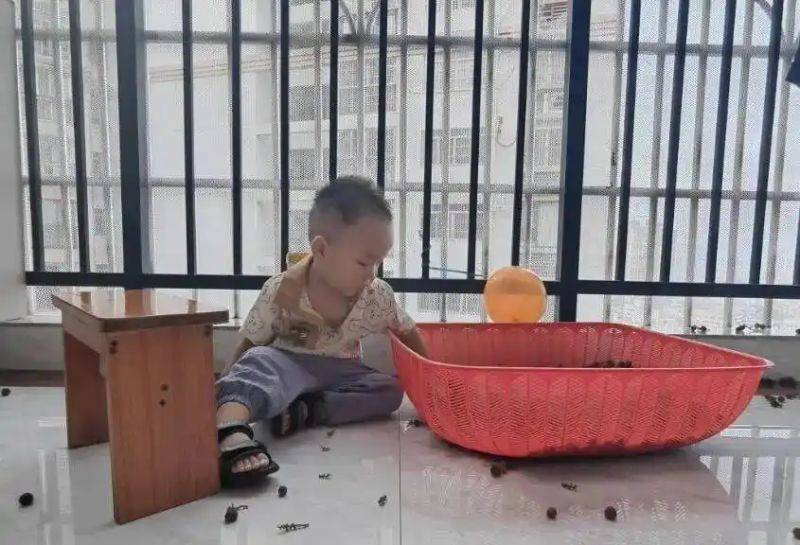
We must respond positively and in a timely manner when children call, ask, talk, or even speak to themselves. Because language is gradually mastery and mastery in communication and application, children can often exercise their language expression in an interactive environment。

Family participation
Some families favour the child as a “centre” and the whole family surrounds him; others feel that “the child is small and has nothing to do with the family”, leaving the child without a sense of belonging。
In fact, a child is considered a “full member” of the family: for example, he is asked “what he wants to buy today” at dinner, he is asked to help with the table while cleaning, and even when there is little decision-making at home, such as whether to visit grandparents on weekends. The involvement of the child in family matters is necessary to foster a sense of responsibility and belonging。
This sense of participation is not built overnight. From the moment a child understands the language, we can consciously involve him in family discussions, even if he may not yet understand the content of the discussions. What matters is the sense of “i am a member of the family”。

Parent-child relationship
Many parents are either “brothers” with their children, without rules, and the children say whatever they want; or they are always face-to-face and distance from the children. A good parent-child relationship is supposed to be "friend-like intimacy, paternal guidance"。
He can play games with his children, talk animated films, and make him feel free to speak to you; but when a child makes a mistake and touches the rules, he must also firmly point out the problem, and he cannot compromise because he is afraid of breaking the relationship. Warm gives children a sense of security and firm rules。
Early childhood teachers are always vocal and even exaggerated in communicating with their children. This dynamic tone and tone will impress the child and inspire his imitation. The same applies to parent-child communication, which requires real emotional input。
Parents love themselves
Many parents feel that “100 points must be achieved” in order to have a good child: they can't watch their cell phones while they are with their children, they can't lose their temper and they have to be tough when they are tired。
Over-expanding perfection not only exhausts parents, but also conveys an anxiety to children that “fault is failure”. Parents don't have to pretend to be perfect: sometimes they say to their children, "mom is a little tired today and wants to take a break," and then they say to them, "mother shouldn't yell at you, let's do it slowly."。
Accepting their imperfections and living in a state of happiness and love is the best role model for children. It's good to be real。
The three core challenges for parenting bloggers are not poor quality of content, but a failure to grasp user needs with precision. Similarly, the central challenge of parenting is not perfect parenthood, but real and growing parents。
# my sports day-to-day cards # # raising children is never an “arms race” # # no need for money and anxiety. # for ordinary families, the inclusion of these eight common senses in everyday life, accompanied by patience and guided by wisdom, is one of the most solid gifts for children。
After all, what children really need is never “the best thing”, but “the best of parents”. When we are able to exercise these common senses of parenting in a peaceful and firm manner, we will find that raising children is no longer a heavy burden but a precious journey to grow together。