


"it's a shame to be idle for almost five months in san park." during these two days, li zhonghua, the head of the family farm in the village of chitang, the city's head town of ha'an, used the winter season of san park to plant corrosively in the san tree range to form a three-dimensional culture model of “sang+ fungus”。
In recent years, our city has been building on the requirements of the new era's “baskets”, based on the wealth of agricultural resources, to continuously broaden food sources, improve supply networks and stimulate the potential for the cultivation of edible bacteria: from sea an's twin mushroom “shroom village” to the sheep's belly, such as the mushroom growing base, the mushroom industry has gradually moved from size to high value, ecologicalization and internationalization, creating a path to modern agricultural development that is productive, resource-efficient and rich。
Continuous expansion of mushroom maps
On 9 january, more than 200 acres of mushroom sheds on the family farm of mingsung mushrooms moved through the town's coastal communities in ruhuang city. Under the black membrane, the fungus of the sheep's belly is spreading quietly, and in more than a month's time, its head will come out of the ground. The head of the farm, li myung, traveled and watched carefully。
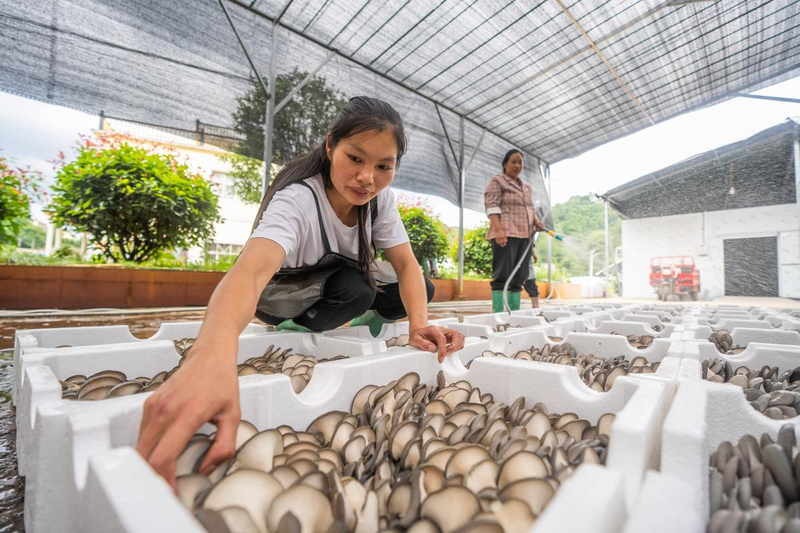
In the past, southern fungus mushroom cultivation was dominated by single varieties, but today it is “spreadless”. From the "one village one" mushrooms in feng fei village in the seagate district, to the sheep's belly in the town of hai an liburg, to the grass mushrooms, the twin mushrooms in the east... In recent years, the emergence of a special planting base has led to the continuous expansion of the mushroom map, resulting in “multi-point flowering, global coverage”。
The richness of the variety has led directly to a leap in efficiency. “at the beginning of the market, a kilo of mushrooms could sell to more than 200, and the price of mushrooms was two to three times higher.” li ming described how he could produce 700 to 900 kg of acre during the harvest season. After being sorted and cleaned, some of them go straight through the cold chain to the domestic high-end coastal market and to the american and european table, while the other part enters the drying workshop and converts them into dry and durable items of increased value。
The value-added space of the mushroom industry is also hidden in the “circle of fields”. “this season of sheep’s belly is being planted next november and will be fully harvested by may this year. In the gap between may and october, when we leave the shed, we'll pick up beans, pickles, etc.” in the specialty growing base of the village of zhuang zhuang, for example, in the town of kutang, east county, a ditch of vegetables has been set aside. Chen jie, the seeder of the sheep, described the nutritional kit of the sheep’s belly, the residue of mycelium and the base nutrients of the harvested field as sufficient both to inhibit the growth of the fungus and to “natural fertilizer” for the follow-up cultivation of the soybeans, small vegetables and vegetables of good quality and high prices。
Technology upgrading to leverage industry value added
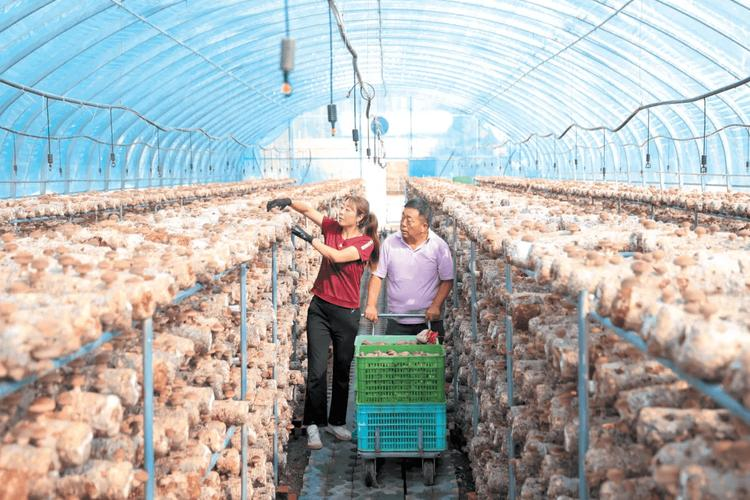
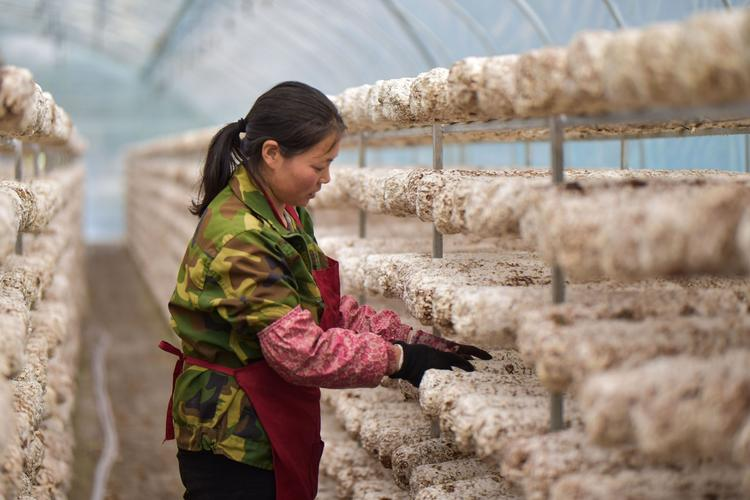
In early winter, more than 200 acres of fragrance fungus and mushroom production sites were fragranced in kaidong city. On a row of “smooth beds”, brown little mushrooms look out of their heads, and they're beautiful. Surprisingly, they do not grow from the soil but are directly rooted in fermentation。
“before growing mushrooms, it was necessary to find soil, sifting soil, covering soil, and time-consuming and difficult to retrieve soil.” five years ago, the chief of the chinese fungus industry, lin jianwei, discovered that soilless cultivation, which took only 18 days to harvest, reduced production cycles by almost one month compared to traditional patterns, saved one third of the labour force and produced two times more grass mushrooms than ordinary mushrooms. Currently, the company's “a soil-free method” has applied for an invention patent to enter the substantive examination phase。
The key to soilless cultivation is precision control of temperature and humidity. In order to ensure optimal growth conditions for mushrooms, the base sheds are equipped with specialized temperature control and wetting equipment. Temperatures have declined and the temperature differentials have increased, and 26 new boilers have been purchased at the base, which warms mushrooms at night。
On the open ground by the greenhouses shed, trucks are unloading, and black bacteria are piled up in small mountains. “this is the waste from the quinshan mushroom cultivation base, which we collect 70 tons a day and consumes about 20,000 tons a year.” forest jianwei said that slags of wood fungus such as almond mushrooms, after crushing and fermenting, become a high-quality culture matrix for mushrooms to grow, rich in nutrients and low in cost, and that the waste matrix after growing mushrooms can be used further for composting and becoming organic fertilizer for staple food crops. The “two mushrooms per meal, recycling” model not only solves the problem of slag pollution, but also constructs a “screen-screen-screen-organ fertilizer” cycle chain that makes agricultural waste a waste。
Stereo symbiotic activation multiplier effect
For example, in the village of fulbright in the town of toung county, jiangsusingda agricultural technology ltd., a model of “growth-up” was highlighted. Overlooking the company's production base from the air: the hot, hot, wet and high standard mushroom sheds are organized in such a way that the solar panels on the roof are glowing in the sun and constitute a 3d view of “power generation on top, ground mushrooming”。
The head of the base described “micro-complementarity” as a clever combination of fungic mushrooms and the advantage of photo-voltaic shades, making full use of the space above the shed for the construction of photovoltaic panels for power generation projects and the development of land resources。
More crucially, this model breaks down the energy pains of mushroom cultivation. "the edible fungus, though afraid of light, cannot be produced without electricity!" the officer-in-charge stated that, from material shredding and mycelitis cultivation to mushroom management, constant temperature, constant humidity and precision control of oxygen were required throughout the journey and that annual electricity consumption was significant. At the end of may last year, the hpv project was officially operational, generating 9. 5 million kilowatt-hours per year, not only to meet the full demand for electricity from the base, but also to generate millions of dollars per year through photovoltaic。
There is a double gain from the dual industry: in the production of mushrooms, each shed produces 175,000 kilograms of mushrooms per year, with a value of approximately $250,000. In the area of photovoltaics, annual electricity generation is 9. 5 million kwh. At the same time, the dividends of industrial development continue to benefit neighbouring villagers. The lead enterprise plays a “leading” role, with village groups benefiting from protection through the rental of mushroom sheds and photovoltaic power generation, villagers using land to share and provide labour... Multiple channels have been used to increase the “money bags” of village groups and farmers. According to statistics, the base, which employs more than 20,000 people annually, has solved the employment of more than 200 people and has led to the development of complementary industries, both upstream and downstream, such as mushroom cultivation, processing, packaging and transportation, which have not only widened the network of diversified food supplies, but have also made the transition from traditional to modern agriculture, making “small mushrooms” truly “large industries”。



