The recruitment software was opened, and almost all finance posts were marked "priority of holding accounting certificates" ; attempts to move into the financial field were blocked by "uncertificate"; even in the case of staff members, promotion was difficult because of lack of certificates. Many people, with the idea of taking an accounting certificate, are stuck in the first step of "not knowing where to do it" -- they don't know what level they meet, they don't know the priorities of the examination, and they don't find an efficient way to prepare for it. In fact, the 2025 accounting certificate examination has clear application rules and preparation logic, whether it is a zero-basic newcomer or a professional who wants to move forward, and it can be less crooked by touching the door. This document collates the latest examination information, from the conditions of registration to the details of the pre-test, and helps you to clearly chart the path to the certificate。
It's a bit painful. Here's the grade guide
Newly graduated candidates who wanted to take an accounting certificate but did not know whether their qualifications met the requirements; three years of work wanted to take a mid-level examination, with no certainty as to the length of their service; and non-accountant transitions, with concerns about limited professional background. These doubts have caused many people to be slow to start preparing for the loss of time。
The key to resolving this issue is to establish clearly the classification of accounting certificates and the corresponding qualifications for the examination. Current mainstream accounting certificates are divided into primary and intermediate levels and meet the basic requirements (good professional ethics, basic accounting knowledge, etc.) subject to educational qualifications and length of service. At the primary level, it is required to graduate from upper secondary school and above, without a limitation on the length of service, and to apply for admission to school. At the intermediate level, there is a requirement for a definite period of service depending on the academic qualifications: a university degree must have completed five years of accounting, a master's degree of four years and a doctorate of one year。
It should be noted that, on 31 december 2025, the number of years of work is calculated, and the number of hours before and after the attainment of a full-time qualification is calculated cumulatively, while full-time studies are not counted as years of work. In addition, mid-level candidates are required to complete three consecutive years of continuing education, prior to enrolling in the relevant documentation. In the case of a master's or doctoral degree in accounting, the mid-level examination is also exempt from the subject of " financial management " , provided that the application is submitted and approved at the registration platform。
It hurts a little bit. Breakout
Many of the candidates who took the course were caught up in a "full focus": the entries of the accounting practice were forgotten, the law on the economy was confused and the financial management formula would not be applied. A great deal of time is spent daily on reading, while the correctness of the issues is not high and the preparation for the examination is slow。

The core solution is to develop targeted strategies by subject characteristics. The examination for the first examination, " practice of primary accounting " and " basis of economic law " , is one-off; the examination for the intermediate examination, " financial management " , " practice of middle accounting " , can be completed within two years。
The accounting practice (primary/intermediate) focuses on understanding and application, with a primary focus on basic chapters such as assets, liabilities, etc. (over 60 per cent) and at mid-level, adding complex elements such as consolidated statements. The core concepts, such as accounting equations, loan bookkeeping and so forth, are taken into account in the preparation process, which is reinforced by a large number of journal exercises, and it is proposed to use “protocolal decomposition” to analyse complex operations in a step-by-step manner. The economics act has a lot of memory and does not have a hard-on-the-ground memory. It is based on the logic of the legal system - core law - practical case, with different colours to mark the hf test point and to understand the application of the rule in the context of life examples. Financial management (intermediate) focuses on formula application, which requires an understanding of formulae extrapolation logic, followed by practical exercises to capture computational methods in different scenarios, and recommends the consolidation of the “formula manual”, which points to formulae applicable to the subject and error prone points。
Question-and-answer session 1: questions and answers to common examinations
Q: can i pass an accounting certificate when i graduate from non-accountancy and have no work experience
Response: primary accounting certificates are available. Primary examinations do not require a professional background, but only a post-secondary degree and above, with no limitation on the length of service. It is recommended that the intermediate examination be considered after the initial examination has been completed. Accounting concepts can be understood more in the light of actual cases, making learning from non-professional backgrounds less difficult。
Q: how does the length of service at the intermediate examination prove? What information is required
Response: a self-signed accounting work experience commitment is required, and some sections will require uploading of materials such as a certificate of continuing education. The length of service is calculated on the basis of the total amount of time spent on accounting before and after the attainment of the academic qualifications, the amount of time that part-time candidates can devote to working time, and the offshore accounting experience of foreigners. The registration process must ensure that the collection of information is completed and that the material is properly regulated so as not to compromise eligibility for the examination。
It hurts a little bit. The third degree is more efficient

Many of the pre-screening examinations were unplanned, either with delays in the advance or with surprises, or with a blind brushing, neglecting the basis, and close to the examination found gaps in knowledge points and anxiety. In particular, in-service candidates, time fragmentation makes balancing work and learning more difficult。
A three-step review of the law, which has been validated by the field, can effectively solve this problem. The first stage (30 days) lays the groundwork for reading the teaching materials and marking the core points of the examination outline, completing the chapter companions, focusing on basic concepts and simple applications such as the calculation of vat in the basics of economic law at the primary level and the basic entries in accounting practice. The second phase (20 days) covered gaps, with specific breakthroughs in error and markings for the first phase, such as budget management for mid-level financial management, depreciation of fixed assets in accounting practice, which could clarify the linkages between the chapters through a “mapping of points” knowledge framework. Phase 3 (10 days) sprint simulations are conducted, year-by-year reality and simulations are performed over the length of the examination, familiar with the machine test process, and the response rhythms are adjusted while reverting to the high-frequency test points of the teaching materials to avoid forgetting the underlying elements。
In-service candidates can use the economics act for early and late shredding of time to focus on subjects requiring in-depth reflection, such as accounting practice, financial management, on weekends, with a half-day per week set aside for learning back-up and flexibility to adjust the schedule。
#4: the process is complicated, afraid of missing key points? Step action list
No official entry points were available at the time of registration, the information-gathering process was unclear, and the deadline for payment was forgotten... Every year, candidates miss their exams because of process problems, for a year in vain. In particular, secondary examinations involve information gathering, continuing education clearance, etc., and are more cumbersome。
The registration of accounting certificates is subject to a three-step process of "preparation - reporting - contributions". First, pre-academic preparation: registration and information gathering, updating of education, work experience, etc., on the national platform for the unified service management of accountants, secondary candidates are required to ensure the completion of three consecutive years of continuing education and the preparation of supporting material and the accounting experience commitment. The second is to fill in on time: initial registration usually takes place in january-february of each year, mid-level in june-july, the platform selects the level and area of the examination, uploads the required material and submits the information after confirmation of correctness. Final and timely contributions: the deadline for primary and intermediate contributions is usually a few hours after the closing of the entry channel, with a cost of approximately $56 per section at the intermediate level, and no refund after the successful payment of the contribution, after careful verification of the information, before payment, and after the contribution, after printing the financial electronic paper。
It is proposed that two reminders be set for the registration deadline and the payment deadline, so as to avoid inadvertent missed time. After registration, regular check-ins are made on the platform and there are problems in contacting local registration agencies in a timely manner。
Question-and-answer session: questions on preparation and examination details
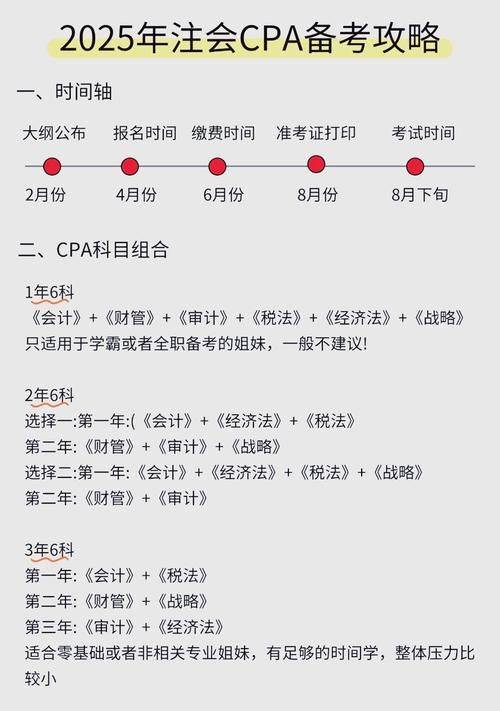
Q: do you need to buy a lot of teaching materials and materials for the study? What is more useful
No more information is needed, and the focus is on official teaching materials, examination syllabuses and calendar issues. The material is based on the latest version, and the outline provides a clear focus and avoids futility. The real question suggests a choice of nearly three years, which would help to familiarize you with the problem. In addition, a mischaracteristic and subject-specific notebook, such as the summary of entries in accounting practice, the formula manual for financial management, could be prepared without recommending blind purchase of various tutorials to avoid an increased learning burden。
Q: how can we respond to the risk of error in the performance of a flight
Response: simulation systems that are available on official platforms or training institutions can be tested prior to the examination and are familiar with the answer interface, formulae input, tagging topics, etc. The examination is conducted by browsing the entire volume and by rationalizing the time allocated for answering questions in various subjects, such as mid-level accounting practice 165 minutes, financial management 135 minutes, economics act 120 minutes. In the event of an uncertain subject, mark it first, give priority to certain content and avoid delays in dealing with an issue. At the same time, care is taken to preserve the answers in a timely manner and to prevent the loss of data as a result of sudden system problems。
The accounting certificate examination is essentially a test of “method + persistence”, which is difficult to imagine, but it also needs to avoid the errors of blind preparation. Whether it is a newcomer who wants to enter, or a professional who wants to move forward, it is possible to move closer to the certification target, if the target is clearly defined against the conditions of the examination, and the time is planned using the pre-screening method。
What stage are you at? Is there a problem with the level of the examination, or is there a specific difficulty in starting a review? You're welcome to share your situation in the comment area and share your problems. If it is felt that the attack has been used slightly, it can also be forwarded to a friend in need, who will be urged to prepare for the examination。
# finance # # accounting