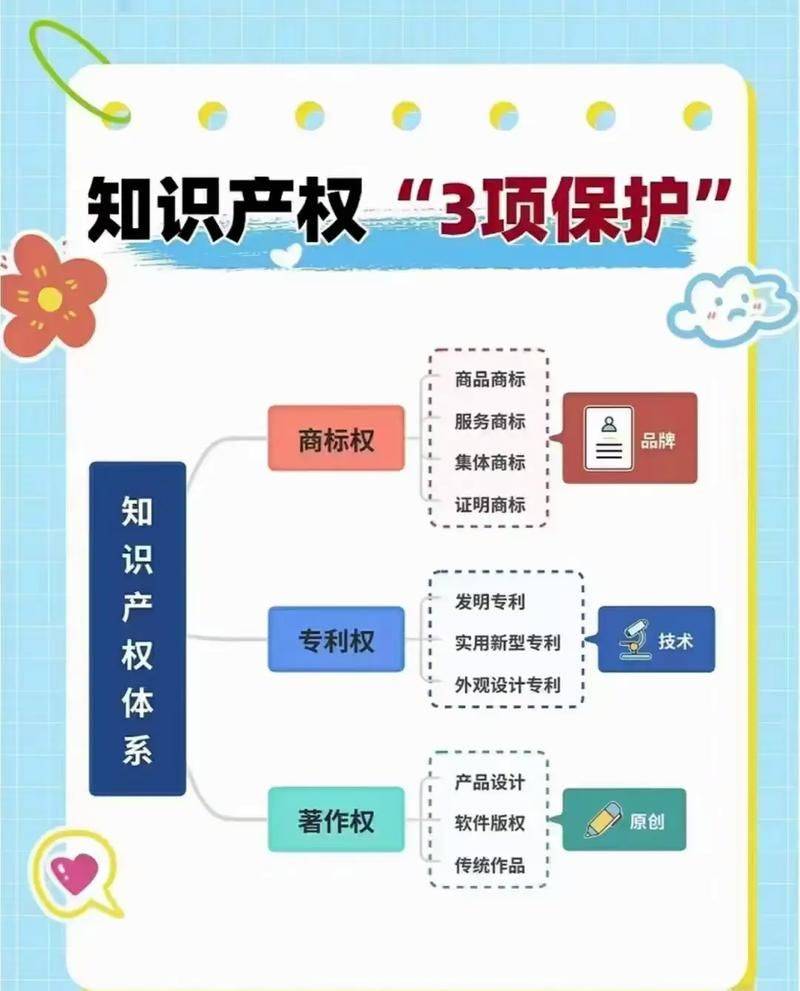
In the era of information about technological adjustment and development, knowledge has gained visibility and the consequent importance of intellectual property protection has grown. Compared to developed countries, china has started to protect intellectual property rights at a relatively late stage, drawing on the positive experiences of its largely sophisticated intellectual property law systems, and has gradually established an intellectual property law and protection regime since the 1980s. At the same time, since the protection of intellectual property rights has become a common concern in international political, economic, scientific, technological and cultural exchanges, china has stepped up the pace of international cooperation while constantly improving its laws. Intellectual property is an intangible property right, also referred to as the right to intellectual property. It refers to the results obtained through intellectual creative work and is the exclusive right of intellectual workers to the results in accordance with the law. This right includes personal and property rights. Traditional intellectual property is often divided into two main parts, namely industrial property and copyright. Copyright is also known as copyright. It refers to the personal and property rights of authors in relation to the work they create. The author's property rights, which arise from the author's publication, transfer or licence of the author's work, are transferable, unlike the author's personal rights, which are non-transferable. As a result of the rapid development of modern science and technology, the intellectual achievements of new technologies are constantly being created, and a series of new intellectual property rights (iprs) have been added to intellectual property rights (iprs) that protect the object in the broad sense of the term, which can include all intellectual creations of human beings, the interpretation of which is still controversial internationally, but the narrow scope of intellectual property rights has been accepted by the majority and consists mainly of three elements: trademark rights, patent rights, copyrights. Intellectual property rights are rights recognized by the state through legislation, and the legal rights of intellectual property rights holders are guaranteed by the law. As intellectual property law is deeply alien in nature, it is important, while improving our intellectual property law, to pay close attention to the state of intellectual property construction in the world and to keep abreast of the latest international developments in order to adapt to the situation of the country's deepening reforms, which has gained prominence in the information age of scientific and technological adaptation, with the consequent growing importance of intellectual property protection. In comparison with developed countries, china's intellectual property rights protection started relatively late, drawing on the positive experience of the country's largely well-developed intellectual property rights legal system. Since the 1980s, china has gradually established its intellectual property law system and protection system. At the same time, since the protection of intellectual property rights has become a general concern in international political, economic, scientific and cultural contacts, china has stepped up its efforts to cooperate with international cooperation while continuously improving its national legislation. Intellectual property is an intangible property right, also known as the right to intellectual property, which refers to the results obtained through intellectual creative work and is the exclusive right of intellectual workers to such results under the law. This right includes personal and property rights. The right to the person means that the right is indissociable from the person of the person who has acquired intellectual fruits and is a legal reflection of the person's relationship. The right to property is recognized by law as the right of a person to be paid or rewarded for the results of intellectual work. This right is also referred to as the economic right. The object of intellectual property protection is the creation of the human mind, the human mind, the intellectual creation of the human being and the intellectual creation of the human being. It is the right of a person to the intellectual production of all intellectual activities in the fields of science, technology, culture and the arts. Intellectual property is a legal concept widely used internationally. Ii. Characteristics of intellectual property. (1) intellectual property is the object of an intangible property right, i. E. The intellectual product, and a physical and intangible spiritual asset. The non-materiality of the object is the essence of intellectual property and the most fundamental difference between that right and ownership of tangible property. (2) the exclusive intellectual property rights (iprs) of intellectual property are a proprietary civil right, which is as exclusive and absolute as ownership. However, since intellectual outcomes are products of spirituality, the effects of iprs differ from those of ownership. Intellectual property is exclusive and manifests itself mainly in the following two aspects: (1) the exclusive possession of intellectual property rights by rights holders, the monopoly and strict protection of such exclusive rights by rights holders, and the right not to use the intellectual achievements of rights holders without legal provisions or authorization from rights holders. For the same intellectual result, intellectual property rights with two or more of the same attributes are not allowed to coexist. For example, two identical patent applications for inventions may be granted only to one of them under the law, and subsequent applications for inventions cannot be granted without outstanding substantive features and significant advances compared to existing technologies. (3) the spatial effects of intellectual property rights, as an exclusive right, are not unlimited, but are limited by their territoriality, i. E., strictly territorial, and their effects are limited to the national territory. Intellectual property, an intangible property right that is distinct from tangible property, is recognized and protected under the law of a state and can only have legal effects in that state. With the exception of international conventions or bilateral reciprocal agreements, intellectual property rights have no extraterritorial effects, other extraterritorial states have no obligation to protect such rights, and any extraterritorial person may freely use that intellectual product in his or her own country without the consent of the right-holder or the payment of remuneration to the right-holder. In order for an intellectual property right to be protected by law outside the country, an application or registration must be submitted to the requesting state in accordance with a joint international convention or agreement between the parties. Otherwise, it is not protected by foreign law. Moreover, the invalidity of an intellectual property right in one country does not in any way affect the effectiveness of the intellectual property right acquired in other countries. (4) while the temporal law of intellectual property gives creators exclusive rights over spiritual outcomes, which in turn inspires the interest and confidence of creators to continue their creative activities, there is no doubt that the dissemination and wide application of spiritual outcomes will have an impact. Intellectual property rights, which have temporal characteristics, are automatically extinguished once they have exceeded the period of validity prescribed by law, and the fruits of knowledge are translated into the common wealth of society as a whole for the common use of all humanity. This feature is one of the main differences between intellectual property and tangible property. Where intellectual outcomes are protected by intellectual property rights, such as copyrights, patents, trademarks and so forth, the law sets separate time limits for each specific intellectual property right and the protection of rights varies. Patents for inventions are 20 years and patents for practical new types of patents and visual designs are 10 years from the date of application. Copyright rights are relatively long and, in our country, are defined as the author's life and 50 years after his death, in some countries as the author's life and 70 years after his death. Traditional intellectual property rights (iprs) are often divided into two major parts, namely industrial property and copyright. Copyright is also known as copyright. It refers to the personal and property rights of authors in relation to the work they create. The author's property rights, which arise from the author's publication, transfer or licence of the author's work, are transferable, unlike the author's personal rights, which are non-transferable. As a result of the rapid development of modern science and technology, intellectual achievements of high-tech technologies are constantly being created, adding a new set of protected objects to intellectual property rights. The agreement on trade-related aspects of intellectual property rights (trips agreement) of 15 april 1994, whose intellectual property rights include: 1; copyright and related rights 2; trademarks 3; geographical indications 4; industrial design 5; patent 6; map design of integrated circuits 7; and protection of undisclosed information, primarily business secrets held by business operators and technical secrets. The right to control literary, artistic and scientific works that restrict competitive conduct in agreement licences falls under the copyright category; the right to perform, record and radio programmes in proximity to copyrights, known as neighbouring rights; inventions (patents), industrial designs, trademarks, service signs, business names, geographical indications, etc., fall within the scope of industrial property rights. The design of integrated circuit maps, information, etc. Have become new elements of intellectual property protection as science and technology evolve rapidly and rapidly in all fields of technology and as intellectual property protection expands, expands and deepens. Protection of industrial property may also be considered against unfair competition or control of unfair competition. The term “industry” in the concept of industrial property is to be understood broadly to mean not only property rights in movable or immovable property related to industrial production. Industrial property rights refer to the right to productive property through intellectual creation, and thus include both the right to intellectual production in relation to industry and the right to intellectual creation in relation to areas such as agriculture and mining. Thus, the related trademarks, service marks, business names and labels, and the suppression of unfair competition, all fall within the scope of intellectual property rights. This is the subject of protection of intellectual property rights under the relevant international conventions。with the rapid development of science and technology, the scope of intellectual property protection has expanded and new intellectual achievements, such as computer software, bioengineering, genetics, new varieties of plants and the olympic emblem, are emerging and are also being protected by intellectual property rights recognized by the nations of the world today. Legal protection of intellectual property rights the broad scope of intellectual property rights (iprs), which may cover the fruits of all intellectual creations of human beings, is still subject to international controversy, but the narrow scope of intellectual property rights has been accepted by the majority and consists mainly of three elements: trademark rights, patent rights and copyright rights. Intellectual property rights are rights recognized by the state through legislation, and the legal rights of intellectual property rights holders are guaranteed by the law. The protection of intellectual property rights is generally understood as the so-called "two-track system", a means of enforcing administrative law in our country more than abroad, and the institution of litigation. Double-track refers to administrative enforcement and litigation. The meaning of intellectual property protection should include at least five aspects: (1) legislative protection. Without legislation to establish its legal status, there is no intellectual property status, intellectual property rights, there is greater reliance on legislation, there is no legal title to intellectual property without legislation, and there is no legal status for creators and rights holders. (2) administrative protection. It refers to administrative penalties imposed by the state administration for serious violations of intellectual property law. (3) judicial protection. Judicial protection means judicial protection of intellectual property rights, including civil, administrative and criminal. Judicial protection also includes criminal proceedings. Judicial protection of intellectual property rights is the criminal, civil and administrative means of holding offenders criminally and legally liable, as well as the administrative proceedings brought by the punished person before the people's court, the judicial review of administrative enforcement, support for proper administrative enforcement, and redress for incorrect and flawed administrative enforcement. That is the whole meaning of judicial protection. (4) collectively regulates the protection of intellectual property rights. Collective organization management protection is a feature of intellectual property rights. (5) self-relief of the owner or other interested person. Self-help means a sense of self-protection as a right-holder. These are the five areas where the protection of intellectual property can be effective only if there is penetration, synergy, an integrated system, integrated governance and a solid defence line. In this way, violations can be stopped and sanctioned in a timely manner. Patent, trademark and copyright laws are the main components of intellectual property law in the relationship between the three sectoral laws on intellectual property protection. It is essential to be familiar with the relationship between the three sectoral laws. (i) the three sectoral laws on copyright protection of intellectual property primarily protect the rights of authors of literary, artistic and scientific works, encourage the creation and dissemination of works that benefit socialist spiritual and material civilization and promote the development and prosperity of socialist cultural and scientific undertakings; the law on trademarks strengthens, inter alia, the regulation of trademarks and the protection of the right to exclusive use of trademarks; guarantees the quality of goods and services and preserves the reputation of trademarks; safeguards the interests of consumers, producers and operators and promotes the development of a socialist market economy; and the law on patents primarily protects the patentability of inventions, facilitates the promotion of inventions and promotes scientific and technological progress and innovation. (ii) the relationship between patent and copyright law. They focus on intellectual achievements in the field of protection of practical technologies; and intellectual achievements in the field of cultural protection. In the field of practical technology, patent law protects programmes for the implementation of technology developed on the basis of one or more scientific ideas or theories, but does not protect those ideas or theories themselves, copyright law protects the expression, expression or protection of some or some scientific ideas or theories; it can be said that patent law and copyright law focus on different ends of intellectual creation in such cases. (iii) the relationship between patent law and trademark law. Patent law protects the methods of production of new products or products, or existing products that are extended by new methods, while trademark law protects the credibility of the source of the product and directs its quality. The same manufacturer would have relied only on the credibility of the trademark exclusively, with the possibility of actually strengthening it through trademark law. At the same time, product reliance on the protection afforded by patent law is likely to result in a de facto extension through trademark law. In many countries, the use of a registered trademark would be considered a violation of trademark law if it were accompanied by the labeling of a patented product on which it was not patented. This provision is based on the actual relationship between patent law and trademark law in market competition. (iv) the relationship between copyright law and trademark law. The words or graphics of a trademark protected by the trademark law must be "identified" so that the public can distinguish between the products of the trademark holder and the same or similar goods originating from other persons. Trademark and copyright laws sometimes protect different ends of the same intellectual creation. Some trademarks are also part of the art or drawings protected by copyright law; they are also protected by trademarks as registered trademarks. On such occasions, however, copyright and trademark rights holders are often not the same. If the trademark holder uses the work of art as a trademark and obtains a right to exclusive registration without the copyrighter's licence, the copyrighter shall have the right to withdraw the trademark as a "proper registered trademark" on his or her behalf. If the trademark holder, by licence of the copyrighter, uses the work of art as a trademark, the right to register exclusive use, once established, has the right to exclude any person, including the copyrighter, from reproducing the same or similar works of art in the commercial flow on the same or similar goods or commercial advertisements. However, the trademark holder has no right beyond that to license or prohibit others from copying the works of art. In addition to the three above-mentioned relationships, there is often a cross-protection relationship between different intellectual law and extended protection for the same object, which generally exists only between copyright law and patent law; bibliography 1; editor-in-chief zheng chengxing; law press 2 1993; editor-in-chief liu chunda, intellectual property law higher education press beijing university press 3 2000; editor-in-chief xu demin, intellectual property law 4; editor-in-chief guo, case analysis of intellectual property law 5; editor-in-chief, civil law science 6; editor-in-chief, people's public security university of china 1 july 2003; and editor-in-chief fian, intellectual property press 1 january 2004