


This may be one of the most popular, long-term and modern, and the easiest-to-eat classic dissemination theories. Compared to use and satisfaction, it follows the changing times, moving away from paradigms; compared to the setting of agendas, it captures multiple topical issues such as older transmission in the current social field, rural revitalization, and technical relief。
The theory that explains the situation in reality and that the tree of theory is green is necessarily the easiest to come to terms with。
Since its introduction in the mid-1990s, the concept of the digital divide has been the focus of attention in many disciplines. Just as the materially rich are the poor, the information society will also have “information rich” and “information poor”。
In fact, the epidemic of previous years has accelerated the process of social “mediaization”, online classrooms, internet shopping, health codes, the growing number of “basics of life” linked to intelligent media, and the “digital divide” derived from the “challengage” has once again become a social theme...
Learning and understanding of the “digital divide” is not only because it is a classic theory of the new imperative but also because it is a concern for social inequality。
Three years
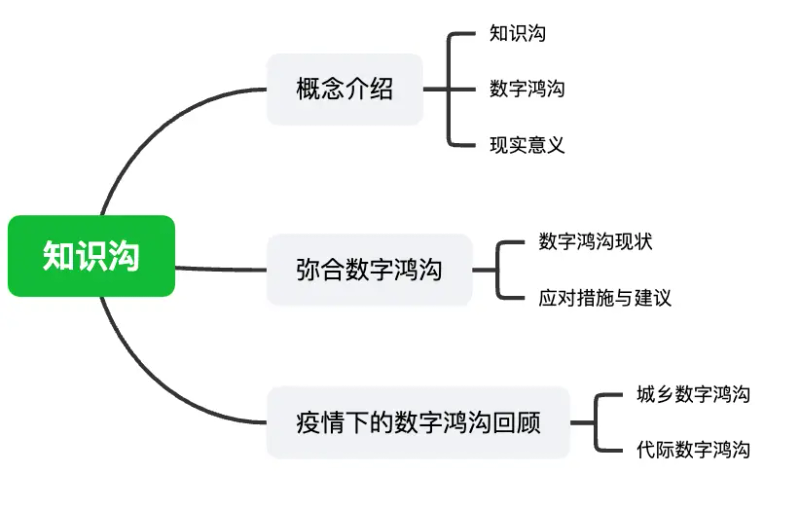
Point frame
01
Concept introduction
Knowledge gap
A hypothesis put forward by united states communicator ticino and others in 1970. The hypothesis assumes that, as the mass media spread more and more information to society, the highly socio-economically advanced will have access to information at a faster rate than the less socio-economically advanced, and thus there will be a knowledge gap between the two groups, known as the “knowledge gap”。
The term knowledge does not refer to professional or advanced knowledge, but rather to knowledge of general information (public affairs and scientific information) reported in the mass media, such as the assassination of the president, human landing on the moon, etc。
In 1974, kazman introduced the information gap theory with a view to the development of new technologies。
The introduction of new technologies will lead to increased information flows and exposure across society。
The benefits of the introduction of new technologies are not equal to all members of society, and those with a higher level of information or greater information capacity are able to obtain more information from the weaker。
New media technologies are emerging and the cycle of renewal is becoming shorter, with trends likely to be uneven and new。
Digital divide
The focus of the knowledge gap theory on transmission and social inequality has given it some criticism. More broadly, the “knowledge gap” is actually a “transmission gap”. On that basis, the concept of the “digital divide” was introduced。
1 definitions
A representative reference to the definition of the digital divide is the definition of the international telecommunication union (itu): “the digital divide can be understood as an inequality in access to new information and communication technologies between poor and rich developed countries due to poverty, lack of modern technologies in educational facilities and illiteracy, between rural and urban areas and between younger and older generations.”
2. Performance
(a) global divide: a gap in access between developed and developing societies
(a) social divide: it refers to the gap between the information-rich and the poor in each country due to race, sex, age, etc.
The democratic divide: the gap between those who use and those who do not use digital resources to engage, mobilize or participate in public life。
3 degrees
The “digital divide” can be illustrated by four differences in access and use of new digital media, represented by the internet。
A: access — internet access and access. Here, the financial barrier is the dominant cause of the information gap, which in turn stems from economic disparities at all levels of society。
B: basic skills — information intelligence in the digital age. The ability to use the internet varies from group to group, as does the benefits。
C:content - refers to online content; the content disseminated on the internet is different. Who leads online products, who has voice and who better benefits from the network。
D: desire (interest) - refers to the motivation, interest of an individual in accessing the internet. This is a microlevel focus on the information gap. There is also a link between interest and motivation and the first three. Together, these four dimensions create a gap between internet users in terms of access to and use of information。
Relevance
At the international level, we still have some gaps in hardware and software compared to developed countries, which should be accelerated, raised across the board and reduced
At the domestic level, we still have regional disparities in new areas of communication, and the government should therefore provide special support policies for less developed regions or low-income groups in terms of "hardware" and promote the availability of hardware facilities。
At the level of three individuals, the gap between different segments of society or groups in terms of "media capacity" is also emerging and tending to widen, and new media skills should be developed and education strengthened in terms of "software"。
02
Bridging the digital divide
Status of the digital divide
The fifty-first china internet development statistics report, published by cnnic (china internet information centre), shows that, as of december 2022, the size of our non-networked population was 344 million, of which non-networked people remained predominantly in rural areas, where they accounted for 55. 2 per cent。
Data show that lack of skills, educational constraints, inadequate equipment and age factors are the main reasons why non-internet users do not have access to the internet. The percentage of non-internet users who do not have access to the internet because they do not know about computers/networks is 58. 2%. The proportion of non-internet users who do not have access to the internet because they do not understand the limitations of literacy, such as spelling; the proportion of non-internet users who do not have access to the internet, corresponding to "basic skills", i. E. Basic skills, is 23. 8 per cent because they are too old/too young; and the proportion of non-web users who do not have access to the internet, such as computers, is 13. 6 per cent. "access", access and access
In today's increasingly up-to-date and efficient communications technologies, the mass communication of information increases both for those with high socio-economic status and for those with low socio-economic status, but it is different that the information divide will continue to widen owing to differences in economic conditions, communication skills, the amount of knowledge stored, social reach, selective access to information and the nature of the mass media。
In the digital divide between rural and urban areas, imbalances in rural and urban development have led to a digital divide, which in turn exacerbates these imbalances and requires adjustments at both the macro and micro levels。
Response measures and recommendations
1. Government regulation to improve hardware facilities and promote rural hardware infrastructure。
While promoting new infrastructure in cities, strong efforts have been made to strengthen the landing of new infrastructure in rural areas, so that development gains are shared among the people and good infrastructure is created for “internet+industrial poverty alleviation”. Through the development of information infrastructure, equal communication opportunities are provided for “all individuals” in both rural and urban areas, with a view to narrowing the “dual divide”。
2. Strengthen rural information literacy education, develop information awareness and improve the media literacy of internet users。
Non-internet users ' access to the internet is facilitated mainly by the provision of training guidance and the upgrading of internet access skills. On the one hand, the government could disseminate information to the public through the mass media, and on the other hand, improve the information-based teaching environment so that rural children could develop information awareness and literacy from an early age, which would make it possible to change the current situation of rural information poverty and thereby reduce the digital divide to some extent in the future。
3. Closing the urban-rural gap
The economic fundamentals determine the upper layers, and the existence of poverty makes internet access a luxury. It is only by eradicating extreme poverty that poverty can no longer become a cyberblock。
4 "digital inversion"
In addition to continuing to improve the infrastructure of the internet, enhancing rural information literacy education and reducing rural-urban disparities, emphasis must be placed on “digital insulation”, in ways that are acceptable to intergenerational generations, constantly indoctrination and scientific guidance for parents to integrate themselves into the information society and use digital insinuation to reduce the digital divide between generations。
5. Addressing the global digital divide: technology support and cultural dissemination
Against the backdrop of the global digital divide, my country, on the one hand, depends on new infrastructure, well-structured communication patterns and internal information connectivity. On the other hand, technical support and cultural dissemination to third world countries, the promotion of international cooperation in the exchange of information and efforts to close the information transmission gap worldwide have objectively enhanced the image of our country。
03
Review of the digital divide in the epidemic
Although the impact of the epidemic on people's daily lives is gradually diminishing with the reduction of new coronary toxicity and the easing of disease prevention and control policies. It cannot be overlooked, however, that the epidemic continues to significantly change the process of our social mediaization and exposes many of the problems of the digital divide, which makes it necessary to look back at the digital divide during the epidemic and explore its continuing impact。
A few years ago, the new coronary virus pneumonia spread across the globe, beginning with a wide-scale stoppage of schools, while many of the government's public messages, health cards, resource allocation, etc. Were carried out on the internet under the cloud...
The acceleration of the process of social “mediating” has exacerbated the digital divide between older persons and the younger generation of internet “indigenous people”, while tele-education policies such as “stopping school” have highlighted the digital divide between cities and villages with uneven levels of technological development。
During the epidemic, for example, events such as “the daughter of a poor family in henan deng county suspected of having committed suicide because she did not have a cell phone on the internet” and “the elderly were driven off a bus because they were unable to show a health code” are visual manifestations of the digital divide in life。

Urban-rural digital divide
During the epidemic, online classes became a national choice for schools. The reality, however, is that when children in rural areas are still using television and reading as a means of seeking information, children in urban areas are more likely to become “indigenous people” on the internet, using electronics for learning and recreation, a digital divide in education resulting from rural-urban disparities。
On the one hand, imbalances in the economy itself result in information imbalances; on the other hand, they contribute to greater imbalances in the level of the urban-rural economy. The epidemic has led to a significant shift in office activities online, which has also contributed to a new trend in future social development and has made it more difficult for rural students to bridge the digital divide in education once they enter society。
Intergenerational digital divide
The younger generation is more receptive to information, more inclusive and better able to process and classify information. Older generations, however, are vulnerable to traditional attitudes, weak access to information and low acceptance of new concepts and things. This is the intergenerational divide that manifests the digital divide at the household level, the gap between parents and children in the adoption, use and knowledge associated with the new media, which is an extension of the traditional intergenerational divide in the digital age。
Over the past few decades, the ceiling on science and technology has tended to be ambitious and imaginative, and more and more people are now wary of its floor. Technology is a double-edged sword that creates a “difference” and provides an opportunity to bridge the “difference”, provided that our social public services and every individual is concerned with the “difference” and gives some time to those behind them。



