"translator's total card shell" "the subject cannot be captured" "the person's emotions are not clear." the pains that beset countless candidates point essentially to the same proposition: how exactly do words go from “hard reading” to “deep reading”
01 trend insight: new directions in 2026
The new high examination in 2025 has sent a clear signal that the literature review is moving from “reading literally” to “reading text”。
Multitext combinations become new normal。
In 2025, the new edition i rarely took the form of a “four combinations of material”, which combines the clips from the left pass, the han poetry outcast, the examination letter. This combination of narrative + commentary logic requires candidates not only to understand individual texts, but also to be able to compare horizontally and analyse in a comprehensive manner the differences of views among the different materials。
2. The selection is more diverse and ideological。
Positive history, impeccable writings and essays can all be used to test material, in particular the appearance of essays such as monkomu " sonsin " . All the selections focused on traditional cultural themes such as “homehood, piety, spirituality” and the dual examination of the ability to speak and the human being。
3. Subjective issues move to deep thinking。
Abbreviated questions are no longer content with a summary of events, but rather require candidates to analyse views more differently or to talk about them in the context of reality. The title has also been transformed into a “in-school + extracurricular” comparison, emphasizing the ability to migrate knowledge, and the meaning of the same term in different contexts needs to be inferred from the field。
02 core breakthrough: three practical techniques to say goodbye to hardback one: three extrapolations to solve the problem of words
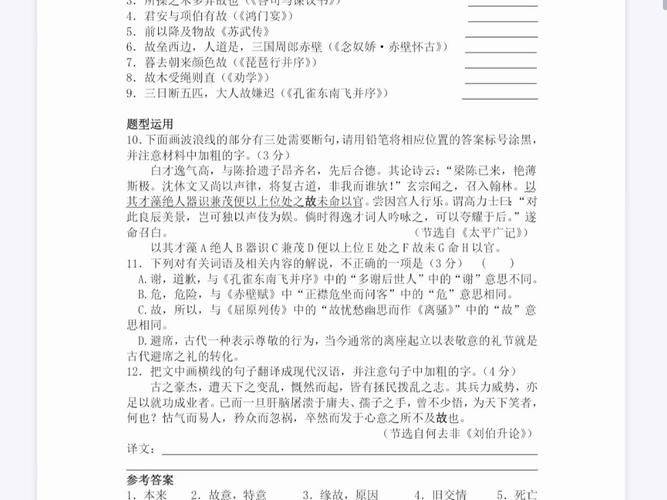
The key to scoring is never to remember 300 words and 50 words, but to grasp the logic of the solution of the question “by unknown knowledge”。
1) ideas for teaching materials
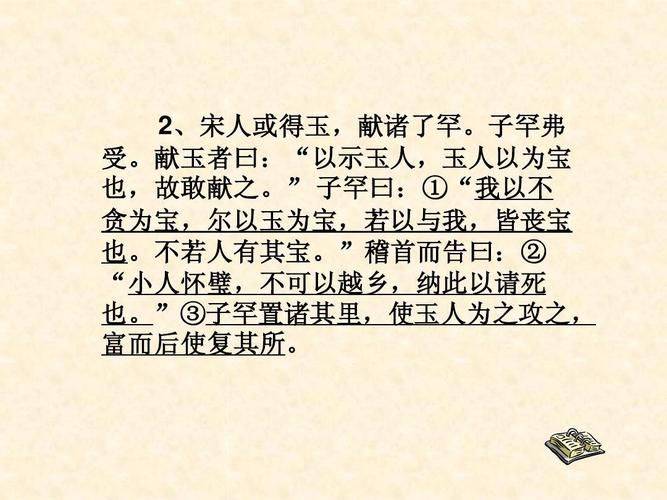
The most efficient way. The words of the high examination are “extracurricular material examination”, and the textbook example is “the master key”. For example, when the word “e. G.” is read in conjunction with the words “in the same way” in the red wall, the meaning of “go, go” can be inferred。
2) language extrapolation
Request for context. The same words have different meanings in different contexts, such as “inhabitation” may mean “occupation” of “inhabitation” and a mere misinterpretation is useless and must be “inferred from the scene”。
3) syntax:
Help clear the sentence structure. In the case of complex long sentences, the words are judged word by word, the meaning of the words, the effect of the words, and re-grouped in the modern chinese syntax。
Skills two: 3-step translation, precision three: multitext comparative reading strategy
Rapidly locate key information。
In the face of multiple materials, the first line of each material is viewed, the core view is captured, and the relevant sections are read in a targeted manner according to the subject matter。
Establish a framework for comparative analysis。
A comparison can be made between the dimensions of the image of the person, the position of the person, the means of justifying it, the language style, etc., so that differences and similarities can be organized in tabular form to make the thinking clearer。
Refinement of common law。
While multilingual reading is diverse in material, the core competencies of the survey are compatible - extracting information, analysing comparisons, summarizing. Access to these universal methods is more important than remembering specific content。
03 proactive exercise: 2026 review guide
1. Material selection should be targeted。
In the last five years, priority has been given to replaying the scrolls, followed by the classic biography of the history, the qualifications, to match the directions of the exam。
2. Methodology for daily exercises。
Interpreted orally, then written in writing, cross-referenced word by word against standard answers, and marked points and error points in red pen. High-frequency scripts, special sentences and cultural commons are collated and recited every morning to create conditional reflexes。
3. The focus is on breaking the four major gaps:
Weak inferences in terms of words, fictions, missing key points in translation, missing the hints of false words, words, subjective generalities, language。
Particular attention is drawn to the fact that the new high-level examination is a low-capacity approach and that it is necessary to abandon the mechanical encapsulation, focus on introspection, intra-curricular mobility and fit the “students” logic。
04 education: personalized promotion programmes
In the face of the new challenges of literature and learning, education has tailored the system for high school students。
1. Precision diagnosis, target breach。
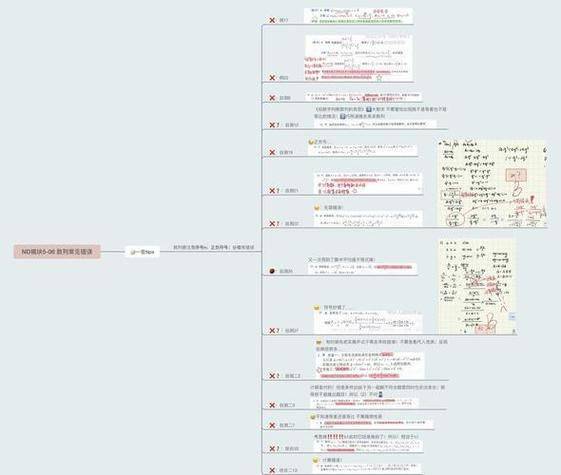
Education is based on a three-dimensional assessment system, which customizes individual promotion programmes for each student through the entrance test + learning style analysis + vulnerability diagnosis. With regard to literature and learning, teachers analyse nearly five examination papers, professional errors and draw up “knowledge hottests” to identify which knowledge points are solid and which are weak, and to truly “where are the weak”。
2. Levels of instruction, which are taught through materials。
Depending on the student's linguistic and linguistic base, education offers a holistic curriculum system ranging from basic reinforcement to high-stroke。
For students with a weak language base, basic knowledge, starting with words, fiction, special sentences, etc., helps them to build a knowledge framework through the classic. For students at the secondary level, emphasis is placed on training in language extrapolation and translation skills and on improving the accuracy of problem resolution through real-life exercises. For high-level students, emphasis is placed on multitext comparative reading and in-depth thinking training to develop high-level thinking skills。
3. Full-time teaching staff, professional security。
The language teacher's team in rhesus education holds a teacher's qualification, with an average age of over six years, including members of the group. In response to the trend in the subject matter of the new high court, the group updated the curriculum on a quarterly basis, introduced the “deflectional reading and writing” course, and responded directly to the requirements of the new high court for the depth of thinking through, inter alia, critical analysis and philosophical dialogue。
4. Diversifying course formats。
Students may choose one-to-one tutorial, six-to-eight classes or one-to-three classes depending on their circumstances。
One-on-one tutorials are highly targeted, and teachers are able to focus on students ' learning and address personalization issues in a timely manner。
The primary classes allow students to interact with high-frequency classes in a climate of healthy competition and cooperation, both to ensure effectiveness and to create a good learning environment。
In 2026, the gacovian text was no longer a battle of memory, but of mental ability. From a multitext comparison to an in-depth thinking requirement, from a linguistic perspective to a cultural reversion, every change is telling us that the age of death is over and the time of flexibility is coming。
Language teachers who think about education are helping students to build such a system of competence — not simply imparting knowledge, but developing an analytical framework in the face of strange texts; rather than mediocre readings, they are mastering the way of thinking about inferences in specific languages。