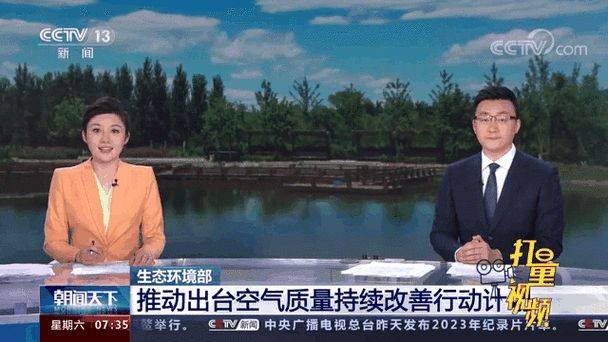
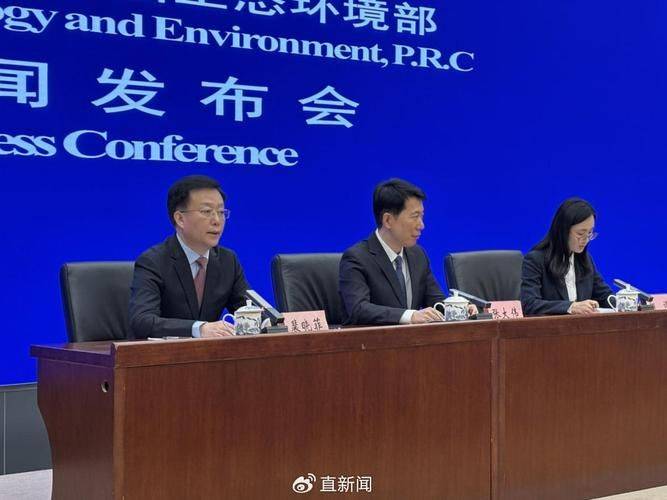
In recent days, the state council has issued an action plan for the continuous improvement of air quality (hereinafter referred to as the action plan). The competent officials of the ministry of ecology responded to questions from journalists on the background and main elements of the plan of action。
Q: what was the background to the plan of action
A: since the 18th congress of the party, the state council has issued a plan of action for the prevention and control of atmospheric pollution and a three-year plan of action for the protection of the blue sky (hereinafter referred to as the " three-year plan of action " ), which has contributed to a significant improvement in air quality and a significant decrease in the concentration of fine particles (pm2. 5) and in the number of heavy pollution days. In 2020, pm2. 5 did not meet the standard grade and above in urban concentrations of 37 Μg/m3, a decrease of 28. 8 per cent compared to 2015; the national rate of good days was 87. 0 per cent, an increase of 5. 8 percentage points compared to 2015, and both met the “1355” binding target, with a significant increase in the people's sense of blue sky and happiness. However, the atmospheric environment remains critical, with some areas marked by pm2. 5 pollution in the autumn and winter, the long-term, complex and challenging nature of atmospheric environmental problems, and the gap between air quality and the need to protect people’s health and the goal of building beautiful china. Since the beginning of the year, it has been affected by multiple factors, in particular the extreme adverse weather conditions, a marked increase in sand and dust processes and a similar rebound in air quality。
The central party, the state council, attaches great importance to combating atmospheric pollution. The secretary-general of xi stated that the blue sky guard was the centrepiece of the battle and that the main battleground was kyosin and other priority areas such as the surrounding, long triangles and the mausoleum plains, with a strong push for coordinated emission reductions of multiple pollutants such as volatile organic matter and nitrogen oxides, which continued to reduce the concentration of fine particles. Integrated measures are needed to accelerate the elimination of heavy pollution of the weather and to protect the beautiful blue sky. The ministry of ecology, together with the national development and reform commission, the ministry of industry and information technology, the ministry of transport and communications, and 26 other departments, have developed a plan of action for the further implementation of the party's central and state council decision-making and for the continuous improvement of the people's sense of access to the sky and quality of the air。
Q: what is the overall thrust of the action plan
Response: guided by xi jinping's new era china's specialist socialist ideology, the party's 20-year spirit is being fully implemented, xi jinping's eco-civilist ideology is being implemented, the national eco-environment congress is being deployed, and the overall tone of its efforts is being maintained. The aim is to promote carbon reduction, pollution abatement, greening and growth in order to improve air quality, with a focus on reducing heavy weather pollution and addressing high-profile environmental problems around the population, with a view to reducing the concentration of pm2. 5 and significantly promoting the reduction of nitrogen oxides and volatile organic matter (vocs); regional concerted governance, highlighting precision, science and the rule of law, improves the environmental management system in the atmosphere and improves pollution prevention and control capabilities; and, in the near future, studies have been undertaken to chart the path to combating atmospheric pollution, boost the low-carbon transformation of industry, energy and transport, strengthen the management of pollution from sources, strengthen the control of sources, accelerate the development of a green low-carbon production lifestyle and achieve environmental, economic and social benefits。
Q: what are the objectives of the work of the action plan
Response: the action plan fully integrates the goals and targets for air quality improvement set out in the 14th five-year plan for national economic and social development and the 2035 vision framework, the central committee of the communist party of china (cpc). The state council's views on the in-depth combating of pollution and the struggle for the prevention of pollution, the “xivv” eco-environmental protection plan, detailing and decomposition, with pm2. 5 pollution control at its core, and vigorously promotes the reduction of nitrogen oxides and vocs, proposing that “by 2025, the concentration of pm2. 5 in cities at the national level and above will be 10 per cent lower than in 2020 and the ratio of contamination of gravity and above will be within 1 per cent; total emissions of nitrogen oxide and vocs will be more than 10 per cent lower than in 2020, respectively. Concentrations of pm2. 5 decreased by 20% and 15%, respectively, in the surrounding region and in the plains of maui, overall pm2. 5 levels in the long triangle were achieved and the city of beijing was within 32 ug/m3
Q: what are the main considerations underlying the regional adaptation of the action plan
The three-year plan of action, which identifies the surrounding areas, the long triangle and the maze plains as the three priority areas for combating atmospheric pollution, sets out stricter mission measures, greater policy support and higher target requirements, focusing on the priority areas for pollution management, giving full leadership to the improvement of air quality throughout the country. The action plan optimizes individual cities based on maintaining the original focus areas, taking into account the actual work of recent years, taking into account the contribution of regional pollution transport, air quality conditions, administrative needs, etc. Specifically, the first is the integration of cities with high pm2. 5 concentrations in the south-east of the mountains and the south-central henan into the surrounding areas, the elimination of the “empty areas” between the surrounding areas and the long triangle, which is more conducive to the development of regional anti-control links; the second is the restructuring of the surrounding areas and parts of the plains of kyinzu, leaving a province with only one focus area, reducing administrative costs; and the third is the redeployment of cities with essentially stable pm2. 5 concentrations, which contribute less to pollution in the long triangle. The adjusted focus areas are as follows:
Kyozu and the surrounding “2+36 cities”. It includes the cities of beijing, tianjin, tangshan, qin emperor, qin, qin, quantai, bao dynasty, quanzhou, quanxiang, quanxiang and xinjiang, zhongzhou, zhinan, zhuibo, zhuang, zhouzhou, zhening, taian, daylight, qiang, qiang, qiang, zhongzhou, henan province, zhengzhou, zhengzhou, zhengyang, qianyang, qianyang, anyang, tsui zheng, zheng, zhang, zhui zhu, zhou zhou zhou and zhi zheng。
Long triangle. They include shanghai city, jiangsu province, hangzhou, ningbo, kashing, lakes state, sau xing city, awashan city, anhui province, huang lake, quan, hunan, makayama, huaibei, yizhou, xianyang, cebu state, six an, wuzhou city。
The plain. They include taiwon, yangquan, changji, jincheng, jincheng, transport city, ping yi, lu liang, xian, bongkawa, poo-chung, xianyang, lunan and yang ling agricultural high technology industries。
Q: what are the key tasks of the action plan
The action plan sets out nine priority tasks。
One is to optimize industrial structures and promote green upgrading of industrial products. Including determined containment of high energy consumption, high emissions, low-level project blindness (b) to step up its efforts to accelerate the withdrawal of poor production capacity from key sectors, to undertake a comprehensive upgrading of traditional industrial clusters, to optimize the structure of raw materials and products containing vocs and to promote the healthy development of green industries。
The second is to optimize the energy mix and accelerate energy clean, low-carbon and efficient development. These include vigorous development of new and clean energy sources, strict and rational control of total coal consumption, active consolidation of the shutdown of coal-fired boilers, implementation of clean energy alternatives for industrial kilns and sustained promotion of clean heating in the northern region。
Third is the optimization of transport structures and the vigorous development of green transport systems. These include continuous optimization of cargo transport structures, accelerated upgrading of vehicle cleaning, enhanced integrated management of non-road mobile sources, and full quality assurance of oil products。
Fourth is enhanced surface-source pollution management and improved precision management. This includes deepening the integrated management of anti-dust pollution, promoting integrated environmental remediation of mines, enhancing the integrated use of straws and prohibiting burning。
Fifth is the strengthening of multi-pollutant emission reductions and the effective reduction of emission intensity. These include strengthening of the vocs process, integrated management of the entire chain, promotion of deep pollution management in key sectors, special management of cooking oil, smoke and stench, and steady promotion of atmospheric ammonia pollution control。
Sixth is the strengthening of mechanisms to improve the system of environmental management of the atmosphere. These include the implementation of urban air quality standards management, the improvement of regional coordination mechanisms for combating atmospheric pollution and the improvement of response mechanisms for highly polluting weather。
Seventh is strengthening capacity-building and strict law enforcement oversight. These include improving atmospheric environment monitoring and surveillance capabilities, strengthening atmospheric environmental regulatory enforcement and strengthening decision-making science and technology support。
Eighth is to improve the legal and regulatory framework and environmental economic policy. These include promoting the revision of laws and regulations, improving environmental standards and technical standards, improving price tax incentives and disincentives, and playing an active financial and fiscal role。
Ninth is the implementation of the responsibilities of all parties and the implementation of national action. These include strengthening organizational leadership, rigorous monitoring of appraisals, promotion of information disclosure, increased advocacy and international cooperation, and implementation of national action。
Question: what are the key fiscal tax policies supported by the action plan
Continued improvement of air quality requires joint action by governments, enterprises and society. The fiscal policies covered by the action plan include, inter alia:
One is the improvement of price tax incentives. The industrial structure includes, inter alia, the implementation of peak valley hourly electricity prices, the improvement of energy-intensive industry ladder electricity prices, the energy structure, including, inter alia, cleaning and heating “coal-to-power” and the sale of side-penetrating valley electricity for heating electricity, and the policy on the price of clean heating gas, among others, the transport structure, including, inter alia, the implementation of a supportive electricity policy for port bank-based power supply, encouraging active local support for the charging of public buses for new energy cities, and studying the introduction of a “sip price” policy for rail freight; and the environmental protection tax, strengthening policy support, improving collection systems and accelerating the inclusion of vocs in collection。
The second is the active role of financial and financial guidance. These include, inter alia, the orderly expansion of central financial support for clean heating in the north, the scaling up of credit financing support in areas such as traditional industries and cluster upgrading, industrial pollution management, railway line construction and the extension of new energy railway equipment, the attraction of investments in green financial products and support for green bond issues。
Q: how can the plan of action be implemented
Response: one is to strengthen organizational leadership. Maintain and strengthen the overall leadership of the party in combating atmospheric pollution. Local governments have overall responsibility for air quality within their administrative areas and organize local implementation programmes. The departments concerned should work together to implement the division of tasks and policies that take into account the need for continuous improvement in air quality。
The second is strict supervision of the examination. The achievement of the goal of improved air quality is an important element of the assessment of the effectiveness of the pollution prevention and control campaign. Incentives have been given to areas that have exceeded their targets; sanctions have been imposed on areas that have not met their targets in terms of allocation of funds, approval of projects, recognition of honour, accountability, etc.; and, in high-profile areas, specialized inspections have been carried out by case-oriented organizations。
Third is the implementation of popular action. To mobilize broad participation by all sectors of society in the protection of the atmosphere environment. The government has taken the lead in green procurement, with the full use of low (no) vocs. Improving incentive mechanisms for reporting environmental violations and encouraging the public to actively provide leads. Central enterprises take the lead in guiding green production and promoting abatement. To strengthen the environmental awareness of citizens and to promote a simple, low-carbon, green, civilized and healthy lifestyle that collectively improves air quality。
Atmospheric environment division, ministry of ecology