Good varieties and scientific planting techniques are two important factors in achieving high quality productivity in crops, the former being the foundation and the latter being an internal factor, and the latter being an external factor, a measure for the full performance of varieties. At the same time, varieties and planting techniques are intrinsically linked, with different types of varieties having different complementary planting measures; cultivation measures should be adjusted accordingly, depending on environmental conditions such as soil, climate and so forth; scientific cultivation management can reduce the incidence of pests and pests, reduce investment in production and achieve high-quality productivity and efficiency in rice production。
I. Technology for seeding during breeding
(i) central mission
"the valley is half full and the seedlings produce high." cultivation is central to this period。
(ii) numeracy standards
They are fast, full, green, green leaves, 15-20 cm tall, silhouettes with elasticity, saplings, multi-coloured, black roots and insect-free。
(iii) key measures
1. Fertilizer fields
After the autumn, the field is re-fertilized and winterized. Benefits: increased organic content, improved ventilation, temperature and water conservation, reduced pest hazards and prevention of soil re-alkalination。
2. Aligning acids and applying bottom fertilization
(1) acid: a paddy sprout: a field of 20m2 is fully mixed with 1. 5 kg+ fine soil and is distributed evenly in the soil of a field 2-3 cm deep. 2 sulphur plating acid: 100 g/m2 is evenly mixed in 10 cm soil 20-30 days before seeding。
(2) bottom fertilisation: 30 kg of ammonium 2 per acre, 45-50 kg of ammonium sulphate, 15-20 kg of potassium sulphate, 2 kg of zinc sulphate for the three to five days before the sowing, so that the soil is even with the fertilizer, flattens and lifts the bed。
3. Seed treatment
(1) sunshine: choose to plant two to three days in the sun, not on the concrete floor。
(2) sterilization: 1 per cent lime water to clarify leachate: 3 days bathing at 15-20°c, 2 days bathing at 25°c, 10-15 cm above seed in the water floor to avoid direct light; 250 per cent more fungus moist powder 150-200g or 40 per cent mixed with double humid powder 100g, mixed with a small amount of water solubility, 50kg rice seeding or 2-3 days with 50 per cent methyl sulphate humid powder; 2-3 days per day seeding; 3 72 hours with 18 per cent pelicans 2,000-3000 times liquid or 500-1,000 times dead spirit impregnation to effectively combat pests, nematodes, etc.; 480 per cent of strong chlorocrete 300 times impregnated for 24 hours before impregnation with water; 5 2-3 days dry chlorophyllation to prevent malcinosis and tritosis; and 6 hours with veration to combat rice macres, greyflies, etc。
4. Elaborate planting
Beds require mud, floors, even seeding, semi-seeding, 35-40 kg seeding in acre fields, and cover 0. 7-1 cm equally with 1:2 dry and dry decomposition。
5. Xinda management
The seed is soaked with sufficient moisture to produce a seed, and before the three-leaf period, it is mainly dry, with water in the ditch. After the tri-leaf period, seedlings are converted from self-inflicted to hesitation and should be replenished in a timely manner. Malnutrition causes adhesive disease, a single-heart second-leaf period, acre pursuit of ammonium sulphate at 10 kg or urea at 5 kg, which can be combined with more than 15% thiram plus 50 kg water, 500 times diaphragm or 5,000 times diaphragm, which can boost the diaphragm, control the height of the seed, and combat the disease. Three-leave perturbation, 20 kg of ammonium sulphate or 10 kg of urea in acre, and a single pouring of water has contributed to the sapling. The silhouettes are protected against flooding, as long as the leaves are not curled and water is kept to a minimum。
6. Disease and grass prevention
Sakada pays attention to pests such as rice tremors, dioxidation, folic plagues, frescosis, etc., and can be used as agents such as insecticides, freckles, aphids, tricyclists, and fungus to poison stars. Herbicides can be used for scavengers, larvae, sorghum, etc., three to five days after seeding, sprayed before seeding, sprayed with a field during the 2-3 leaf period and protected against weeds。
Ii. Plug-in and phased cultivation techniques
(i) central mission
Early, shallow, composted, rationally implanted, early and large, with high-yielding shelf set up as early as possible to achieve strewn, large, large, grainy and seed weight。
(ii) specific measures
1. Finely fine, full layer balanced fertilization。
50 kg of calcium perphosphate plus 50 kg of ammonium carbon or 20 kg of ammonium diammonium plus 35 kg of ammonium carbon, 10 kg of potassium sulfate and 1 - 1. 5 kg of zinc sulfate。
2. Early, early, shallow and even
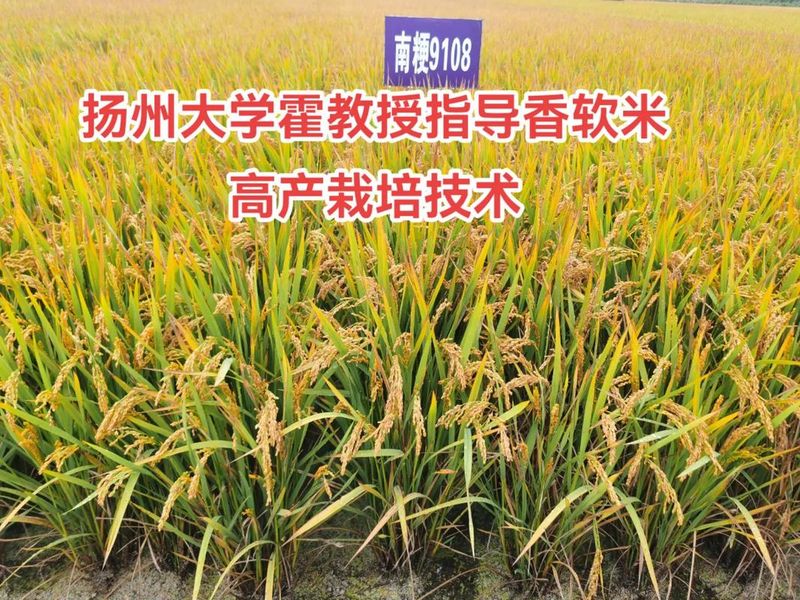
After harvest, the ground is emptied in a timely manner, water bubble fields are planted early, at depths of 1-2 cm, narrow and wide, and east-west direction. Specification for planting: 30 cm x 13 cm (high fat field), 2-3 pm, 27 cm x 13 cm (central fat field) and 3-4 pm; 27-30 cm x 10-13 cm) for multi-gap species and around 3 pm. Fatty fields are rare, thin fields are dense, early and late. The plant should have a consistent distance, so that each paddy seedling grows evenly and forms a high-quality group。
Three, re-energizing the fertilizers in the morning
In the case of rice, five to seven days after the drop, a combination of acreage fertilizers is applied, with 15% more than 20-30 g zen and 2-3 kg of herbicide ploughing, which is then evenled into 30-35 kg of carbon ammonium or 12-15 kg of urea, so that the field remains shallow。
4. Scientific irrigation
Deep water is planted, and when it returns to the ground, it is shallow, it is dry, and the water is empty. The well-protected fields are filled with water for three to four days, the well-protected fields for five to seven days, and the dead fields are connected to the drains, drains and gassing to raise the temperature. When the head count reaches the high yield target (preparation no. 6: 240-270,000 head; crystal no. 3 et al.: 273-300,000 head), it starts to tan, fat fields are tanned (7-10 days), lean fields are tanned (5-7 days) and saline lands are dry. Benefits of tan fields (baking fields): control of ineffectual fractions and reduction of waste of nutrients; control of excessive excessive growth to prevent subsequent reversals; improvement of soil aerobics, improvement of the vitality of the root system to prevent early decay; introduction of leaves, ventilation, promotion of light co-operation and reduction of disease。
5. Disease control
Attention is being paid to combating dichotomy, leaf plague, viral disease, rice elephants, fly, etc. The virus can be used as a multiform “sweep” for new products prepared by the rice research office of the provincial agricultural institute, one or two times in the early stages of the disease, with good inhibition。
Iii. Employment technology
(i) central mission
And attains a lot of ears, a lot of ears, and a lot of grains, so that they will be strong and strong, and they will fight for their weight. The critical period of production formation。
(ii) management measures
One, you've got a lot of weight
At the onset of pregnancy, acres are applied 5-6 kg of ammonium and potassium sulphate; leaves are dim and can be applied up to 6-7 kg earlier in the morning, plus 2-3 kg urea; and green leaves are delayed or not pursued. In order to prevent backsliding, short strongs of 200 ml can be used at the beginning of the pyrocardium, and spraying of 30 kg of water can be reduced by a strain of about 10 cm high. At the same time, the acres are sprayed 100-300 times the leaf face with multi-element efficient liquid fertilizer of 200 ml。
Water management
The field is wet and the pregnant field is wet (inches). Deep water irrigation is not appropriate。
3. Insects and diseases
The main fights are against twilight, twilight, neck plague (pharmaceutical decomposition), white leaf death and rice rot. It can be used with sharpness, avimoxin, bifertilin, irigonin, microtoxin, tricycling, trimoxin, chrysophyllite, spectrum, rottenin, domex, etc. A pesticide is not sprayed repeatedly。
Iv. Employment technology
(i) central mission
The critical period for determining a firmness rate and a thousand grains. It is centred on rooting, leaf preservation, prevention of premature decay, protection against corruption, reduction of emptiness, improvement of maturity, particle retention and increase of particle weight。
(ii) management techniques
1. Leafing measures
Potassium fertilizer and trace elements, mainly for phosphorus spraying, have a better effect on the initial application of the slurry after the squirt. 200 g of potassium dihydrophosphate or polyethylene zinc liquid fattening of 200 ml in acre to 30-40 kg of water for foliage。
2. Reasonable irrigation
The poaching season, which is deep and shallow in the field, is filled with active water; the dry and wet rotation of the slurry period is dominated by wetness before the drying period and by dryness after the waxing period. One week before maturity, the water was cut off。
3. Pest management
The main areas of prevention and treatment are albino fever, stripping, gecko plague (application in the qingo season), fungi nuclei, paddy twilight, rice lice, etc. Precipitous, avil, insecticidal, lice, irigonin, fungus toxin, tricyclic cylindrium, mesmericin, pheasant, pheasant, pheasant, rusty, etc。