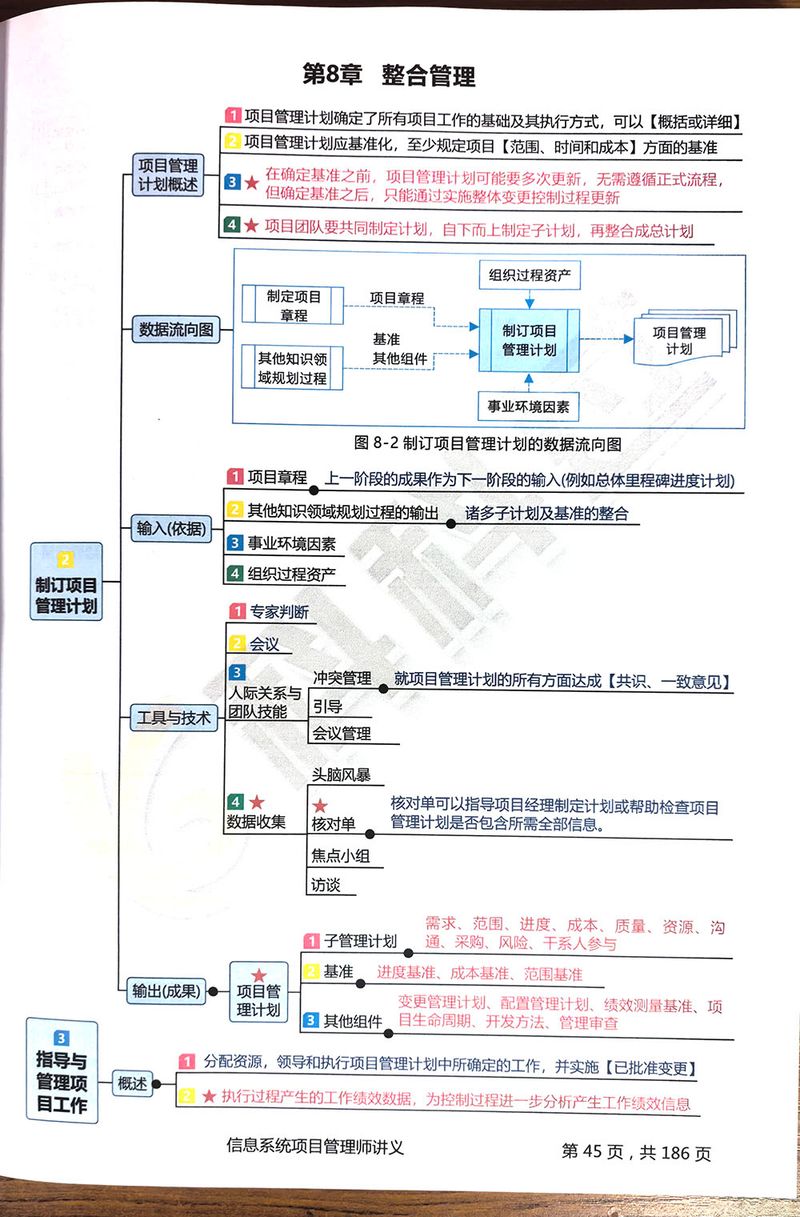
In the project management knowledge system, integrated management is referred to as the “core responsibility of the project manager” as the “central nerve” to work with all knowledge areas to ensure that project objectives are achieved. Chapter 8: an in-depth analysis of the framework for the integration of the entire process from project start-up to completion, including the development of project charters, plans, guidance for implementation, monitoring of change and knowledge management. In order to assist the candidates in their attempt to overcome this high-scoring chapter, we have carefully crafted our thinking maps based on official teaching materials, and have pointed to the pentagram and red focus, striking the core of the examination. Integrated management not only allows for a steady score on the examination field, but also enhances the integrated capacity for integrated and efficient collaboration in actual projects
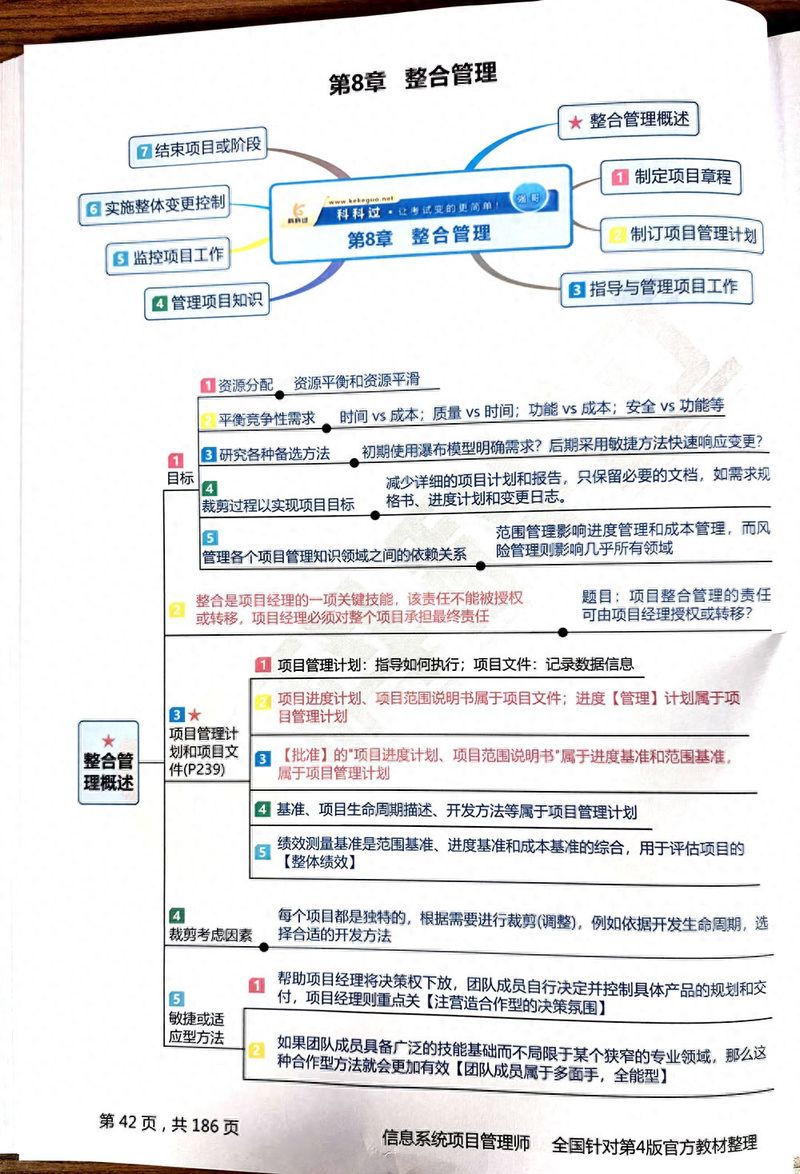
Focus of this chapter
The central role of integrated management: balancing competitive needs (e. G., time, cost, quality), coordinating reliance across knowledge areas, tailoring processes to suit project characteristics (e. G., using agile or predictive approaches). Project charters: the charter is a sign of project start-up and needs to identify project objectives, measurable objectives, high-level needs, overall milestones, pre-approved financial resources, key practitioners, project managers ' responsibilities, etc. (accreditation: target results, risk of progress costs, clearance of withdrawals). Project management plan development and benchmarking: the plan needs to integrate sub-plans with baselines (scope, progress, cost), be flexible to update before baseline is established, and be subject to a formal change control process after baseline is established. Guidance and management of project work: implementation of the plan, implementation of approved changes and production of performance data; emphasis on resource balance and teamwork, particularly in a responsive environment, decentralization of decision-making and multi-faceted membership. Overall change control process: ensuring that all change requests are routinely assessed and approved is key to maintaining the seriousness of the benchmarks。
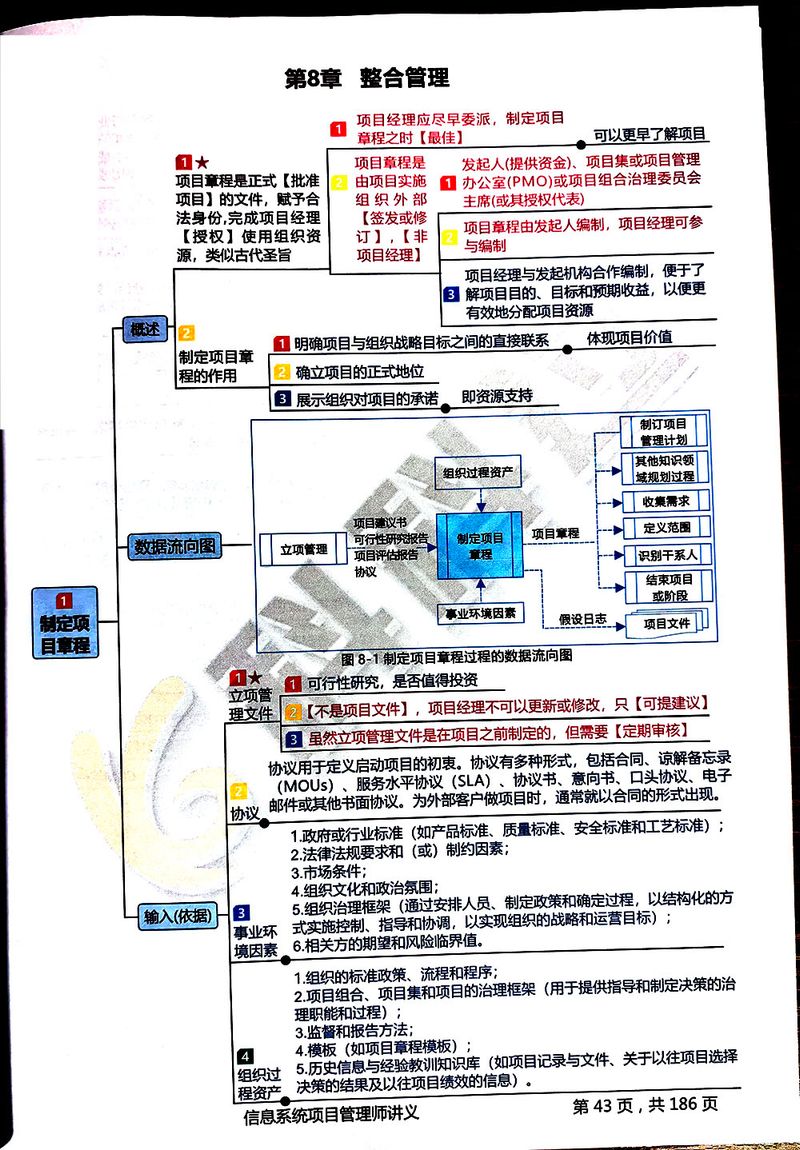
Mind mapping advantages
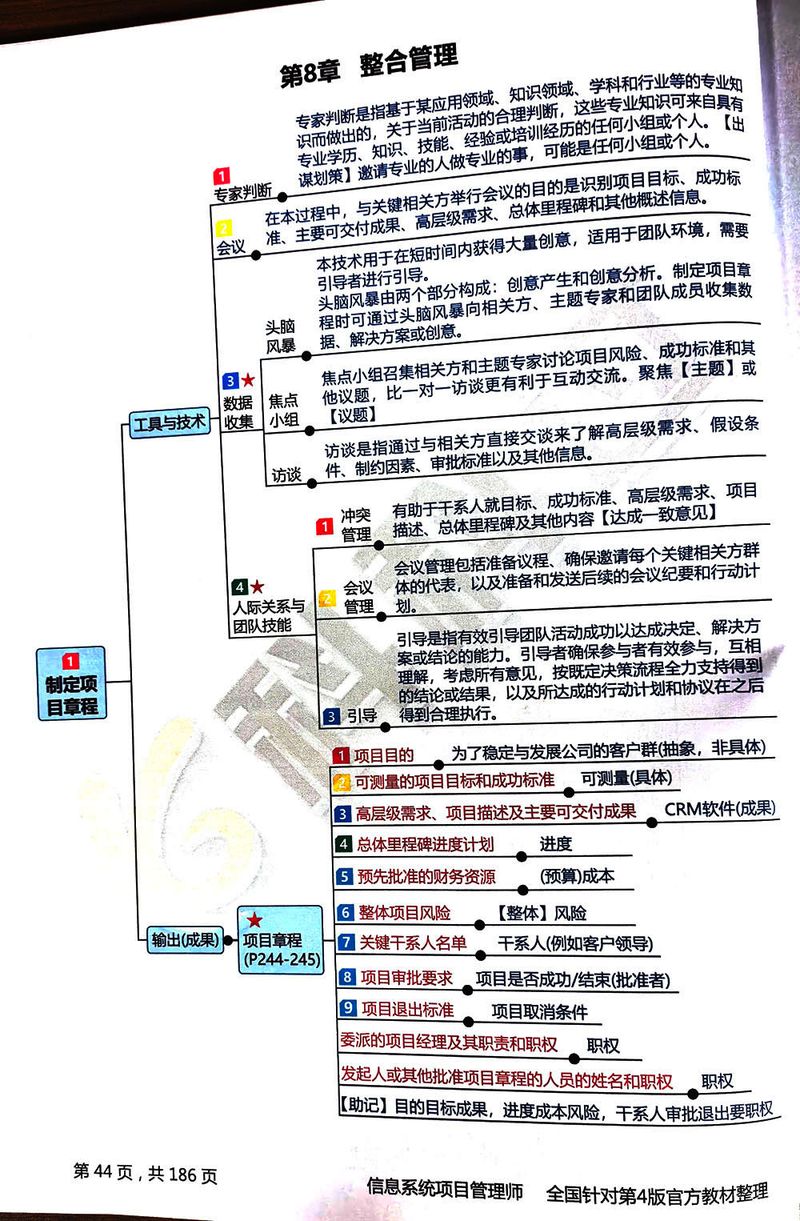
Integration management is the “master hand” of the project manager in managing complex projects. With a mind map to clarify the main lines and focus, you will demonstrate global control in the examination and in the field, and truly achieve “integration for success, management for good”