Write a 900-word statement based on:
Customs clearance, transport, insurance, risk... Who pays? Who takes responsibility? Incoterms 2020
In the foreign trade sector, there is a wide-spread saying: “i don't know terms, i can't walk.”
Whether new entrants to foreign trade or those who have crawled through the industry for years, it is essential to have a core knowledge system — international trade terms. It not only determines who is responsible for the transport, who bears the risk, who pays the customs duties, but also directly influences the pricing structure and the division of contractual responsibilities。
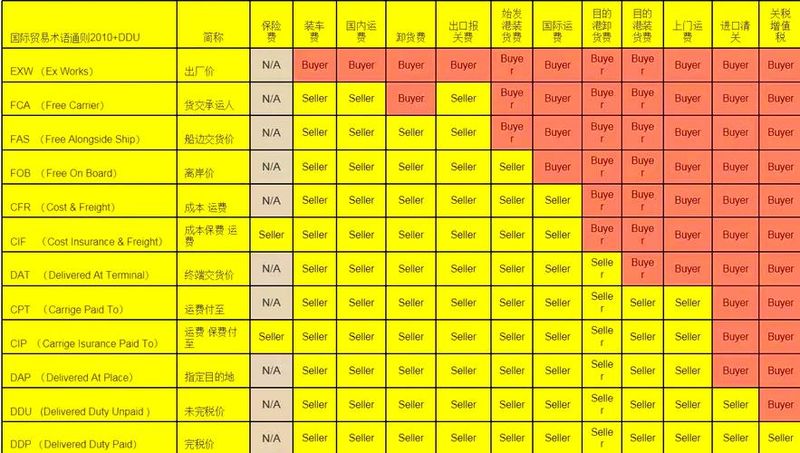
In order to help you quickly clarify these terms, today we have a picture of the nine most commonly used trade terms, using a “seller's responsibility from a small to a large order”。
I. Why do you understand incoterms
InternatioNal commercial terms, the latest version of icc 2020. It defines the boundary of responsibility of the buyer and seller in terms of delivery, transport, customs clearance, insurance, risk transfer, etc。
In short, incoterms decides:
• who arranges transportation
• who pays freight
• who buys insurance
• who bears the risk of damage to or loss of goods
• who is responsible for export/import clearance
Without understanding these, the offer is “naked running”。
Ii. 9 terms: seller's responsibilities from childhood to general analysis
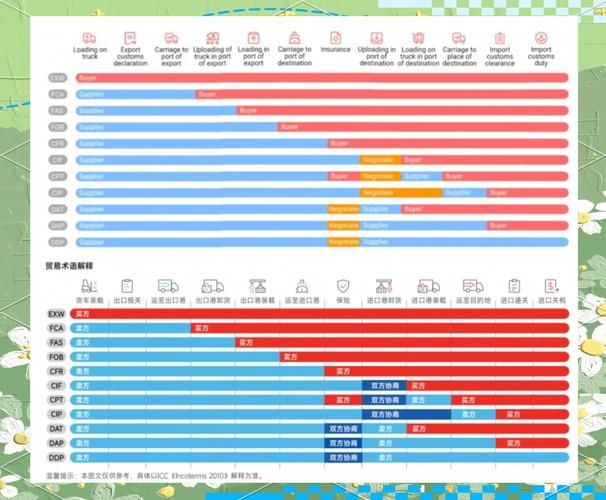
According to the picture, we have been dismantled one by one according to the order of the seller's responsibilities from childhood to age。
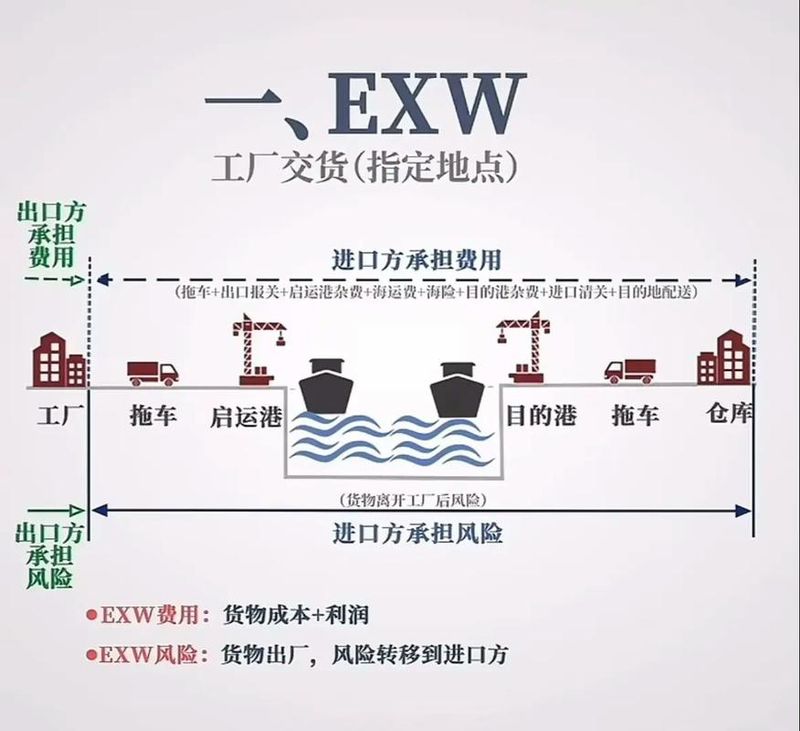
Exw(ex works) - plant delivery
Seller's liability (minimum)
• delivery is completed when the seller hands over the goods to the buyer at its own factory or warehouse。
The buyer is responsible for all follow-up matters: delivery, loading, transport, export clearance, import clearance, insurance, freight, etc。
In summary:
The buyer was in full and the seller was only responsible for “preparation of the goods in the factory”。
Applicable scene:
The buyer had a familiar logistics resource at the seller's location or wished to have complete control of the transport and customs clearance process。
Attention:
If the buyer was not familiar with the export clearance process, exw could lead to delays or even the seizure of the goods。
Fca (free carrier) - delivery for shipment people
Seller's liability:
The seller completes delivery by handing over the goods to the carrier designated by the buyer at the designated place (which may be the seller's factory, freight station, airport, etc.)。
:: the seller is responsible for export clearance。
The buyer is responsible for subsequent transport, import clearance, insurance, etc。
In summary:
The seller delivered the goods to the “first person to remove” and completed the export formalities, leaving the buyer's business。
Applicable scene:
The buyer appointed a courier or courier company to collect the goods and the seller cooperated in completing the export declaration。
3. Fas (free alo)Ngside ship) - shipside delivery
Seller's liability:
• delivery is completed when the seller places the goods next to the ship at the port of shipment (e. G. A dock or barge)。
• the buyer is responsible for loading the goods from the side of the ship to the ship and for subsequent shipping, insurance, customs clearance, etc。
In summary:
The seller was responsible for the delivery of the goods to the ship and the buyer was responsible。
Attention:
Fas applies only to sea or inland transport。
Fob(free on board) - ship delivery
Seller's liability:
• the seller is responsible for loading the goods on a ship designated by the buyer, and the risks and costs are transferred to the buyer after the goods cross the ship (or are loaded on board)。
:: the seller is responsible for export clearance。
In summary:
The cargo is overboard and responsibility is transferred。
Applicable scene:
One of the most commonly used terms in maritime transport. The buyer controlled the main transport and the seller controlled the local costs。
Classic error:
Many assumed that the seller under fob was responsible for delivering the goods to the port of destination, wrongly! Fob was only responsible for reaching the “ship of the port of shipment”。
Cpt (carriage paid to) - freight payable to
Seller's liability:
• the seller is responsible for transporting the goods to the designated destination and paying for the transport costs。
• the risk passes to the buyer when the goods are handed over to the first carrier。
The seller is not responsible for insurance。
In summary:
The seller paid the freight to the destination, but the goods were lost and broken in the course of the journey, and it was the buyer's risk。
Applicable scene:
The buyer wanted the seller to arrange the transport, but was willing to bear the risk of the journey or not to require insurance。
Cip - freight and insurance to
Seller's liability:
• the seller is responsible for transporting the goods to a specified destination, paying for freight and purchasing cargo insurance。
• the risk is also transferred to the buyer when handed over to the first carrier, but the seller must be insured (minimum risk)。
In summary:
There was an additional insurance policy than cpt, and the seller paid both freight and premiums。
Applicable scene:
The buyer wanted the seller “one dragon” to arrange transport and insurance, but the risk transfer point was still earlier。
Cif (cost, insurance and freight) - costs, insurance and freight
Seller's liability:
• seller responsible: cost (price of goods) + shipping freight + insurance。
When the goods are loaded onto the ship at the port of shipment, the risk passes to the buyer。
• the seller must purchase minimum maritime insurance。
In summary:
The seller paid for the shipment to the port of destination, but the risk passed to the buyer at the port of departure。
Applicable scene:
In the maritime scene, the buyer was not familiar with transport and insurance arrangements and was willing to allow the seller to act on its behalf, but accepted the “early transfer of risk”。
Attention:
Cif ≠ to door service. Customs clearance, delivery of goods and inland transport after the port of destination are the business of the buyer。
Dap (delivered at place) - destination delivery goods
Seller's liability:
• the seller is responsible for the delivery of the goods to the specified destination (without unloading) and for their disposal by the buyer。
• the seller bears all transport risks, freight, including export clearance, but is not responsible for import clearance and unloading。
In summary:
The seller delivered the goods to the door, but did not unload them and did not conduct import clearance。
Applicable scene:
The buyer wanted the goods to be delivered to a designated location (e. G. The warehouse door) but was able to handle the unloading and import clearance itself。
Dpu (delivered at place unloed) - place of discharge
Seller's liability:
• the seller is responsible for transporting the goods to the designated destination and completing their unloading。
• the seller bears all transport, discharge risks and costs, but is not responsible for import clearance。
In summary:
One more “offload” than dap, but without regard to import clearance。
Applicable scene:
The buyer wanted the goods to be discharged directly to the designated location, but was able to handle the customs formalities itself。
Ddp (delivered duty paid) - post-tax delivery
Seller liability (maximum)
The seller is responsible for transporting the goods to the designated destination, bearing all costs and risks of transport, insurance, export/import clearance, customs duties, unloading, etc。
• the buyer needs only to take delivery of the goods at the designated place。
In summary:
The seller, in full, and the buyer, “dived to receive the goods equally”。
Applicable scene:
The buyer wanted truly “door-to-door” services and the seller had the capacity to handle customs clearance and taxation in the destination country。
Attention:
Under ddp, the seller bears the greatest responsibility, especially with regard to familiarity with the country of destination's import legislation and taxation system。
Iii. A table comparing core differences
Terminology size of seller's liability risk transfer points export clearances import clearances main transport insurance
Exw minimum seller factory buyer buyer buyer buyer buyer buyer
Fca small delivery carrier seller buyer buyer buyer
Fas small side seller buyer buyer buyer
Ofb seller buyer buyer buyer
Cpt first carrier seller buyer seller buyer buyer
Cip medium-high delivery to first carrier seller buyer seller seller (minimum risk)
Cif medium high ship seller buyer seller seller (minimum risk)
Dap high designated destination seller buyer seller seller seller
After high value dpu seller buyer seller seller seller
Ddp highest designated location seller seller seller seller seller seller seller
Iv. How do foreign traders choose? 3 practical recommendations
Selection based on client experience
• buyers are experienced + have freight forwarders: exw, fca。
• buyer is newer + hope saver: cif, cip and even ddp。
2. Based on value & risk bias okay
• high-value, vulnerable goods: choice of terms (e. G., cip, dap) for which the seller controls the transport as far as possible, and sufficient insurance。
• low-value, non-vulnerable goods: buyers can control transport (e. G. Fob, exw) and reduce costs。
3. Difficulties of clearance based on destination
• complex customs clearance in destination countries (e. G. Brazil, argentina): avoiding ddp, it is proposed to use fob or cif。
• simple customs clearance in destination countries (e. G. United states, major eu countries): dap, ddp, enhanced customer experience。
V. Special caution: incoters all the contract
Many foreign traders thought it was enough to write “cif”, but it was not enough. You must also make it clear in the contract:
:: designated location (e. G. Cif shanghai port, not china)
:: include discharges
• insurance coverage (the cip minimum is often insufficient to negotiate all risks)
:: cost-sharing details (e. G., who will bear the operational costs of the port of destination)
One sentence: incoterms are the foundation, not the whole。
Vi. At the end
From exw to ddp, the seller's liability ranged from “neither at all” to “full responsibility”, and each term was backed by a fine balance of interests, risks and costs。
The true professional foreign trader is not a repertoire, but rather a choice of the most reasonable term, based on customer, cargo, market and logistics conditions, and is included in the contract。
It was to be hoped that today's nine terms would be broken and that they would help you to clear your mind, offer a better price and communicate more professionally。