


On august 5th, xinhua news agency (journalist zhilonghong hsi), during the summer season, taiwan's “muguada” quirebin used to hang around on the hot sun, sweating on his back and busy his fields. Looking forward to the fruits, he looked forward to selling the papayas at a good price this year and hoping that the new species of papayas would be popular with consumers on the continent。
Quirebin, a family of 3 hectares of papayas, is the 26th class commander of fruit tree production and marketing in the tortoise district of gao yu city, and is the leader of papaya cultivation in the area. He had been working outside of the country in decorative work and had to return home in 2000 to work exclusively on papayas and bananas for almost 20 years。
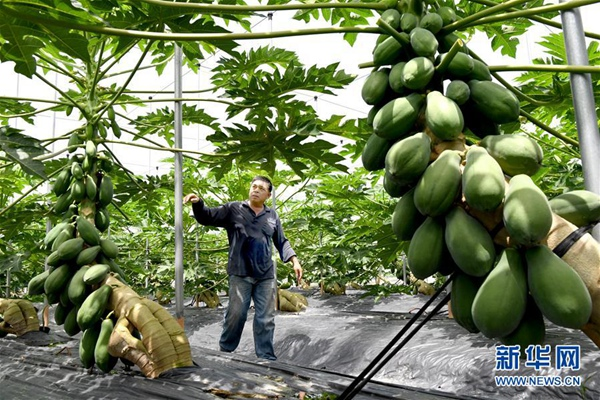
Quirebin managed papayas in the fields (photo on july 12). Xinhua news agency journalist zhu chang
Entering the papaya fields of the quirebin family, it was found to be somewhat different from those of other areas. His papaya trees live in a “net room” with small heads and long slopes, green leaves, full rows of fruit trees with hundreds of fruit。
According to quirebin, the six turtles are located in the upper middle of the river, with clean and abundant water sources and easy irrigation, along with sandy, corrosive soil from alluvials of the stream, suitable for papaya growth. The main type of papaya planted in the area is the tanon ii, which is available for harvest throughout the year and lasts from november to may。
Since entering the papaya industry, quirebin has been exploring agricultural techniques. In order to prevent pests, he built a solid “net room” for the papaya field; for the typhoon, he studied the technique of shrunking the plant to allow the papaya tree to grow on its slopes; in order to improve drainage, his field had slopes; in order to ensure food safety, he reduced the use of pesticides and used organic fertilizers; in order to provide a good growth environment for fruit trees, he introduced a land rotation system
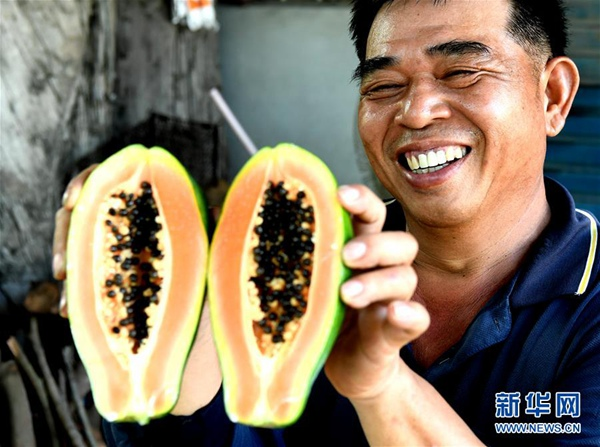
Quirebin introduced the journalist to the papaya he planted (12 july). Xinhua news agency journalist zhu chang
Quirebin spends a year with papayas and treats them like children. “take care of fruit trees more than others and do what farmers should do.” that's the secret of this rich farmer growing good papayas。
In 2005, churebin joined other local papaya growers to set up a fruit tree marketing class. In a pious attitude to the land, the distribution classes mentor farmers in the proper application of fertilizers and pesticides and participate in technical seminars to strengthen the concept of safe medicine, help farmers reduce production costs and improve the efficiency and quality of fruit-plant management。
"take good care of the fruit tree, and it will also be good to you." with scientific and careful care, papayas in the six turtles not only produce high yields, but also are well received by consumers and marketed both inside and outside the island。
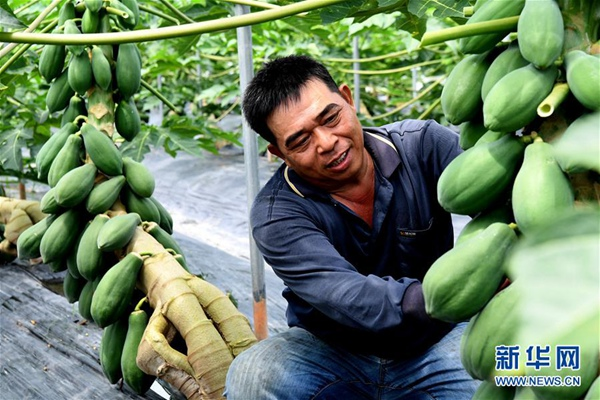
Quirebin managed papayas in the fields (photo on july 12). Xinhua news agency journalist zhu chang
They also branded themselves “perfect papayas”, which ring the name of the six turtle papayas. In 2011, the fruit-tree marketing class was awarded the top 10 high-performing agricultural sales class, and in 2014 quirebin was awarded taiwan's top ten “goon farmers”。
Not only are fruit trees well grown, but it is also important that they be sold well. According to quirebin, more than 60 hectares of papaya are now grown at the market, with an annual production of more than 1,600 tons. Owing to the limited market in the island, production is often stagnant and prices fall. They therefore attach great importance to large continental markets. In recent years, between march and june of each year, about 700 boxes and 4. 5 tons of papaya are sold to the mainland。
There has been feedback from distributors that, owing to the size of the “tainon ii” species, the fruit weight is about 1 kg, which is less favourable than that of consumers on the continent. As a result, in recent years, churebin has focused on developing a smaller papaya species, the “sunrise”。
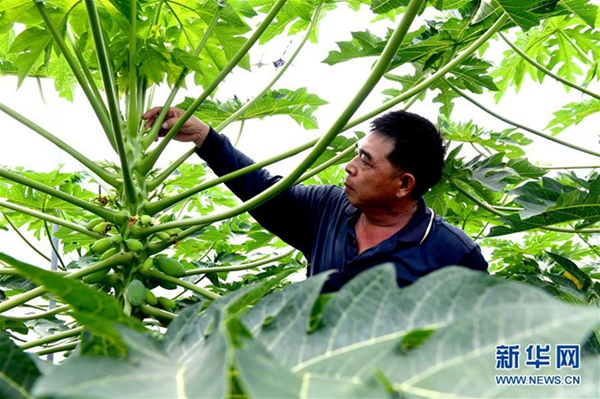
Quirebin managed papayas in the fields (photo on july 12). Xinhua news agency journalist zhu chang
“cucumber fruit contains rich nutrients such as sugar, organic acid, protein, fat, vitamins and calcium, iron, and papaya fermentants in papayas can help digest and absorb protein.” according to quirebin, papayas are more beneficial and more consumers are expected to understand their value。
Quirebin looks very good on the mainland market. He argued that after decades of rapid economic growth, consumption levels on the continent were increasing and consumer demand for fruit quality was increasing. He looked forward to the recognition of its new species of papayas by continental consumers and more for sale to the mainland。
Usually at more than 5 a. M. Every morning, quirebin starts to work in papaya fields, day after day, year after year, and he does so. "bear the idea, grow the papayas well, and be happy in agriculture," he said。



