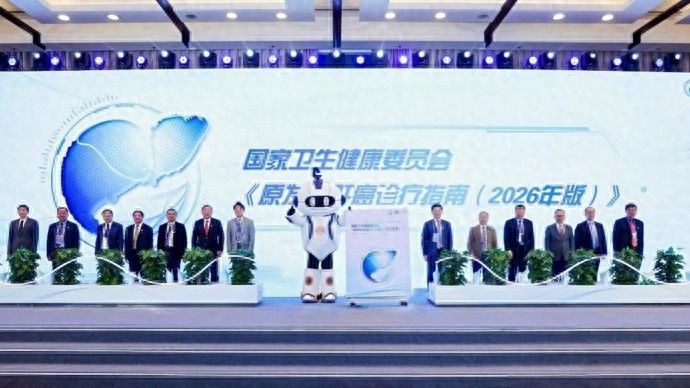

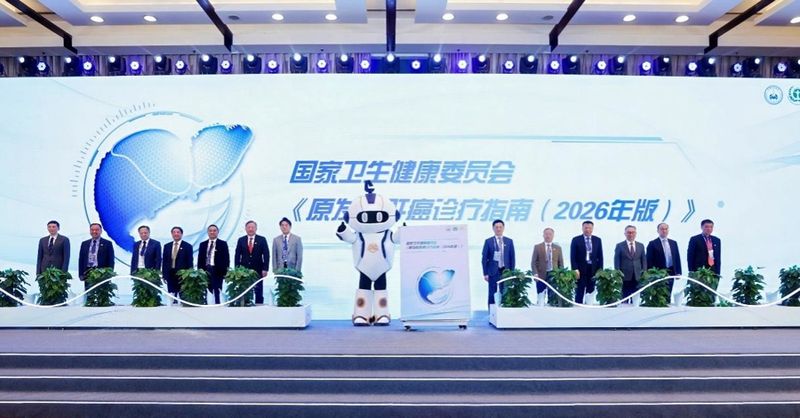
On 10 january, experts from the national board of health and health issued a final version of the " guidelines for the diagnosis and treatment of primary liver cancer (2026 edition). The new version of the guide system consolidates up-to-date high-quality clinical research evidence in recent years at home and abroad, in particular the original results of many chinese scholars-led and published in international leading journals, providing authoritative technical guidance on clinical practice of primary liver cancer in our country。
For the first time, the new version of the guide, based on the scientific and practical continuity of the previous edition, makes “prevention, screening and monitoring” a stand-alone chapter, meaning that our strategy for the prevention and control of liver cancer has been upgraded from a treatment-based approach to a full cycle of “prevention-screening-diagnostic-treatment” to provide the institutional basis for the improvement of early detection and treatment rates by strengthening risk management at the source of high-risk populations。
The guidelines are more fully updated with regard to treatment routes for mid- and late-stage liver cancer. Surgery has highlighted the “comprehensive treatment strategy aimed at surgical removal” and has formalized the status of conversion treatment and new assistive treatment in the promotion of surgical root rates. In the area of intervention, for the first time, hepato-injection chemotherapy (haic) and selective internal radiotherapy (sirt) were upgraded to independently recommended treatment options, and a richer treatment system was developed with tace。
At the same time, innovations in the concept of treatment have been throughout the process of updating the guidelines. The new version of the guide places special emphasis on integrating anti-viral treatment, liver protection and treatment for disease support into the overall strategy, leading to an integrated management system that combines anti-oncological treatment with the management of whole-body conditions. This also reflects a shift in the treatment concept from focus on tumour control to systematic maintenance of the liver function and the overall health of the patient, providing comprehensive protection for the improvement of long-term efficacy and quality of life of the patient。
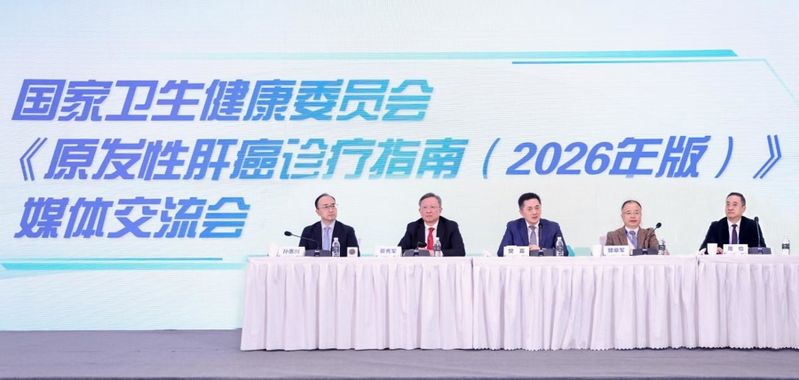
Answer the reporter: professor sun weechuan from left to right, sergeant cai xiu, sergeant jing jia, sergeant teng, sergeant zhou
The core principles of the retrospective revision of the guidelines are consistent. The guidelines have been revised consistently to adhere to the principles of “evidence-based, country-based, service-clinical” and have undergone five important updates since the issuance of the first edition of the code in 2011. The new version of the guide brings together the collective wisdom of more than a dozen academics and over a hundred interdisciplinary experts and is the “national programme” for the prevention and control of liver cancer in china。
The publication of the new edition of the guide is far-reaching, from industry values to national strategies. The publication and implementation of the final version of the guide by experts is not only an important step in the process of standardizing the treatment of liver cancer in our country, but is also a concrete step towards the implementation of the goal of cancer control in the “health china 2030” programme. In the future, the new edition of the guide will also contribute to more recognized programmes and standards in the world's liver cancer care field on the international stage, using chinese data and chinese wisdom。
It is a matter of concern that while the new version of the guide has been finalized and published by experts, another important initiative in the area of liver cancer prevention and control has been synchronized. At the launch, the chinese alliance for the innovation of hepatic courage cancer was launched. The alliance was launched by the carnival of the nakayama hospital, affiliated to the university of jordan, in collaboration with staff sergeant teng of the grand hospital, affiliated to the university of south-east, with the aim of creating a national, open, collaborative, co-founded and shared innovative platform for the development of a coordinated and systematic approach to the prevention and control of liver tumours in the country。
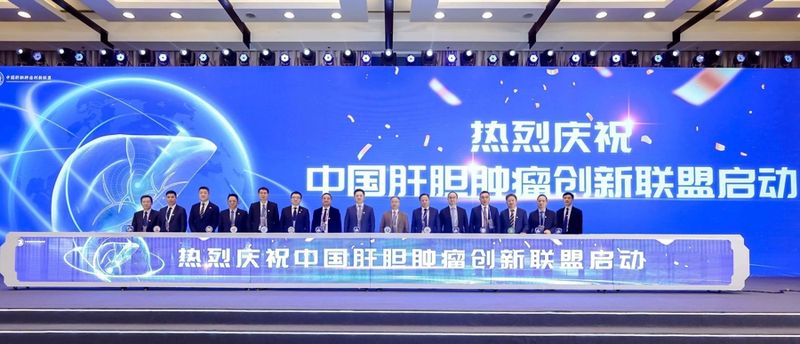
In the future, the alliance will focus on the development of an integrated integrated management system for liver cholesterol throughout the cycle of “screening-diagnosis-treatment-confection”. Through the development, updating and dissemination of guidelines and consensus-building for liver cholesterol in line with china's characteristics, quality control standards and systematization, and the upgrading of standards and homogenization standards in health-care institutions throughout the country。
At the core of the development path, the alliance will be underpinned by a digital transition. The alliance aims at building a unified industry data infrastructure, establishing a national high-level data platform for liver tumours, developing and harmonizing a full-chain data standard covering images, pathology, genomics, clinical consultations and pre-post-visiting, and achieving standardized collection and governance of multi-source isomeral medical data。
At the level of scientific innovation, the alliance will also lead and launch multi-centre clinical research across the country to promote organic synergy between real world evidence and multi-centre clinical random cross-reference studies to address key scientific challenges in the field of liver tumours. As part of this programme, the congress simultaneously launched the project “chia-hbc-1 national real world evidence of carcinomas and mixed liver cancer”。