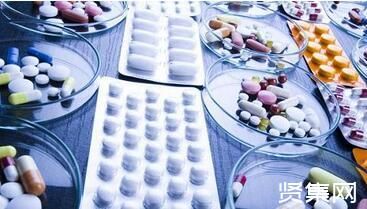
Raw medicines are the active ingredients of medicines, which generally require additions and processing before they can be produced for immediate use, and the quality of raw substances will have a direct impact on all aspects of the drug。
01. Industry basics
In terms of industrial chains, the raw pharmaceutical industry is upstream in petrochemical products, agricultural products, and downstream, mainly in the areas of chemical preparations, health products and so forth. The following is a discussion of raw pharmaceutical products used in the field of chemical pharmaceuticals。
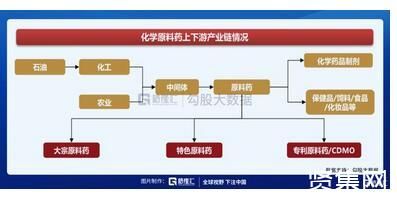
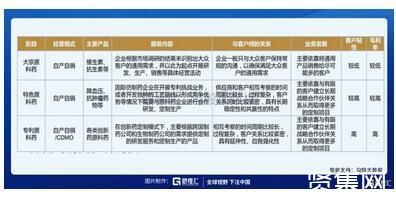
Depending on the patent stage, raw materials can be broadly classified into three categories: 1) bulk raw materials: generally including traditional raw materials such as anti-infective drugs, vitamins, amino acids, antithermal analgesic pains and non-polymeric anti-inflammation drugs, hormones, bioalkalis and organic acids, which generally do not involve patent issues; 2) special raw materials: generally, products whose patents are about to expire or are due to expire in the near future, consisting mainly of a series of products such as blood pressure, blood resin and blood sugar; 3) patented raw materials: generally, innovative pharmaceutical products in cooperation with the cdmo model。
02. Perceptions are corrected: raw materials are not simple periodic plates
High barriers to special features and patented raw materials
Large quantities of raw materials are characterized by low value added, large-scale production and technological maturity and generally do not involve patent issues. Overall, there is a relatively low rate of mpl for bulk raw materials。
After many years of development, the global pharmaceutical industry for bulk raw materials has matured, demand has been slowly growing, and capacity is currently concentrated in china. The price of bulk raw materials is dominated by changes in the supply side caused by industry emergencies, such as natural disasters, environmental safety events, etc。
There is also room for an increase in the penetration of downstream agents with regard to special raw materials, for example, the increase in sales in sample hospitals over the period 2012-2015, which is expected to result in an increase in the volume of upstream raw materials. In terms of mĀori rates, special raw drugs are relatively high, as in the case of minoslava, which is the main product of the product, with the mĀori ratio in the raw drug industry at around 37 per cent in recent years. ? The drivers of the special raw materials industry typically come from the abundance of product pipelines, the expansion of more core customers downstream, the expansion of the regulatory market and the transition to cdmo and downstream formulations。
The barriers to generic and patented raw materials are high in four main areas:
First: high technical barriers
In research and development, the frequency of innovation in downstream medicines has accelerated in recent years as research and development inputs have increased and reviews have accelerated, leading to accelerated innovation in raw drug varieties and higher demand for innovative research and development capabilities in raw pharmaceutical enterprises。
Second: strong customer viscosity
In the selection of suppliers of raw materials, downstream formulation clients have relatively long study cycles, often demanding the quality of raw materials and generally choosing suppliers without easy replacement。
Iii. Heavy asset industry, high investment
New products in the raw materials industry are developed with high levels of investment, long cycles, and specialized equipment for the production of medicines. Important equipment is imported, expensive and capital assets are invested。
Industry opportunities: shifting capacity to asia-pacific + increasing concentration degrees
Progressive transfer of capacity to asia-pacific
Before the 1990s, europe and the united states were the world's leading producers of raw materials and, after the 1990s, europe and the united states were gradually shifting their production capacity out of the world for environmental reasons, labour costs, and emerging markets, represented by china and india, were rapidly emerging as major producers and exporters of raw materials。
Overall, the global production capacity of bulk raw materials has been largely completed and the country is at maturity; the transfer of special raw materials and patented raw materials is accelerating, with the country at a rapid stage of development, with some varieties, such as zhushatan and camasi, having gained a more global advantage; and the country is at an early stage in the transfer of capacity for downstream agents。
Combination of relatively good raw materials
In recent years, there has been a marked trend in domestic health-care fees, with the procurement of pharmaceutical belts becoming the norm. Enterprise policies on raw materials have benefited relatively from this policy。
First, the procurement of bulk is not lethal for raw materials enterprises that dominate export operations. At present, there are a large number of companies with major clients from abroad that are the main source of chinese raw materials exports。
Second, the increased demand for raw materials is driven by the lower prices of formulations, the higher penetration of medicines, the higher demand for raw materials, the higher demand for essential clinical drugs, and the expected increase in sales due to the increased penetration of most medicines。
Third, consistent evaluation improves the quality standards of medicines, while parameters such as the stability, impurities, crystals, particle size, solubility of raw materials affect the behaviour of agents. This has led to a stronger demand for quality raw materials by formulation firms, the continued concentration of orders in high-quality and stable supply of high-quality raw materials, and the upgrading of the role of raw materials companies in industrial chains. As a result, the bargaining power of raw-material companies is increasing and prices are expected to be maintained。
Fourth, the role of sale in the chain of industry is weakened by the procurement of lead volumes, and the production and cost advantages of raw materials companies are magnified. At present, there is a generally low share of pharmaceutical product revenues from raw materials companies, with almost zero revenues in 2019 from bori pharmaceuticals, taiji, tianyu share, oshang pharmaceuticals and kyushu pharmaceuticals. The production and cost advantages of raw materials companies are beginning to be magnified in the context of lead procurement。
In december 2017, the cfca published the common review and approval scheme for raw substances, medicaids and packages and pharmaceutical agents (approval draft), requiring that all levels of pharmacological and pharmacological departments no longer receive separate applications for registration of raw materials, pharmaceutical supplements and kits into a registry system, after which registration numbers are obtained, subject to a request for registration of the pharmaceutical preparations concerned. Linkage reviews allow for pre-selection of feedstocks and formulations, leading to stronger, long-term partnerships, with significantly increased costs and difficulty in replacing suppliers of raw materials and deeper bindings with upstream suppliers for formulation enterprises。
04. For raw materials companies
There are currently three major trends
For raw material suppliers, the continuous enrichment of their product pipelines through r & d can increase market competitiveness to some extent. In the case of menohua, for example, the company's layout revolved around areas such as blood pressure, sugar and anti-infection, and the product pipeline was constantly rich, forming a combination of fists in the slow-disease sector and significantly increasing market competitiveness。
2. In a domestic health-care-control environment, where domestic pharmaceutical prices are under pressure, the integration of raw-materials and preparations can reduce costs significantly. This is the current focus of the distribution of raw-materials and generic-pharmaceutical companies, such as the chinese sea medicines industry and the swiss medicines corporation, which have extended their share of the market on the basis of the advantages of raw-materials。
3 in terms of industrial chains, the cmo/cdmo upstream is a fine chemical industry, the downstream customer is a pharmaceutical company, which is very similar to that of the special raw materials industry. The expansion of the special raw materials industry to the cmo/cdmo has some natural advantages. The cdmo in the country is currently in a rapidly developing phase, and we believe that the growth space for the raw materials enterprise capable of extending to the cmo/cdmo will be further opened。
Letting the population use drugs that will allow us to enter the era of “quality generic drugs”
In my country, the original drug has a clinical monopoly of about 30 to 40 years. Both medical workers and patients have a high degree of recognition of the original drug. In the traditional sense, it is widely accepted that “the price is better than the price”. In recent years, however, our country has been able to provide alternatives to expensive imported medicines through a generic assessment of drug consistency, which has given the population more choice, not only for use but also for affordability。
The generic drug consistency evaluation was achieved by replicating the original 1 :1 with the quality and efficacy of the original drug at a much cheaper price. According to the information received, by the end of january 2021, 1973 standards had been evaluated for consistency and our country had gradually entered the era of “quality generic drugs”。
Consistent evaluation is a common international practice
Simulation is a drug that has the same active ingredient, specifications, formulation type, route of delivery and therapeutic effects as the original drug and has been demonstrated to be equally effective and safe. Not only have we been a long-standing priority in the production of medicines in the developed countries of europe and the united states, but we have also had important economic and social benefits in terms of meeting medical needs, reducing costs, improving access to medicines and maintaining public health。
In the history of generic drug development in the united states, new drugs and their analogues have also been re-evaluated, most notably the “desi” project implemented in 1966-1969, which not only raised the quality of original drugs but also upgraded the level of assessment of generic drug consistency from a simple “chemical composition similar” to a “bioequivalence”. The hatch-waxman act 1984 expands the range of medicines that can be listed through “consistency evaluation” and regulates the refinement of consistency evaluation processes and standards, laying the foundation for a modern united states pharmaceutical review system。
The european union's registration management of generics originated in the 1960s and was developed and supplemented over half a century, resulting in a complete and efficient system for the registration of generics. The eu model pharmaceutical consistency evaluation was conducted in the context of the model pharmaceutical registration review and the generic drug was listed by means of a “simplified application”, i. E. By demonstrating that the drug was similar to the substance of a drug approved for listing (through a “consistency evaluation”) that met the eu reference drug standards。
Japan officially carried out a drug re-evaluation in december 1971. In april 1980, the medicines reevaluation system was introduced into the medicines act. Among them, the drug re-evaluation was divided into the first re-evaluation, the second re-evaluation and the drug quality re-evaluation, which lasted until june 2012. After three drug re-evaluations, the number of japanese drug companies decreased from 1,359 in 1975 to 300 in 2011, with only 20 of them still taking generic drugs. Following a large card shuffle, the success of the victory was evident, with a significant improvement in the quality and efficacy of generic medicines。
The historical experience with the evaluation of pharmaceutical consistency abroad shows that, with rapid economic development and the improvement of people's living standards, people will inevitably have higher demand for the quality and efficacy of medicines, and it is historical that governments will have to improve the quality and efficacy of pharmaceutical production through evaluation or re-evaluation of generics to meet that demand. While in the short term it will increase the costs of generic pharmaceutical producers, from an industrial point of view it will be possible to improve the enterprise's r & d capacity and production scale as a whole, leading to industrial transformation and international competitiveness。
The quality of generic drugs is uneven
My country is the second largest global pharmaceutical market and is also a “similar power”. Due to the late start of the modern pharmaceutical industry, and in particular to the development and production of our chemical drugs, it is largely based on generics, more than 95 per cent of which are generics。
The vast majority of the country's pharmaceutical preparations and raw materials enterprises, some 4,800 of which produce generic drugs, cover more than a dozen areas of treatment, such as cardiovascular, respiratory, digestive, urinary, endocrine and malignant neoplasms, and provide basic coverage for clinical medical drugs. Our drug research and development has been at a “mock-and-mix” stage。
Owing to the late development of the pharmaceutical industry and the limited level of research and development by domestic enterprises, the comparative study of the key quality attributes, prescription techniques and pharmacological ergonomics of the original drug is not thorough. Added to the market disorderly competition, enterprises have reduced the cost of raw supplements and the quality management of production, and the quality of domestically produced generic pharmaceuticals has varied over time. There are significant differences in impurities, dissolutions, etc. Between some of the national generics and others, biological differences and lack of assurance of therapeutic efficacy. There is an urgent need for a comprehensive assessment of the quality consistency of generics, the elimination of a number of backward products, the upgrading of the overall level of the pharmaceutical industry in the country, the promotion of the restructuring of the pharmaceutical economy and the upgrading of the industry, the enhancement of public confidence in the national generics and the further safety of the public。
Normalization of generic drug consistency evaluation
With a view to improving the quality of generic medicines and ensuring their safety and effectiveness, in august 2015 the state council issued an opinion on the reform of the system of approval for the evaluation of medical devices of medicines, implemented a reform of the classification of chemical drugs, adjusted the generic medicines from “simulation of medicines that already have national standards” to “simulation of medicines that are consistent with the quality and therapeutic efficacy of the original drugs”, and required enterprises to evaluate, in instalments and in accordance with the principles of consistency with the quality and therapeutic efficacy of the original drugs, the generic medicines that have not been listed for approval in accordance with the criteria for conformity with the quality and therapeutic efficacy of the original medicines。
In march 2016, the office of the state council issued an opinion on conducting a consistency evaluation of pharmaceutical quality and effects, which explicitly requires the approval of listed generic drugs prior to the implementation of the new register classification of chemical drugs, which are not approved in accordance with the principles of conformity with the quality and efficacy of original medicines, and identifies the subject, time frame and methodology of the conformity evaluation。
A consistent evaluation of the generic drugs that have been approved for listing is part of the history course. It has been learned that pharmaceutical production enterprises carry out generic pharmaceutical consistency evaluations, which require reference to the selection of formulations, pharmacological research, documentation of be (bioequivalence), testing of be and submission of supplementary applications. Among them, the selection of reference agents is an essential link. In order to assist enterprises in the selection of reference agents, the national drug regulatory authority has established a selection procedure for reference agents, published a catalogue of generic pharmaceutical reference agents, and guided and encouraged the orderly development and registration of generic laboratories。
After several years of effort, we have established a well-established system of evaluation and evaluation of pharmaceutical consistency, which has become normal. It can be said that generic drugs evaluated through consistency are more stable, regardless of whether the person tested is young or old, male or female, or physically weak, and that the absorption, metabolic status of the drug in the body can be consistent with or very close to the original drug, and consumers can easily buy it。
It's a drug-compatibility evaluation dividend that benefits the population
As a result of consistent evaluation, overpacking of drugs adds a small label marked “similar to the assessment of pharmaceutical consistency”, indicating that medicines have been evaluated for generic quality and efficacy and that the quality and efficacy of medicines are at a level consistent with the original drug. Following the adoption of the conformity assessment, greater attention should be paid to quality management systems for drug production to ensure the continued stability of products。
In order to avoid a "one-off evaluation" of pharmaceutical consistency evaluation, the national drug regulatory authorities have increased their regulation of generic pharmaceutical varieties that are evaluated for pharmaceutical consistency, while including generic pharmaceuticals that have already been evaluated for pharmaceutical consistency in the next year's national drug sampling programme, ensuring that the quality of the tested varieties is safe and wiping out the “pyramid sign” that generic drugs are evaluated。
In order to encourage businesses to participate actively in the generic evaluation of pharmaceutical consistency, the state provides for appropriate support from the health-care sector in terms of payments through the simulation of the variety of pharmaceutical consistency evaluations. Medical institutions prioritize procurement and clinical selection. The national development and reform commission, the ministry of industry and information technology have provided financial support for the technical adaptation of pharmaceutical enterprises through the evaluation of pharmaceutical consistency through generic pharmaceuticals. At the provincial level, there are more than three generic drug purchase platforms, which are evaluated through generic drug consistency and can guarantee supply and eliminate the selection of unevaluated varieties。
To date, three national drug collections have been carried out, involving 112 varieties, representing an average decrease of 54 per cent. By 2020, actual purchases had reached 2. 4 times the agreed procurement volume, with overall savings exceeding $100 billion, effectively reducing the burden on patients, increasing the accessibility of medicines and increasing the population's access to them。