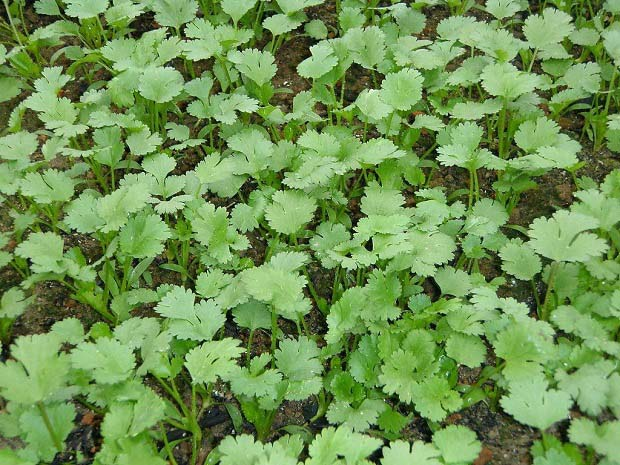
As the external temperature warms, the open winter cuisine begins to return to green. The management points are presented below。
:: pre-watering。
The cuisine is usually watered on the top leaves of the cuisine, and this year you are advised to go a few days ahead because last year's winter weather was exceptionally dry, with less rain and snow, resulting in serious soil insufficiency and slow return of the cuisine. Early watering can facilitate the rapid return of spices and their early marketing. When external temperatures are unstable and in order to prevent the freezing of cuisine upon return to the cyanide, small arches or membranes can be raised to protect the temperature。
Secondly, it is timely to take root。
Winter cuisine is largely dependent on nutrients stored in the roots, and in spring, the cuisine roots are thin, small and poorly absorbed. Rapid revitalization of the roots is required to promote plant growth. After returning to the cuisine, the second water can be poured in about 10 days, so that the fertilizers that take root with the water, such as lighthouse root agents, root roots, etc., can be applied 10 pounds per acre, promoting the formation of the lower root system and increasing production。
Thirdly, catch up in time and promote the rapid growth of plants。
Starting with the third water, the plant is growing faster, at which point it needs to be replenished in a timely manner. The fragrances are leafy and the demand for nitrogen fertilizer is high, with approximately 40 kg of high nitrogen compound fertilizer or urea per acre, or 8-10 kg of fully water soluble fertilizers, such as aromatics, lighthouses and so forth, to promote the growth of fragrances。
At the same time, in order to prevent the aging of the upper leaf and to improve commerciality, attention should be paid to supplementing the face of the leaf and preserving it. Leaf spray can be carried out with 100 times the crustal and 1,000 times the thorium esters, with 500 times the fatty of all-nutrient leaves, such as fragrance, and with a view to promoting the synthesis of chlorophyll, improving the function of the leaves and increasing the production and commerciality of fragrances。
After that, beware of the worms。
As temperatures continue to rise, pests such as gold turtles can jeopardize the growth of fragrances, which requires increased care by vegetable farmers, who can use 2 per cent avil or 5 per cent salt 1,000 times more。