The issue of concrete cracks has been a difficult problem in the engineering field. Frequent cracks in construction would seriously affect the overall and durability of the structure. In response to this issue, the present paper explores in depth the causes and effects of concrete cracks during the construction period, including building components, temperature changes, volume contractions and construction operations. On the basis of these analyses, the corresponding concrete crack control techniques for the construction period are presented here, with the aim of providing useful guidance for the control of concrete cracks during the construction period。
1. Types of cracks common in concrete construction
During concrete construction, cracks are inevitable. These cracks not only affect the appearance of structures, but are more likely to undermine their integrity and durability. In order to respond effectively to this problem, we need to have an in-depth understanding of the types of cracks that are common in concrete construction and their causes. Only then can targeted measures be taken to ensure the quality and safety of concrete structures。
1. 1 dry cracks
Dry cracks are a common type of cracks in concrete construction, usually in the early stages of concrete maintenance or about a week after construction has been completed. This crack was created by a dry indentation resulting from the evaporation of moisture in the cement plasma. Because of the varying degrees of moisture evaporation within and outside concrete, deformation of the surface from the interior results in a pull force when the difference is constrained, leading to crack formation. Especially when relative humidity is low, the dry indentation of the cement plasma is more pronounced, making the dry cracks more readily visible. These cracks consist of many shallow parallel lines or nets, usually ranging from 0. 05 to 0. 2 mm in width, and are more common in the flats and thinr beams where the bulk of concrete is accumulated, with a shorter distribution more pronounced. Dry cracks not only affect the impermeability of concrete, but may also cause erosion of steel bars, thereby undermining the durability of concrete. In addition, these cracks, as a result of water pressure, may result in water fragmentation, thus affecting the carrying capacity of concrete. The main factors influencing concrete drying are ash ratio, cement composition, cement usage, aggregate nature and usage, and the use of additives。
1. 2 plastic constrictions
Plastic constrictions are the contraction of concrete before condensation due to water loss on the surface. These cracks are often found in dry hot or windy weather and are characterized by wide and narrow cracks, wider in the middle, thin in both ends and incoherent. The length of the crack is usually between 20 and 30 cm and the width is approximately 1 to 5 mm. The main reason for this phenomenon is that, in the event of high temperatures or wind weather, the surface water evaporates rapidly before or just after the end of concrete, leading to negative pressure in the catheter, which in turn causes the concrete to contract sharply. However, concrete strength at this time is not sufficient to resist this contraction, resulting in cracks. Factors affecting the condensation of concrete include water ash ratio, concrete condensation time, ambient temperature, wind speed and relative humidity。
1. 3 sinking cracks
The formation of the cracks is usually related to the physical state of the structural foundations. Inequitable or soft local soil levels, as well as the fact that the backfilling of soil is not real or is affected by water flooding, can lead to uneven deposition, which in turn triggers the sinking of cracks. In addition, problems such as the lack of rigidity of the template, the excessive distance of the template support or the looseness of the bottom may also lead to the formation of sunk cracks. Especially during the winter, templates are supported on frozen soil, which, as it is frozen, produces uneven deposition, which also results in cracks in concrete structures. These cracks are often deep or cross-cutting, and their direction is closely related to the sinking situation, usually along a vertical or 30-45-degree angle to the ground. The larger cracks are often accompanied by a certain amount of error, and the width of the cracks is proportional to the amount of sedimentation. It is noteworthy that the width of the cracks is less affected by temperature changes. After local deformations stabilized, the cracks were generally stabilized。
1. 4 temperature cracks
Changes in temperature stress and temperature control are particularly important in the mass concrete structure. Such changes not only affect the overall strength and durability of the structure, but also continue to play a role in its use. In concrete construction, cracks can be created for a variety of reasons, such as temperature and humidity fluctuations, the fragility and unevenness of concrete, as well as structural irregularities and the quality of raw materials. Cement releases large amounts of hydrocides, especially during the sclerosis of concrete, resulting in rising internal temperatures. With late cooling, concrete surfaces can generate stress as surface temperatures spread faster and are bound by internal concrete or foundations. Once the stress exceeds the tensile strength of concrete, there will be a mild crack. In addition, even if the internal humidity of concrete varies relatively little, drastic changes in surface moisture, such as dry and wet times due to inadequate maintenance, can bind the dry surface decomposition to internal concrete, thereby triggering a dry condensed crack. Since concrete is a brittle material with only about one tenth of the resistance strength, the unevenness of raw materials, the instability of the water ash ratio, and the decomposition of the transport and irrigation processes lead to differences in the tensile strength of the same concrete, which in turn creates weak areas and is prone to cracks. In steel-condensed concrete structures, stress is mainly borne by steel bars, while in the case of solid concrete or on the edge of steel-concrete concrete, the stress is to be borne by concrete itself. Therefore, reasonable design and construction must take full account of the effects of temperature stress。
Temperature cracks are common in the concrete structure of the mass concrete surface or in areas with significant temperature differences. During the sclerosis of concrete, the waterization of cement releases a large amount of hydrothermal. In the case of concrete per cubic metre, when cement is used between 350 and 550 kg/m3, the heat of 17500 to 27500 kj is generated, resulting in an increase in the temperature within the concrete to 70°c or higher. Owing to the size of the concrete, it is difficult to distribute the bulk of the watery heat gathered internally, leading to a sharp rise in internal temperature. However, concrete surfaces spread more rapidly, resulting in internal and external temperature differentials. This marked temperature difference can lead to an incoherence between internal and external heat swelling and cooling, thus generating stress on the concrete surface. When the stress exceeds the tensile strength limit of concrete, there are cracks on the surface, most of which occur in the middle and late stages of concrete construction. In addition, large changes in temperature differentials or cold tides of concrete attack can lead to a rapid decline and contraction of concrete surface temperatures. Since condensed concrete is bound by internal concrete, it creates enormous stress and triggers cracks. Such cracks usually occur only within the shallow zone of the concrete surface。
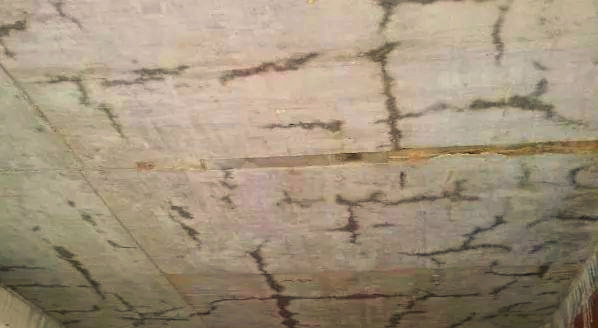
1. 5 cracks resulting from inadequate construction operations
In particular, the following are common construction irregularities:
(1) when concrete is poured on the ground, the presence of cracks is likely to occur if the vibrations or insertions are not appropriate, such as leaks, excessive vibrations or the rapid extraction of the bar。
(2) for high-altitude-supplied concrete, the contraction value increases if the wind is too fast or tanned, thereby triggering cracks。
(3) in the absence of on-site conservation measures, concrete may cause constrictive cracks at an early stage due to dehydration。
(4) the premature or inappropriate removal of the model may also lead to the creation of cracks。
2 crack control measures
2. 1 design aspects
(1) in the design of the building, the "anti" and "discharge" relationships of components need to be properly addressed. Here, the term “resistance” refers to the reinforcement of measures to prevent cracks when structures are in a state of constraint and lack sufficient deformation space, while the term “dissemination” implies a strategy to be taken when structures are in a state of free deformation with no constraints。
(2) in the design process, every effort shall be made to avoid stress concentration caused by a mutation of the structure。
(3) it is recommended that compensatory concrete contraction techniques be widely used. Since concrete contraction is a common cause of many cracks, it has become an effective solution and has proved to be effective in practice by compensating for the contraction by adding an inflation agent to the concrete。
2. 2 selection and matching design
(1) select concrete strength levels and the type and grade of cement according to structural needs, and as far as possible avoid the selection of early and excessive cement。
(2) select the sand, stone raw material with a grade, while ensuring that its sediment content meets the standard。
(3) the use of blends and concrete additives is recommended to optimize concrete performance。
2. 3 construction operational elements
(1) spraying process
In the course of the blasting, it should be ensured that the bar is inserted quickly and pulled out slowly, and that the duration of the shock is reasonably controlled according to the level of concrete collapse, in order to prevent an oscillation or leakage. It is recommended that secondary oscillation and double lasagna techniques be used to effectively remove moisture and bubbles within the genre and concrete。
(2) concrete conservation
Early conservation of new concrete is essential to prevent cracks, which can reduce the early contraction of concrete。
(3) summer construction attention
In the summer, when concrete is taken, attention needs to be paid to the temperature. The application of cryogenic induction modelling and cryogenic conservation methods is recommended and, where necessary, ice blocks may be tested to reduce the temperature of concrete raw materials。
2. 4 fragmentation control due to volume contraction
Constrictions, divided into dry and plastic cracks, are common problems in concrete construction. Dry cracks occur mainly before and after the end of concrete, and the evaporation of concrete surface water as a result of the climatic effects of the environment has led to the straining of the gel in the cement, resulting in the formation of cracks. The width of such cracks may be large, even through the entire building block. Plastic cracks, on the other hand, often occur on the surface of new concrete-fed surfaces, floors or large-area components, with irregular shapes, varying lengths and incoherence。
In order to control such constrictions, the key is to maintain structural and component moisture stability. Specific measures include:
(1) control of the water ash ratio through appropriate selection of matching and mixing. Add powdered ash to concrete and use subsequent strength to reduce cement usage and temperature increase. At the same time, the sediment content of sand and stones is strictly controlled and the use of dust is avoided in order to increase the tensile strength of concrete。
(2) strengthen early conservation of concrete. When installed, plastic film and grass bags are covered to ensure that the temperature difference within and outside concrete does not exceed 25°c and is maintained through wet water spills. In high-temperature, low-wet and windy weather, early coverage, water spray conservation and appropriate extension of maintenance time should be undertaken。
(3) when wiping concrete surfaces, care needs to be taken to avoid excessive wiping。
(4) sealed water protection methods such as water spraying to conserve concrete surfaces or to cover plastic sheeting in order to reduce water evaporation or otherwise reduce air flow, thereby slowing the evaporation of surface water。
(5) for long-term open-air stacking components, appropriate water spilling or cover maintenance should continue to be undertaken to ensure long incendiary maintenance times, especially thin wall components, should be placed in the shade and covered with stacking。
3. Common remedies for concrete cracks
As construction technology advances, concrete cracks are being repaired in increasing numbers. Common remediation measures include: surface treatment, which is used to deal with situations where the width of the cracks is smaller; sew-laying, which fixes the wider cracks by pressure-plugging, tank filling or coating closure; structural reinforcement, which enhances the structural integrity; concrete replacement, which removes damaged concrete and replaces it with new concrete; electrochemical protection, which uses electrochemical reactions to repair the cracks; and imitation self-healing, which is legal and imitates bio-healing mechanisms。
3. 1 surface treatment
The surface treatment method includes two methods: painting and patching. For small cracks that are difficult to fill with oars, and for hair cracks that are not depthed by the surface of the steel bars, surface coating may be selected for repair. In addition, the same applies to non-spill, non-scaling and inactive cracks. In the case of large-scale leaks, such as beehives or deformations, where it is difficult to determine the location of specific leaks, surface patches may be used to protect against leakage by using membranes or other water-proofing sheets。
3. 2 mixed sealing of slurry
The emulsion is sequestered and applied to all kinds of cracks, both fine and large, with good treatment. It offers a variety of approaches that can be used either individually or in combination. For example, in the repair of a bridge crack, a coating can be made, followed by a closed coating, while in the case of large cracks that appear on the surface of the road, the pavilion, etc., it is more appropriate to use an open tank filling method. In addition, in order to prevent the erosion of steel and concrete from harmful ions, waterproofing of coatings can be used to enhance structural durability。
3. 3 structural strengthening
Structural reinforcement can be used to repair structural intensities caused by cracks from overload, reduced durability of concrete due to long untreated cracks, and damage due to fire. The methodology covers a wide range of technical means, such as fault reinforcement, anchor reinforcement and pre-resilience. In order to ensure the effectiveness of concrete crack treatment, a series of inspections could be carried out, including tests of material repair performance, core sampling analysis, water pressure tests and pressure gas tests。
4. Control of building blocks cracks
4. 1 crack control of beams
The beams are areas of buildings that are prone to cracks, which often include cracks in the lacerous zone, slanted cracks in the vicinity of the mats and cracks in the pressurized zone. Once it has been determined that these cracks will not reduce the carrying capacity of beams, they can be handled by simple methods such as surface treatment, sew-laying, etc. However, if the cracks in beams have affected their carrying capacity, they need to be examined more carefully and strengthened through analytical comparisons using an economical and efficient approach. Options include steel reinforcement, stick-up reinforcement, three or four sides of beam encircling, and one-sided amplification of beams。
4. 2 crack control of existing concrete plates
Cracks of concrete sheeting are a common quality problem, with diverse manifestations, including turtle cracks, vertical cracks, horizontal cracks and tilt cracks. These cracks were created in connection with both design, raw materials and the construction process. In order to control the cracks effectively, the following measures could be taken: first, to ensure the quality of raw materials; secondly, to strictly control the concrete mixing process; secondly, to upgrade the requirements for the transport and construction of concrete; and, lastly, to improve the monitoring of concrete construction; and finally, to ensure the conservation of concrete and the protection of finished products. Because of the complex and multifaceted causes for the formation of concrete cracks, there is a need for prevention from a variety of perspectives, including material selection, construction processes and structural design. Where cracks are found, appropriate remedial measures should be taken to prevent their further expansion, depending on the circumstances。