Class analysis has always been the central analytical tool of left-wing theory in the interpretation of social structures and the promotion of liberation movements, rooted in historical materialism, providing a systemic theoretical framework for understanding capitalist exploitation and social change. However, the emergence of post-modernism and the flourishing of identity politics in the second half of the twentieth century posed a fundamental challenge to the “priority” of class oppression. In the post-modern discourse, multiple dimensions of oppression, such as race, gender, culture, sexual orientation, and class oppression are intertwined, mutually reinforcing and even more prominent in some social movements. This reality forces the marxist tradition to confront a core theoretical and practical issue: will the “universal narrative” of the left, with class liberation at its core, suppress the special demands and unique voices of other oppressed groups, with due recognition of the objective existence of pluralistic oppression? How can political practices aimed at the liberation of the proletariat respond to and resolve these non-classic dimensions but also profound social divisions
Class analysis paradigm constructs and theoretical nucleotosis
The marxist classic class analysis is based on the solid foundation of historical materialism, defining class as a social sphere with objective economic attributes, and considering its existence closely linked to a particular historical stage of productive development as a corollary of the movement of conflicting productive and productive relationships. Lenin’s classic definition of class, which further defines its core characteristics: class is a social group that “can occupy the labour of another group because of their different positions in a given socio-economic structure”, anchors the centrality of economic status, exploitation and exploitative relationships in class division. In the classic class analysis paradigm, class struggles are a direct driving force for historical development, while the proletarians, by virtue of their exploitative and revolutionary position in the production structure of capitalism, have been entrusted with the historic mission of leading social change towards universal human liberation。
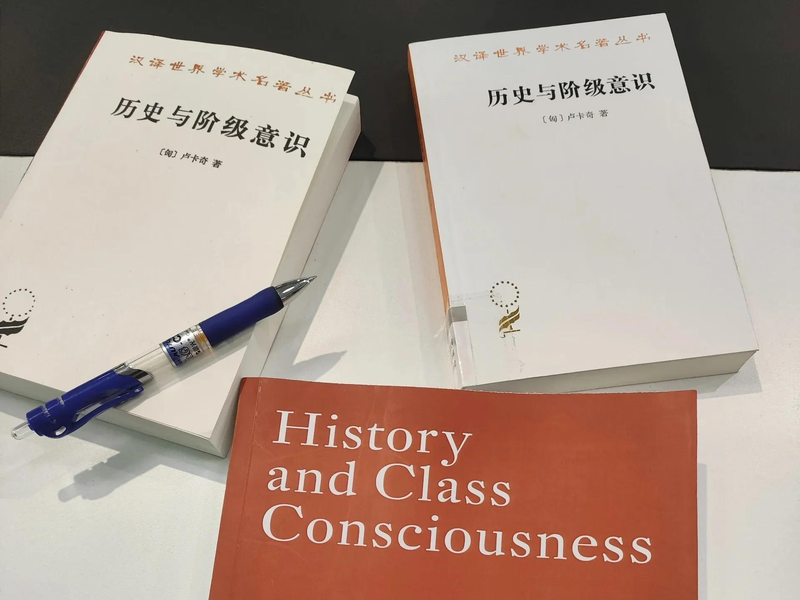
In the twentieth century, this paradigm faced the twin challenges of theory and practice, and its absolute economic determinants began to break, with the expansion and reflection of class analysis emerging within the left-wing theory. The early western marxists, like lukacchi and grange, took the lead in overcoming the single emphasis of traditional class analysis on the foundations of the economy by looking at the ideological and cultural realms: the concept of “class consciousness” put forward by lucachi, which emphasizes that the ability of the proletarian class to develop a conscious class consciousness is key to the success of the revolution, and the “cultural leadership” theory of grange, which points out that the dominant class is governed not only by violent coercion, but also by dominance at the cultural, ideological level, an area in which the proletarian revolution also needs to compete. For the first time, the two have sought to clarify the cultural and ideological dimensions of class politics, setting the stage for the expansion of class analysis。
Since then, the reflection of left-wing theory on classical class analysis has deepened, with a clear trend towards “de-economic determinants”. Alducer’s student, planchass, presented a “pluricultural decision-making theory” of class formation, arguing that the formation of class is not determined by economic factors alone, but rather by the interplay of economic, political, ideological and other factors; darundorf recasts the definition of class from a political power point of view, arguing for the separation of the economic and political ruling class, emphasizing the importance of power distribution in class division. These theories explore the multiple dimensions of social politics and ideology that allow class analysis to move beyond purely economic spheres。
As the focus of class analysis gradually shifts from the economic base to culture, lifestyle and consumption patterns, the core content of the class is beginning to be diluted, which is particularly evident in budieu's theory. The concept of “cultural capital”, advanced by budieu, extends the form of capital from economic capital to multiple forms of culture, society and symbolism, considering that social stratification is determined not only by economic capital but also by the combined possession of the various types of capital, and that its theoretical analysis has shifted from the traditional “class” to the “class” in the sociological sense. This shift in theory has led to a gradual blurring of the boundaries of class as a solid economic-political sphere and has provided an important theoretical space for post-modernism to completely deconstruct the “centre” of class。
Post-modernist theory and the reality of identity politics rise
Post-modernism, as an anti-traditional ideological movement, with its fundamental criticism of fundamentalism, grand narratives and fundamentalism at its core, has directly impacted on the theoretical foundations of the class-centred left-wing emancipation politics. In the post-modern state of the world, leota declared the end of an “absolute narrative” aimed at the collective liberation of humanity, arguing that such narratives are essentially a suppression of the diversity of social experiences; fukuo, through a microanalysis of power, pointed out that power is not concentrated in the macro-power of the dominant class, but in the micro-networks scattered across all corners of society, a view that has completely broken down the class definition of power in traditional class analysis. Post-modernist thinking, which ultimately points to the emphasis on difference, fragmentation and pluralism at the political philosophical level, provides an important intellectual underpinning for the rise of identity politics。
The transition to post-modernism has three core features and is a key theoretical weapon in deconstructing class-centreism:
First, to reject fundamentalism and universalism and to reject any single identity (e. G. Class) as a static, birthrightly unified and representative of the oppressed as a whole, and to consider all social identities as the product of social construction and not as a birth
Second, to emphasize differences and fragmentation, considering that modern society is not a unified whole linked to class ties, but rather a “mixed picture” of multiple, heterogeneity, identity segments in constant flow, and that the experiences and claims of different groups are inconvenient
Thirdly, by deconstructing grand narratives, traditional narratives that have a unified orientation or a single dynamic of history, such as class struggles, are seen as often under the name of “universal liberation”, stifling the unique experiences and voices of minorities and marginalized groups。
The reality of post-modernist ideological and social movements has led to the emergence and flourishing of “identity politics” as an important realist force challenging class-centreism. Identity politics stems from a series of new social movements, such as feminists, black people's movements, sexual minorities' rights movements, and indigenous peoples' movements, which, unlike traditional proletarian revolutionary movements, are not fought as “proletary classes”, but are marked by specific identities such as women, blacks, homosexuals, indigenous peoples, who claim that the source of oppression is not only class exploitation, and that racism, patriarchy, heterosexual hegemony, colonialism, etc., are independent forms of oppression and cannot simply be reduced to subordinates to the economic exploitation of capitalism。
As corbena mercer has pointed out, the “new” of the claims of these new political subjects lies precisely in their emphasis on “differentiation” — differences in group identities, differences in oppressive experiences, differences that cannot be simply codified into traditional left, right, middle-class political formulas, or included in a single class emancipation narrative. The core claims of identity politics can be summed up as “recognition”: demand that mainstream societies confront the existence of marginalized groups, recognize their unique claims to identity and values, and stop assimilating and strangling them in the name of “universalization”。
Charles taylor's theory of “political difference” exemplifies the “recognition” of identity politics, noting that justice in modern societies includes not only the allocation of resources but also the equal recognition of different identities, while nancy fraser further sums up the dual dimension of justice in contemporary societies as “redistribution” and “recognition”, arguing that traditional class politics focus only on the “redistribution” of economic resources, while ignoring the cultural “recognition” problem, which is at the heart of identity politics. Post-modernist theory, which combines critical thinking with the real demands of identity politics, has forced left-wing theory to confront the reality of multiple oppression and rethink the orientation of class in liberal politics。
Is class oppression the “first dimension” or “one of the multiples”
The rise of post-modernism and identity politics triggered a core debate within the left-wing theory: is class oppression still a fundamental, structured “prior” position in a pluralistic repressive society, or is it just one of the dimensions of oppression alongside race, gender, etc.? The parties to this debate, represented by marxists and radical left-wing scholars respectively, have developed opposing theoretical views and have contributed to a deep reflection on class analysis and emancipation politics。
The post-marxists, represented by raclaw and murphy, have carried out the most thorough deconstruction and restructuring of traditional marxist class analyses. In the hegemonic and socialist strategy, they explicitly accused the traditional marxism of falling into the wrong zone of “class theory” and “economic decision-making”, arguing that there was no one-class-minded “working class” subject determined a priori by the economic fundamentals — that there were multiple differences within the working class, such as race, gender, industry, geography, etc. — that would diminish the unity of its class and prevent it from becoming a natural revolutionary subject. In the view of both raclaw and murphy, politics has an independent ontological status, and all claims of social identity and interests are not an objective reflection of the economic foundation, but are randomly constructed in specific political discourse and practice, and class status is only one of many social identities and does not have natural priority。
At the same time, some radical left-wing scholars have warned harshly about the shift in identity-led political doctrines, arguing that excessive defunctization of the centrality of the class would deprive left-wing doctrines of their capacity to criticize the capitalist system and end up in fragmentation. Ellen meeksings wood pointed out sharply that, in an era of expanding global capitalism and deepening exploitation, many left-wing theories were busy conceptualizing capitalism itself, dissolving its systemic domination and exploitation into countless fragmentation issues of “differentiation” and cultural identity. This practice has in fact become the “exoneration card” of capitalism, leading to the neglect of the capitalist system as an important institutional basis for forms of oppression such as racism, patriarchy and, ultimately, the defusing of the drive of left-wing movements to transform the very fabric of society. Wood also pointed out that the concept of “civil society” espoused by post-modernism, while defending individual freedoms and critical of state power, dangerously became the “proximity” of capitalism, ignoring the fact that civil society itself was the product of capitalist economic foundations and that within it was the rule and oppression of capital。
At the heart of this argument is a fundamental question: what is the relationship between racism, patriarchal forms of subclass oppression and the capitalist system? Pure identity politics, which tends to view various forms of oppression as separate from each other, ignores a key fact: various forms of non-class oppression have historically and structurally been closely interwoven and mutually constructed with the development of capitalism. For example, the original accumulation of modern capitalism had to do with the genocide and plundering of colonies and the occupation of female gender oppression and unpaid labour; the establishment of the united states capitalist industrial system, which was inextricably linked to the trade, exploitation and apartheid of black slaves, and its so-called “new world proletarians”, had been shaped by the twin effects of racial violence and class exploitation. It can be said that the capitalist system has been developing in a way that has incorporated and re-formed forms of oppression, such as racism and patriarchy, as part of its own rule, and that various forms of non-class oppression have acquired new forms of existence and ways of functioning within the framework of capitalism. The symbiotic relationship between the two dictates that liberal politics cannot be separated from class analysis to speak of pluralistic oppression, nor can it remain entrenched in class-centreism to ignore the dimensions of other oppression。
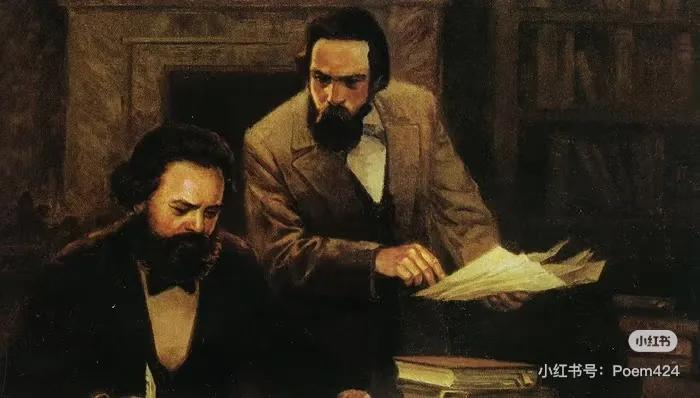
In the post-modern era of pluralistic oppression, class analysis has not been “defunct” because of the critical and identity politics challenges of post-modernism. It remains of irreplaceable theoretical and practical value as a central tool for understanding the structure of capitalist societies and analysing economic exploitation; but it is undeniable that the traditional status of class analysis as a “first” and even “single” instrument of analysis has been completely shaken, and that its inner core needs to be re-structured and expanded in response to multifaceted challenges。
The challenges of post-modernism and identity politics are profound and positive: it reveals the complexity and diversity of human oppression experiences, breaks the theoretical shackles of class theory and economic decision-making, exposes left-wing theory to the reality of multiple oppressions, such as race and gender, and warns that any single emancipation blueprint can become a new exclusionary rhetoric that silences the voices of marginalized groups. However, there is also a clear theoretical and practical risk of complete fragmentation of identity politics: it sees various forms of oppression as separate from each other, neglecting that the capitalist system is an important institutional foundation for many forms of oppression, and ultimately losing the capacity to judge the fundamental systems of capitalism, leaving left-wing movements in a fragmentation of “identity delimitation” and losing the incentive to transform the fundamental fabric of society。
Future left-wing emancipation politics should neither go back to the rejection of differences and the elimination of pluralist class theory, nor become mired in cultural relativism that negates solidarity and structural analysis, but should move towards “multiple universal emancipation” based on a cross-cutting perspective. This requires an in-depth analysis of how repressive systems, such as capitalism, racism, patriarchy, are interwoven and mutually constructed, responding to the diverse demands of different groups while criticalizing the fundamental systems of capitalism; the formation of cross-resistance coalitions that recognize internal differences in concrete political practice, with a deeper integration of “recognizing” and “redistributional politics”; and the maintenance of an open and counter-productive attitude of left-wing theory, in which the dynamic balance between universality and specificity, economy and culture, solidarity and differences is constantly negotiated。
Classes, as one of the fundamental forces shaping the fabric of modern society, will continue to be indispensable analytical dimensions of left-wing emancipation politics, but it must learn to find its own new, non-exclusive voice in a “social concert” of diverse identities and diverse claims. It is no longer the “dominant melody” that suppresses other voices, but rather an important “sound” that echoes each other's voices and supports each other, which together constitute an era of strength against oppression and in pursuit of liberation. A viable left-wing narrative never lies in its ability to provide a perfect, once and for all answer, but in its ability to be an open process that continues to question itself, evolves over time, accommodates and translates new claims, new experiences – a central orientation of class analysis in an era of pluralistic oppression, and the future direction of left-wing politics. Headline creation camp