In the midst of the evolution of human civilization, the mode of governance of ideas often profoundly influences a country's development trajectory and social patterns。
The stratification of ideas that emerged from china's post-qin han was distinguished from the ancient rome public ideology model and, with its unique structure and functionality, became the central mechanism for maintaining the long-term stability of the empire。
This mechanism, which establishes a hierarchical framework of governance by giving different social strata the inner core of the idea of differentiation, has also invisibly reshaped the ideological ecology and development path of traditional chinese society。
I. The division of administration of thinks: the competition of the scientific and worth instruments
As a hidden instrument of social governance, ideas have taken on very different forms of practice in ancient civilizations of the central and western world。
The central characteristic of ancient roman civilization is the public nature of ideas, whether nobles, citizens or civilians, following the same set of legal norms, social rules and a system of world interpretation. This unified mode of supply of ideas creates the intellectual basis of relative equality, allowing all segments of society to interact within a common framework of values, with the advantage of creating a strong sense of civility and community identity, and strengthening the authority of laws and rules through their universal application。
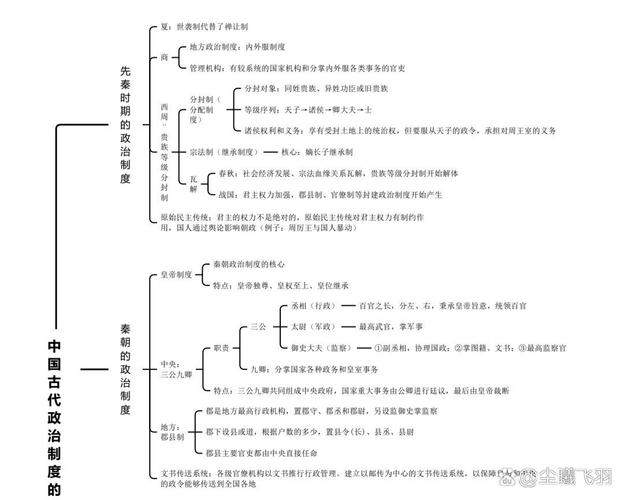
By contrast, the qinhan empire, after completing its reunification of the border, did not choose the conglomerate of ideas, but rather built a sophisticated hierarchy of ideas. This choice is not an accident but is based on realistic considerations of china's vast territory, large population and complex social structures. As the core of society, the royal class, the bureaucracy and the people at the bottom have been given a completely different ideological orientation: the monarchy was based on the rule of law, the bureaucrats were based on a code of conduct for the confucian, and the people were based on the creed of the domesticated monger。
This differentiated distribution of ideas has made it possible to exercise precision in the governance of different sectors of society. Its efficiency lies in reconciling the social functions and governance needs of all sectors, creating a stable triangular support structure that is a distinct feature of traditional chinese social governance。
Ii. Three structure and functioning of the initiative structure
(i) the royal perspective: the french are nuclear domination techniques
The central claim of the post-qin han royal class has always been to achieve long-term stability control over large populations. Under this claim, the french ideology became the hidden inner core of royal governance. The skill of “one people, the fool, the weak, the poor, the tired” proposed by the merchants is not a moral value judgement, but a purely technical means of domination. In the royal system of consciousness, the population is not an individual with an independent mind and a dominant mind, but a social resource that is managed and regulated. At the heart of the philosophy of the french is the establishment of a system of obedience based on fear, through strict laws, clear rewards and concentration of power, to ensure the absolute authority of the crown and the stability of the social order. This intellectual choice is entirely at the service of the efficiency of domination, with “control” as a central objective, stripping the idea of its own value logic and highlighting the extreme application of the instrument rationality。
(ii) bureaucracy: self-regulation based on confucianism
The long-term security of the empire is difficult to maintain through the mere rule of the french, and the bureaucracy, as an intermediary between the monarchy and the people, needs a system of ideas capable of achieving self-restraint and identity in values, a gap that the confucian ideology fills。
The ideals of loyalty, filiality, respect and courtesy advocated by the confucian, appear to be moral advocacy and essentially professional training for bureaucratic groups. By building a complete ethical order, it convinces bureaucracies that their governing practices are not simply the application of a mere instrument of domination, but the maintenance and implementation of an ethical order. This identity of value allows bureaucracies to consciously submit to royal authority, to adhere to their duties and to rationalize their own values in a highly hierarchical bureaucracy。
The confucian ideology has given moral legitimacy to bureaucratic governance, reducing the cost of the royal oversight of bureaucracies and guaranteeing the orderly functioning of the administrative system as an ideological link between the royal power and society。
(iii) underlying people: survival orientation of trainer
For people at the bottom of the vast majority of the population, the empire's demands for governance are not to foster a sense of political awareness and participation, but rather to lead it to the status quo and to subjugation. The political criticism and philosophical thinking inherent in the originalists' ideas have been severed and transformed into an attitude of living “in accordance with their nature, incompetence and common sense”. This domesticated philosophies has lost the reflection of social order and the quest for freedom in the old philosophy and has become a tool of governance that reduces the cost of resistance. It leads people to subjugate their predicaments and destinies into natural norms, abandons questioning and contesting the existing order and accepts the established social status and life trajectory in the basic demands of subsistence and the spiritual comfort of “satisfaction”, thus achieving stability at the bottom of society。
Iii. Historical implications of the ideological hierarchy: the dual dimensions of stability and confinement
In terms of governance efficiency, a hierarchy of ideas has undoubtedly been successful. It has built a closed-ring governance structure of the “royal regent, the ruler, the ruler of the people and the ruler of the people” by giving it an accurate capacity to the various sectors of society, acting within the established ideological framework and creating a highly stable social order。
This mechanism has enabled the traditional chinese society to resist many internal and external shocks in a long historical process, maintaining the continuity of the empire and its cultural heritage, whose governance wisdom has had a profound impact on the development of ancient chinese society。
Equally, the negative impact of this system cannot be ignored. The ideological hierarchy is essentially a restriction on freedom of thought and the entrenchment of cognitive boundaries, which put an end to the possibility of philosophical development. The core values of philosophy lie in the question of the nature of the world, the reflection on the existing order and the reshaping of future patterns. This system excludes precisely this critical and creative thinking. When different sectors are given the pre-defined “truth”, ideas lose space for free collisions and mutual inspiration, and the ideological ecology of society as a whole becomes rigid。
More importantly, the entrenchment of ideas directly impedes the generation and development of science. Advances in science depend on the spirit of exploration of the unknown world, the attitude of questioning existing knowledge and the cross-sectional and cross-cutting exchange of knowledge. The stratification of ideas has limited the perception of the various sectors within a specific framework, lacking a universal rational basis for thinking and a platform for knowledge-sharing and creating an intellectual dynamic and a social environment for scientific development. This has become one of the major reasons why traditional chinese societies, despite their brilliant technological achievements, have failed to nurture the modern scientific system。
Concluding remarks
The hierarchy of ideas that emerged from qinhan was the hidden governance mechanism built by ancient chinese rulers based on the need for governance. It has achieved long-term stability in society through the supply of differentiated ideas and has demonstrated unique governance wisdom, but also at the expense of intellectual confinement, which has limited the development of philosophy and science and has become the hidden shackles of traditional social development in china。
Looking back at this historical phenomenon, we can see clearly that the free growth of ideas and the confluence of diversity are central drivers of progress in civilization. A healthy socio-ideological ecology requires both value orientation that is consistent with social development needs and the inclusion of different ideas and cognitive approaches. In contemporary social governance, how to strike a balance between maintaining social stability and encouraging intellectual innovation, and how to break down cognitive barriers and promote knowledge-sharing remain important topics for our in-depth reflection. A study of china's ancient ideological hierarchies would not only allow us to better understand history, but would also provide useful insights into contemporary societies ' intellectual construction and innovation in governance。