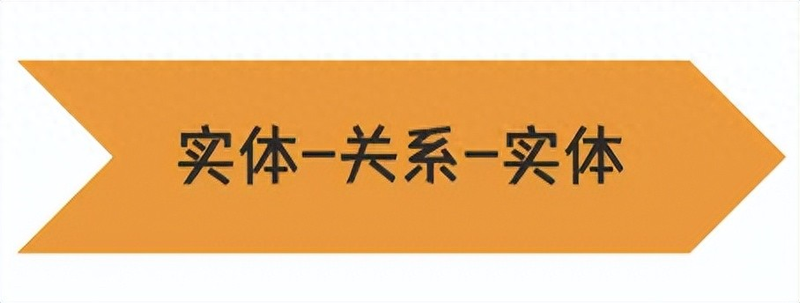
The knowledge mapping is a structured semantic knowledge base that symmetrically depicts the concepts and linkages in the real world, with the core unit being the “entity-relationship-entity” triad。
Knowledge mapping — knowledge graph — is accompanied by the continuous evolution of artificial intelligence, and its application is growing in breadth and influence, yet, with the exception of a few professionals in the field, there is still a lack of systematic public awareness of its nature。
To that end, this paper will provide a concise overview of the basic content, core functions and building paths of the knowledge map, helping you quickly to create a clear picture。
What's the knowledge map
Knowledge graph, a key technology branch of artificial intelligence, was first introduced by google in 2012 as a structured semantic knowledge base for the symbolic portrayal of concepts and their linkages in the physical world. Its core component unit is the “entity-relationship-entity” troika, supplemented by the entity's properties-values, which interconnects the various entities and forms a networking structure。
The essence of the technology lies in the attributes of its structured semantic knowledge base, which is the same as the relationship database as the structured data storage paradigm, but which is fundamentally different from the data organizational logic。
The relationship database relies on a two-dimensional form with a row to record information, while the knowledge map is based on a three-dimensional group of “entity-relationship-entity”; its design focuses on a network of relationships between visible modelling entities. This gap is being addressed in a more flexible and semantic way by the emergence of knowledge maps, which are facing structural rigidities and search efficiency bottlenecks when dealing with complex linkages。
Can knowledge mapping address issues, and can relationship databases also be addressed? The answer is that relationship databases can cover most of the applications of the knowledge map, but the process of realization is often cumbersome and low performance, and that part of the complex correlation queries can only be performed efficiently by knowledge mapping. Therefore, the two are not mutually exclusive, but rather synergetic. In particular, knowledge mapping is expressed in a simpler and more efficient way when processing trimester structure data。
The value of the knowledge map derives from the four core characteristics assigned to it by its intrinsic structure:
Unified structured expression: organization of knowledge in a machine-deconstructable, human-understood way
A rich semantic carry: clearly depicting concepts, attributes and semantic links between entities
Reusable base of background knowledge: construction can directly support downstream tasks after completion
Strong correlations and graphic computing: natural mapping features supporting algorithms such as path reasoning, community discovery, etc
Its typical landing scene focuses on three main areas: search optimization, smart questions and answers, and big data analysis。
The construction of the knowledge map is a systematic project that covers the following critical phases:
Data acquisition: raw information from structured, semi-structured and non-structured sources
Information extraction: identifying entities, extracting relationships, extracting attributes, forming preliminary knowledge modules
Knowledge convergence: discriminating, aligning, consolidating differentiating knowledge, eliminating redundancy and conflict
Knowledge processing: reasoning completion, quality assessment, model optimization, improvement of knowledge integrity and accuracy
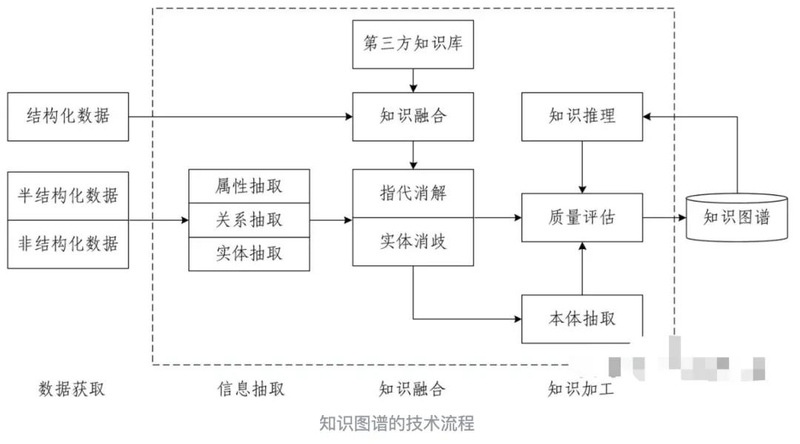
The starting point for the creation of knowledge maps is the acquisition of data, which constitute the original source of knowledge and may take the form of tables, texts, databases, etc. Based on its organizational pattern, the data can be divided into three categories: structured data, non-structured data and semi-structured data。
Structured data refer to the contents of tables or databases presented in a fixed format, as they have clear fields and linkages that can be used directly for the construction of knowledge maps。
The unstructured data cover non-fixed-format information, such as text, audio, video and pictures, which must be extracted and processed in order to extract the entity and relationship that can be used to construct the map。
Semi-structured data are structured between non-structured formats such as json, xml, which contain a certain tagging structure, but still depend on information extraction techniques to be converted into semantic units required for knowledge mapping。
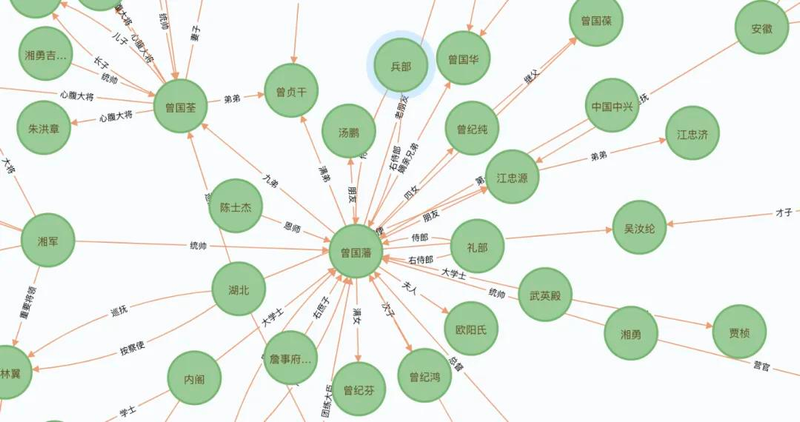
Knowledge extraction
Knowledge extraction covers core tasks such as physical identification, relationship extraction and attribute extraction. Currently, structured data remain the main source of knowledge acquisition. For such data, knowledge mapping can directly map and convert, build initial data sets and continuously expand their coverage using knowledge mapping supplementation techniques。
Entity recognition relationships extraction attributes extract knowledge integration
In building knowledge maps, data from multiple sources need to be consolidated. These data sources often overlap and overlap, and the same concept or entity may appear repeatedly. The central objective of knowledge integration is to integrate semantic equivalents of entities, to achieve the integration of multi-source isomeric knowledge and to create a coherent and non-duplication-free knowledge base。
Knowledge processing and storage
Knowledge processing focuses on in-house construction, knowledge reasoning and quality assessment; knowledge storage is responsible for the sustainable preservation of laundered and enhanced knowledge in structured, searchable formats that underpin subsequent efficient retrieval and application。
Summary
Knowledge mapping, as a key artificial intelligence technology, is constantly evolving and landing. By transforming mass unstructured information into structured semantic networks, it significantly enhances the ability of humans to interpret and use knowledge and drives the intellectual upgrading of industries. Based on knowledge mapping, organizations and individuals can achieve systematic management and efficient transfer of knowledge resources, thereby optimizing decision-making processes and enhancing operational effectiveness。