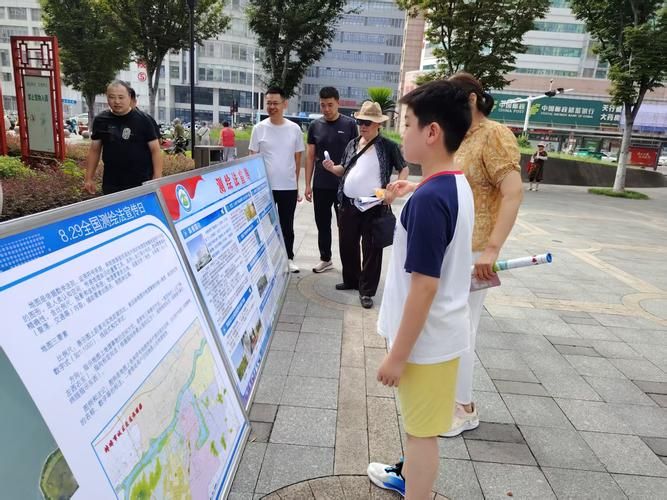
Part i. Seismic basics
Why is there an earthquake
Earthquakes are the result of earth movements. The earth's crust is also constantly changing in its movement。
The dynamics of the earth have gradually accumulated enormous energy, with very powerful effects on the underground rocks, and when the rocks are unable to withstand these forces, there are sudden breaks and distortions。
Earthquakes are surface vibrations caused by energy released by faulty rock fractures in the crust。
Rock break-ups produce seismic waves, which reach the surface, and the ground vibrates, which is the earthquake。
What are the types of earthquakes
There are three main types of natural earthquakes: volcanic earthquakes, falling earthquakes and tectonic earthquakes。
Volcanic earthquakes were caused by ground vibrations caused by volcanic eruptions that caused magma to hit the surface. Volcanic earthquakes have a relatively small impact and damage。
The sinking earthquake was caused by ground vibration caused by the sinking of the ground floor. For example, the collapse of underground limestone dissolved holes, or the collapse of mining areas, can cause small ground vibrations. Such earthquakes are generally less destructive。
What we call an earthquake is a tectonic earthquake。
The tectonic earthquake was caused by a faulty and fractured rock formation in the deep underground. Such earthquakes, which account for more than 90 per cent of the global number of earthquakes, and the intensity of vibrations and the scale of impacts, pose the greatest threat to humanity。
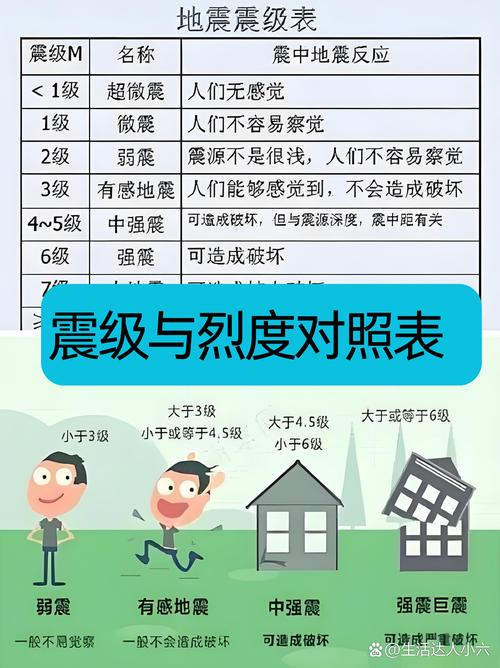
Earthquakes are big. The size of the earthquake is expressed by the magnitude of the earthquake, the stronger it is, the greater it is. Earthquakes can be classified by magnitude into the following categories:
The seismic magnitudes were weak, sensitive, destructive and severe。
Weaknesses: normally refer to earthquakes below level 3, which are usually invisible and can only be recorded by instruments。
Sensitivity earthquakes: the general reference is to earthquakes above level 3 and below level 5 that can be felt, but do not generally cause damage. More than 50,000 earthquakes occur globally each year。
(b) disruptive earthquakes: generally referred to as earthquakes above level 5 capable of causing damage to the surface and its construction facilities. Globally, on average, there were about 1,000 earthquakes per year at above level 5。
Severely damaged earthquake: means earthquake above level 7. Such earthquakes occur 10 to 20 times a year globally, although most occur in the ocean and in wasteland。
The energy varies by more than 30 times for each level of shock, that is to say, the capacity generated by a magnitude 7 earthquake is equivalent to almost 1,000 magnitude 5 earthquakes。
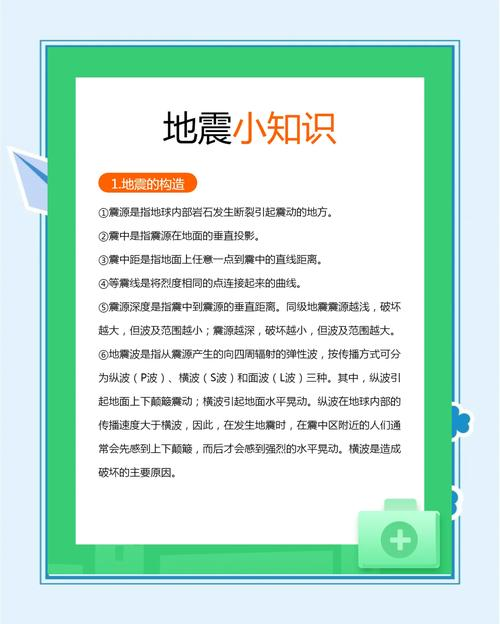
When earthquakes occur, they produce seismic waves, and the perceived vibrations are caused by seismic waves。
When earthquakes occur, they tend to experience up and down, and then shake around. This is due to the characteristics of seismic waves. Seismic waves, which consist mainly of vertical waves, transwaves, etc., are spreading at a rapid but weak rate, giving a sense of up- and down-swing; they are spreading at a slightly slower pace, but they are strong and can cause significant shaking, causing serious damage to surface buildings。
The extent of the damage caused by the earthquake, in addition to the size of the magnitude of the earthquake, is related to the depth of the source, the mid-range of the earthquake and the spread of seismic waves. We measure the damage caused by the earthquake in terms of intensity. In general, after an earthquake, the epicentre of the earthquake was damaged most severely and with the highest intensity. From the epicentre to the surrounding area, the intensity is gradually decreasing. An earthquake has only one magnitude, but it allows for different degrees of intensity。
In the event of an earthquake, the site of an earthquake inside the earth was called the source. The point on the ground facing the source is called the epicentre. It's called the depth of the earthquake. Any distance from the ground to the epicentre is called the epicentre。
Earthquakes on earth are not evenly distributed and, as can be seen from the map of the world's epicentre, the global distribution of earthquakes is of a certain regular nature, mainly in the pacific rim earthquake zone, the eurasia earthquake zone and the ridge earthquake belt。
China is located in the south-eastern part of eurasia and is located in the pacific ocean, a country severely affected by earthquakes。
As can be seen from the map of the country's main earthquake belts, the country's earthquake is widespread, with some 20 major seismic belts throughout the country。
Part ii. Macro-prompt phenomena of earthquakes
Pre-earthquake-related phenomena in nature were referred to as pre-earthquake symptoms. Pre-earthquake anomalies are micro- and macro-normal。
Micronormalities, such as topographic variability and geomagnetic anomalies, are primarily detected by high-precision scientific instruments。
Macro anomaly refers to sensory abnormalities, mainly groundwater abnormalities, plant and animal abnormalities, geoacoustic anomalies, and ground light。
Changes in well water
It's a long way to go. Province
No rain, no color, no smell
The jet's ringing again
This is a macroprompt of well water in groundwater。
When groundwater is bulging, obscuring and smelling, it may be a pre-earthquake anomaly. Of course, many causes cause anomalies in groundwaters, which may also be affected by other environments。
Ii. Animal anomalies
Many animals showed varying levels of “unusual behaviour” before many major earthquakes in history. So, people call animals “living instruments” to observe the signs of earthquakes。
People make up a proverb about these anomalies:
The mules don't go in circles and get out of the ropes
Pigs don't eat dogs, rabbits jump and jump
Ducks don't go up a tree, pigeons don't fly back to the nest
The hibernation snakes come out of the hole early and the rats run around
The locusts are moving up and down, and the fish are spinning
The charades are moving, the bees are terrorizing the animals
There are also a number of factors that cause animal anomalies, so the presence of anomalies in animals is not necessarily a precursor to earthquakes。
Iii. Light and holding
Ground light refers to what people see in the sky when a big earthquake takes place, and the colour of the ground light is different than blue and white. As a rule, small earthquakes are not easy to cause land-light phenomena, the arrival of which often bodes well for the imminent occurrence of a major earthquake, which was prominent in our city of liaoning sea in 1975 and before the earthquake in hebei tangshan in 1976. It would be possible to avoid an earthquake disaster if a number of shock avoidance measures could be taken quickly and decisively at this time。
Minutes and hours before the earthquake, there was often a noise from deep underground, known as the “earthings”. Ninety-five per cent of the inhabitants who did not sleep before the tangshan earthquake were surveyed heard. These are low, low and low, completely different from the usual urban noise。
Part iii. Identification and eradication of earthquakes
Because of the devastating nature of the earthquake, people are prone to panic about the earthquake, when rumours of the earthquake appear and spread quickly. Earthquake rumours are very damaging and have the potential not only to disturb our learning, production and life, but also to disrupt social stability。
How do you recognize the earthquake rumors
Rumours often have the following characteristics:
The “forecasting” of earthquakes is large in magnitude, with the timing of earthquakes and the specificity of earthquakes, such as those occurring in a particular city and in a few days。
2. A foreigner, an expert or an seismic agency made a forecast。
3. Forecasts with feudal superstitions or with eccentric legends。
Earthquake rumours exist because earthquake predictions are a worldwide scientific challenge and are still being explored。
Our earthquake forecasts are world-leading and have successfully forecast earthquakes such as the liaoning sea city. But for now we can only make some predictions of some types of earthquakes, not all of them. In particular, it is far from as accurate as weather forecasts。
The power to publish earthquake forecasts rests with the government, and no other unit or individual has the right to publish earthquake forecasts. Article 16 of the law of the people's republic of china on the prevention and mitigation of earthquakes provides that the state shall have a unified system for the publication of earthquake forecasts。
Thus, when the news of an earthquake comes, it is important to remember the most basic one; the news of an earthquake is forecast only to the government。
To deal with the earthquake rumours, we have to “do not believe, do not spread and report in a timely manner”。
Part four, what if an earthquake comes
As we all know, earthquakes, like wind, rain and lightning, are a natural phenomenon and an objective pattern. With advances in science and technology, people's approaches to earthquake disaster prevention and response are also increasing。
What do we do when an earthquake does happen
First, don't panic, don't move blindly. Whether the earthquake is large or small, near or far away, is judged by the sense. The general near-earthquake is first upside down and then swings to and from the right, while the long-earthquake is only the back and the right. In the case of a small earthquake or an earthquake, the houses we now live in are largely earthquake-resistant and do not have to panic。
Second, the right way to avoid earthquakes。
In different places, shock avoidance is different, and we are talking about how to avoid earthquakes in schools, homes and public places。
How to avoid the shock at school:
Security alert: 1. All operations are under the direction of the teacher
2. Take care of each other among students and among students
3. Avoid the shock under the school table and evacuate in an orderly manner, without overcrowding。
What if we're in class and there's an earthquake
First of all, we have to wait, get down or sit down, get the head under the desk, and never run around the podium. Try to twist the body and lower the weight of the body. Grab a firm object like a table leg. Protect the neck, eyes, nose and mouth。
After the earthquake had ceased, they should be evacuated in order under the direction of the teacher, with the school bag placed on their head at a distance. Especially in narrow places such as classroom entrances and stairwells, it is important to slow down, to find fallers to help each other and to inform those who follow in a timely manner in order to avoid overcrowding。
Once outside, it is important to hide as far as possible, where there is no easy fall around or above the head。
If we are in the playground or outdoors, we can stay put, keep our hands on the head and be careful to avoid high buildings or dangerous objects. Don't forget to go back to class。
How to avoid shocks at home:
(a) security alert 1: hide and run, and do not run
2. Hide in solid places (under the bed, in small spaces, where there is support)
Open the door, turn off the gas, power, etc。
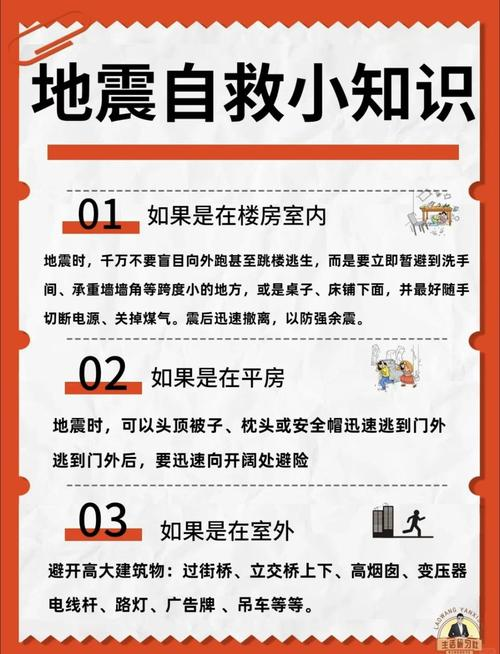
And when the earthquake is averted, take refuge in the place where you were at the time of the earthquake, and when it stops, then withdraw to safety. To hide under solid, non-displaceable objects that cover the body or next to it, such as tables, beds, etc., can also quickly run to smaller, supported rooms such as kitchens, bathrooms, etc。
If it is available, open the door to ensure the passage; close the gas switch and the electrical switch。
In the event of a shock, climb down to minimize the weight of the body, face down, keep your nose and mouth shut, and grab a solid object. You can either get down or sit down and try to twist your body up. Care should be taken to protect the head and neck, to guard the head and the back of the neck with your hand and, where possible, to put the objects around your head and close your eyes in order to prevent alien injuries。
How to avoid shocks in public places:
Security alert 1: subject to staff command
2. Do not rush to the exits and keep a distance from those before them
In case of overcrowding, unbutton the collar, cross the chest and guard the chest。
After the earthquake, if there is an emergency shelter nearby, they must be taken to the shelter under the guidance of adults。
Earthquake emergency shelters are generally built on parks, greenfields, playgrounds and squares with basic emergency response functions. For example, emergency command, emergency distribution, emergency shelter, emergency latrines, etc。
In the aftermath of the earthquake, the following issues were also noted:
Don't rush to the stairwells, it's easy to squeeze。
Do not light light light, as there may be flammable and explosive gases in the air。
Do not rush to make phone calls in order to avoid congestion of routes affecting disaster command communications。
Part v: seismic self-help
When disasters occur, we need to learn not only about the basics of disasters, but also about the basics of self-help and the basics of self-help and mutual relief. According to statistics, 570,000 people were buried in the tangshan earthquake, and around 450,000 were rescued through self-help. In general, the survival rate of those rescued within half an hour of a major earthquake was 99 per cent, and self-help was one of the main measures to reduce casualties. Let's just learn about self-help and mutual help:
I. Self-help:
It demands that the men be buried
(1) resolute survival and elimination of fear。
(2) where this is not possible, an attempt shall be made to remove the hand and foot, to cover the mouth and nose and to prevent asphyxiation。
(3) stay awake, do not cry out for help, communicate with the outside world with objects, such as stones or iron, and preserve physical strength。
Many children and adolescents were buried in the great earthquake in tangshan, but with their wisdom and tenacity, they stood up, were in danger, were rescued and saved their lives。
Ii. Mutual rescue
The main ways to save lives are:
Excavation of persons under pressure should maintain support to prevent further collapse; and
(b) the victim is exposed to the head, removed from his or her mouth and nose, kept breathing open and, if suffocated, performed immediately artificially
(a) when the person under pressure is unable to climb out of his or her own way, he or she is not forced to pull the force in order to prevent further injury; and when the person with vertebrate damage is moved, apply a door plate or a hard stretcher
When survivors are found who cannot be rescued at once, they should be marked for rescue。