Lee
Building an autonomous knowledge system for philosophy and social sciences in china
In his important instructions on social work, general secretary xi stated that social work was an important part of the work of the party and the state, that it was a matter of the long-term administration of the party and the long-term security of the state, and that it was a matter of social harmony and the well-being of the people. The decision of the chinese communist party (cpc) on further and comprehensive reform and modernization in china, adopted at the twenty-third plenary session of the party, clearly sets out the institutional mechanisms for sound social work. How can we understand the chinese language of “social work” in the context of china's unswerving commitment to the path of socialist governance in china and the promotion of high-quality social work in the new era? What is its relationship to social work in a western or international context (i. E. Social work as a discipline or professional social work)? What is the value of autonomous innovation? These are important topics that deserve in-depth exploration。
Social work in chinese from an international comparison
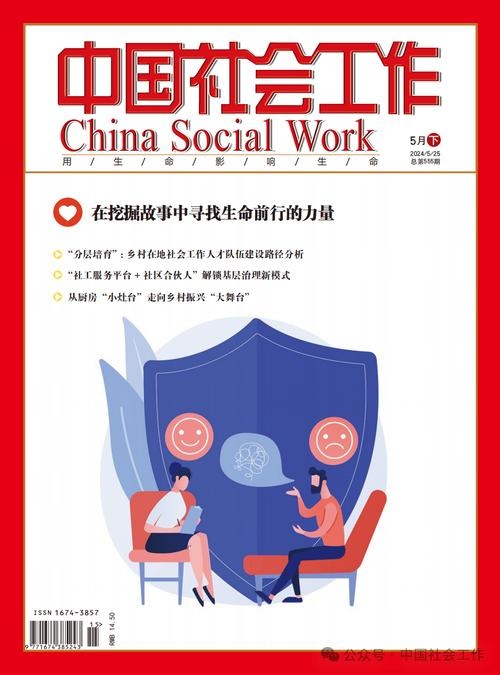
“social work” in a western or international context is a direct translation of the english word “social work”, commonly referred to as “professional social work”, aimed at using scientific methods to help groups in need to solve their plight and make them better adapted to social circumstances. Social work stems from social service practices in the west in recent times to address social problems arising from excessive marketization, in which “social” is generally referred to as “social” and is an adjective corresponding to the meaning of “commercialized, marketed”. There is an underlying tension in the development of the capitalist market economy, known as the “two-way movement” by karl polani: on the one hand, the human labour force must be commodified as much as possible in order to accumulate capital and advance economic development; on the other hand, the social existence of the human person does not allow for the complete commodification of human beings like objects. Social work is based on a “social” approach that corrects the social problems of excessive marketization and commodification and helps groups whose basic needs cannot be met through the market in the process of commercialization. Unlike medical workers, therapists, etc., who focus on the physical, psychological and spiritual aspects of the individual, social workers mainly address the social adaptation aspects of the individual。
In chinese terms, social work is much richer and more complex. The term “social” is terminological, and the english equivalent is roughly “society”, which is the translation of “social work” by the central department of social work. As a term, it is known as society, both as human society and as a community. But what social work in china calls “social” cannot be understood so broadly. According to the author, the term “social” in social work has at least two meanings: one is a society in which economic, political, cultural and ecological aspects are paralleled in the larger system of society, and the other is a social unit outside the political, social structure of a party or political body, an enterprise or a state enterprise, such as “two new enterprises”. This can also be understood at macro, meso and micro levels. Social work at the macro level is mainly concerned with social construction, social governance and so on. Social work at the meso level can be divided into party social work, government social work, group social work, etc. The social work of the new age party refers to the construction of the new economic organization, the new social organization, the new employment group party, the party's leadership of grass-roots governance and power-building at the grass-roots level, as well as the gathering of people's work (i. E. The “three new and two basic services”); the social work of the government in education, health, housing, social security, judicial redress, rural renewal, etc.; and the social work of the groups in the services of working women, foundations, etc. As far as social work at the micro level is concerned, communities, enterprises, social organizations and individuals, families, etc. Are the clients of social work at this level。
A comparison of the concept of social work in china and abroad shows that social work in the chinese language differs markedly from the social work in the western or international context, both in its content and in its outreach. Social work in the chinese language involves macro, meso and micro levels, while social work in the western or international context is mainly micro-level. Two are different objects. Social work in the chinese context includes not only individuals, families, organizations and communities, but also different levels of local, social (group) and international areas within the nation state. Thirdly, the focus is different. Social work in the chinese language is focused on social construction and social governance, with a view to promoting social harmony and social cohesion. Social work in the western or international context is focused on the individual, on welfare services and micro-governance, and promotes the adaptation of the client to society. Four is different. Participation in social work in the chinese language is diverse, while social work in the western or international language is the main area of professional social work。
The social work of the party has focused on the core content and essence of the social work of the new age
As mentioned earlier, the social work of the party is mainly a meso-level social work, which also runs at the macro- and micro-levels, with a clear political, popular and scientific and professional nature, and is an important tool for understanding the core content and essence of social work in the new era。
First, the “social” sphere has been inspired by the dynamic development of the socialist market economy: the transformation of the economic system has led to significant changes that have led to the proliferation and growth of the non-public sector; the transformation of the social structure has led to the expansion of the area of community autonomy and the expansion of the area of individual self-government in the management of public affairs; and the arrival of a number of intellectual societies has led to the emergence of new economic organizations, new social organizations, new groups of workers, and the consolidation of society as a new subject of governance. These new changes, new circumstances and emerging issues impose new demands on adherence to party leadership and innovative social governance. The central party has strengthened top-level design, layout and outreach to the population through efficient social work, while allowing for the orderly participation of the population in the governance of the country, thus contributing to the expansion and consolidation of the long-term social foundations of the party and enhancing the effectiveness of governance in the country。
Second, the grassroots (community) is the party's main area of social work. The importance of grass-roots (community) in social building and social governance lies in the fact that, on the one hand, the grass-roots (community) is the hub that connects thousands of families, the daily life space for the people, and the concentration and convergence of conflicting disputes, the effectiveness of which directly affects people's sense of feeling, well-being and sense of security, and the long-term governance and security of the relationship party. On the other hand, the social work of the party promotes social building at the grass-roots (community) level and social governance as an important path towards building a community of social governance that fully integrates government, social, market and personal resources and brings together and interacts with diverse actors. The grassroots (community) is an important platform for the new economic organization, the new social organization and the new employment groups. It is the party's main venue for gathering people's opinions and bringing people together。
Thirdly, party-building and mass work are the main pathways to the social work of the party. Party-building is the organizational guarantee of mass work, which is an important element of party-building. The social work of the party has its roots mainly in mass work and has further embedded the leadership of the party in daily practices such as grass-roots governance, the “two new ones” service, the leadership of the party, the promotion of social reorganization, social cohesion and commitment, and the creation of a solid social foundation for the party's governance and the modernization of the state's governance. At present, the total number of new employment groups in the country stands at 84 million, with the number of new economic and social organizations active in hundreds of millions, covering all areas and levels of productive life. Strengthening party-building and mass work in the emerging areas is a top priority of the social work of the new march party of the new age。
The value of autonomous innovation in social work in china
To speed up the construction of chinese philosophies and social sciences, ultimately the building of an autonomous knowledge system in china. Social work in the chinese language differs considerably from social work in the western or international context, which in fact raises the urgent need to combine local political, cultural and social construction and social governance needs, to break the limitations of the theory and practice of social work in the west, and to form the basic theory, the practical system and the institutional mechanisms of social work that characterize china。
The underlying theory of local language social work. First, adherence to marxism. Since the 18th anniversary of the party, the general secretary of xi has made a series of important statements on social work, social construction and social governance, which have provided a profound illustration of the fundamental principles, values, development orientation, priorities and basic guarantees of social work in the new era and are the theoretical basis of social work in the new era. Second, china-based modernization is a reality. Social work in a western or international context is based on the fundamental assumption of individualistic values and emphasizes the individual's “person in the context” of social adaptation. Social work in the chinese language emphasizes the interaction between the individual and the environment, focusing both on the stimulation of the inherent potential of the individual who is the object of the service to adapt to the environment, and on the impact of the environment on the human person and on the stimulation of the individual's potential, and the environmental impact of the development of internal dynamics, thus breaking the gap between social work in the western or international context, which is limited to microlevels, making the theory of the interaction between individuals and society, the theory of the state and society, the theory of political parties and the theory of social interaction, among others, the theory of social work fundamental to china's social work. Thirdly, the creative transformation and innovative development of china's excellent traditional culture is driven by the core values of socialism. Integration of concepts such as “co-governance and sharing” “community of social governance” and “common wealth” into social work objectives that are distinct from western individualism; drawing on traditional cultural resources of excellence, drawing on ideas such as “bridled” “coherence” and “advanced” “order”, and developing an ethical framework for indigenous social work characterized by “collective priority” in the “consistent nation”。
- establishment of a practical system of local language social work. The first is to construct a methodological system applicable to local language social work. The “casework-group work-community work-social administration” approach to social work in western or international contexts is limited by exploring intervention methods and strategies appropriate to chinese social relations. For example, emphasis is placed on drawing inspiration and experience from the social work practices of the party, such as the law on mass work, the law on party building work and the maple bridge experience of the new age, to shape indigenously distinct social working methods. Second, the development of social work intervention models adapted to the needs of social governance in the new era. The “party-building + social workers” partnership governance model is an innovation in grass-roots governance, which is well promoted everywhere through social work embedded in grass-roots party organizations (e. G. Community group service centres, family integrated service centres, community neighbourhood centres). In the context of the social focus, the three new two-basic services should continue to explore appropriate models of social work interventions, such as the “party-building + social worker + platform + community + consumer” for new employment groups, such as food-sellers. Third, tracking the iterative development of digital technologies, building innovative models for social workers in the intellectual age of the internet + social workers, meta-cosmologists, intelligent social workers, etc., and promoting digital, professional, fine and efficient social governance。
To promote local social work and exchange experiences with the international community. Based on national realities, traditional culture and development, it is necessary to construct and develop a theoretical and practical system of autonomy in china's social work, emphasizing the political, governance, hierarchical, social and mass characteristics of social work in the native language, which are a real need to promote high-quality development of social work; at the same time, the innovative development of indigenous social work needs to draw on the useful experience of incorporating the work of the international community. According to general secretary xi, “the emphasis on ethnicity is not to exclude academic research from other countries, but to make it more responsive to the development requirements of contemporary china and today's world, on the basis of comparison, comparison, criticism, absorption and upgrading.” “the theories, concepts, discourses, methods of foreign use must be analysed, clearly identified, applied and not applied. Building on the social construction and governance needs of china in the new era, exploiting and refining traditional resources and practical experience in social construction, social governance and incorporating the theoretical and empirical results of social work in western or international contexts that reflect the general patterns of human social construction and social governance, china's indigenous social work will certainly lead to innovations in the theoretical and substantive systems of social work and the intellectual programmes that developing countries contribute to social construction and social governance。
(by lee niengsheng, professor at the centre for research in sociology and methods and faculty of social sciences, people's university of china, vice-president of the chinese society for social work)