Modern farming: making grass a big undertaking — expert in the development of our grassland series4
China has a rich grassland quality resource. Over the years, research institutes have also worked tirelessly on the path of grassland research and have made many achievements. It is impossible to make grassland a major undertaking without modern farming. What is the current state of grassland development in our country? Please listen to expert voices from the academy of quality development in the grassland industry。
Focus on specialized grass production
Several decades later, chinese grassland has shifted from field collection to specialized production and has grown in size in some areas. Mao bae-sung, a professor at the faculty of grassland science and technology of the chinese university of agriculture, said that the production of seeds was very demanding for the environment, so that specialized seed production required the selection of suitable areas. “how can a plant grow in a field that is flowering and solid, but if there are thousands of acres of land, how can it be ensured that it matures? How can more branches be formed and more nutrients stored in seeds? These are challenges to the harvesting of high-yielding pastures and are areas worth theoretical research.”
According to mao peong, the biggest problem in the cultivation of crops in the northern part of the country is that of water. “irrigation is the first element.” if water conditions are not met, it is difficult to achieve high yields. The second element is density. The “breeding” is more suitable for high-yielding varieties of pastures。
Looking to the future, maobai kung said that achieving high production would require systematic research from industry-wide chains. One is to conduct targeted and systematic research based on differences between the genetic properties of varieties and those of seed biology. The second is grass-breeding production in different regions, with different technological systems, which need to be further strengthened by further research into breeding systems in different production areas and the establishment of specialized technological systems. Thirdly, there is a desire to strengthen the construction, construction and management of specialized grassland production belts. Fourth is the strengthening of seed certification systems to ensure seed quality. Five is aimed at scaling up, mechanizing and automating grass-grass production and strengthening the development of relevant machinery such as modern grass-grass production, harvesting and processing。
Take, for example, the green grass
In the case of qinghai university, the vice-president and researcher of the academy of livestock and veterinary sciences of qinghai province addressed problems and perceptions in the industrial production of grass。
The wild native species of long-finished grasslands are growing in the daji district of qinghai province, at an altitude of 4125 metres. The main domestication area of the qinghian grasslands is maqing county, qinghai province, at an altitude of 3780 metres above sea level, which is lower than its wild native species. Ma yushu said: “we have not succeeded in inducing grass from outside or abroad in any of the decades. Grasslands growing at altitudes of more than 3,500 metres in the trigenian area are the only native grasslands that are domesticated in the wild. The green grass can grow well even at altitudes above 4,700 metres.”
The green grasslands have a well-developed underground root and have no sexual fertility. The planting of green grasses on the black beach as “front-earth grasses” allows for the rapid formation of grasses as a “basic operation” for the ecological restoration of the black beach — the mixing of some other grasses on the basis of the green grass。
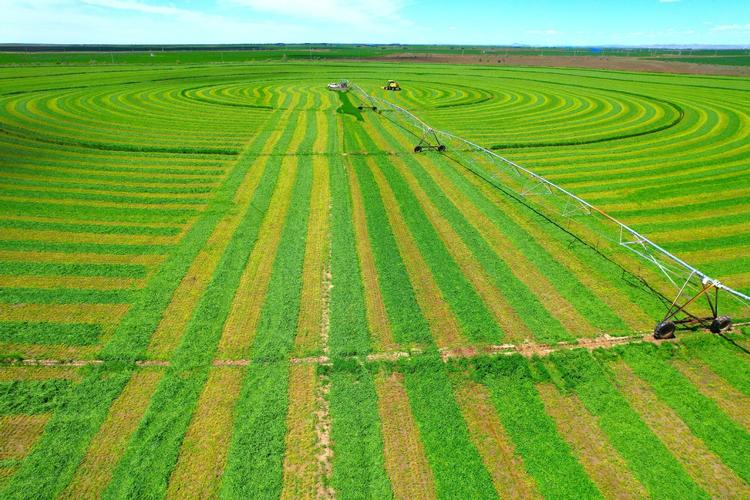
The green grass is good pastures with good taste and high nutritional value。
“however, due to the fact that the green pastures of seagrass have a base hair and small seed grains, which make it more difficult to harvest and remove them, we do not currently have the machinery to support them.” ma yuxi said。
With regard to the industrial production of grasslands, ma yusheng believes that it is important to strengthen the production of original species, accelerate the transformation of scientific and technological results and establish the operational production base. The second is to strengthen the circulatory choice of ecological grass. Thirdly, private enterprises should be strongly supported, leading scientific and technological enterprises in grass-breeding production should be nurtured, and private leading enterprises should be the main owners of grass-breeding research and production through, for example, the standardized production and marketing of original species。
The exploration of the pedigree
With regard to the production and protection of the herbs of the paisal grass, san minghong, a researcher at the institute of grassland science of sichuan province, presented his views。
Pyramid is an important group of wheats, which are ecologically adaptable, resilient and pest-resistant, with strong seed breeding and high grass production ... At present, pelican grass is an important ecological plant for maintaining the ecological balance of improved and degraded grasslands in the tibetan highlands, as well as a major grassy resource for improving the quality and productivity of grasslands in the region。
He explained that in sichuan, through the government's coordination of land, the integration of scientific research units and the funding of the ministry's projects, provincial and county co-institutions, the management of the relevant grass-breeding bases led to the development of a “co-building, benefit-sharing, risk-sharing” business model for grass-breeding, which resulted in the sustainable development of seed-breeding sites, as well as the creation of state-purchased varieties, the concentration of enterprises and the accompanying model for the promotion of breakthrough varieties。
In addition, yuminghong believes that, for a variety of seedlings, the need for special climatic conditions, such as light and rainfall, should be built around the need to expand the concentration of production areas and promote the integration and standardization of breeder seeds, basic seeds and certified seeds。
“it is hoped that the policy will emphasize the priority given to the use of native-grass varieties of the country's land in the implementation of major projects, such as the ecological restoration of grasslands, the development of pastures and the greening of the land, along with the introduction of a policy of subsidies for the production of grassland, the reduction of the cost of grassland land and the reduction of tax revenues for grassland enterprises.”。
Accelerate the industrial production of herbs
Researcher at the institute of plants of the chinese academy of sciences and director of the professional committee of the national alliance for technological innovations in the herbry industry, liu commune, began researching weeds in 1994, almost without receiving herbage from the grasslands. Low yields, low growth rates and long breeding cycles have long constrained the development and utilization of new varieties。
“we look at the issue from a genetic resource perspective. Based on a solid assessment of the interlocking and hybridity of thousands of species, we were the first to present a model of the mechanics of masculinity and sexual activity based on genetics, cytology, molecular biology.” the liu commune said, “we then raise the yield of weeds through hybrids and select new materials and varieties with higher seed yields from hundreds of hybrids.”
For more than 20 years, liu community has led the scientific team in the systematic collection, evaluation, exploration of scientific issues, extraction of genetic resources, selection of new varieties, etc. From the collection of seed resources. New varieties of herbs 1 and 2 and 3 and 5 and 7 have been created in order to break down the technological bottlenecks that have plagued industrial development, such as the “low spotting rate, low yield rate and low growth rate”。
In order to accelerate the industrial development of chinese herbs, the national alliance for technology innovations in the herbry industry, in partnership with the liu community scientific team, successfully hosted four on-site workshops on chinese herbs from 2016 to 2019, in xinjiang, khotu, beijing, and akeming, inner mongolia. The industry unanimously evaluated the great potential of chinese herbs for development in the areas of water conservation, soil conservation, wind and sand protection, and savannah restoration。
“technology has now improved and optimized the seed breeding capacity of weeds, and new varieties are now being cultivated back in the koljan region, reflecting the basic principles of the ecology of grassland restoration, and significantly increasing the production of weed seeds and grass, improving economic and ecological efficiency. In order to contribute effectively to the early establishment of a specialized seed base for our country, our goal is to build a chinese version of oregon — a small street village of sheep and sheep — with a view to professionalizing large-scale seed production and processing and completely breaking the foreign monopoly on high-quality grass.” liu chongqing said。
Fight the grass
Professor of grasses and grasslands college, beijing forestry university, and deputy secretary-general of the chinese grass society's lawn professional committee, often with wisdom, say that our country is a large, but also a weak, grassland country — the annual demand for grass is around 150,000 tons, of which more than 40 per cent depends on imports; the largest-growing grass-grass vervain, with more than 80 per cent of the imports required; and the greening of more than 90 per cent of grass-grass dependent on imports ... “seeds are the grass `chips', which are key to the development of the grass industry `chip necks' and the fights `turn to battles' are far-reaching for grass
In terms of the development of new varieties of grass-breeding in the country, registration of grass-breeding began in 1987 and has grown over the past 20 years (excluding the 15 certified by the national forest and grass office in 2021), to 602. According to data published by the official organization of north america accreditation agency, a total of 3019 individuals were nurtured in the united states between 1993 and 2020, 6. 5 times as many as in our country。
Based on further analysis, it is common wisdom that of the 602 varieties, the following are mainly rye and sorghum, or 52 per cent, and soybean, or 37 per cent. In terms of variety, 36 per cent of the species are produced and 30 per cent are imported. Functionally, there are 435 new varieties of grass, or 72 per cent, of grass, or 12 per cent, and about 16 per cent of other eco-grass。
As a matter of conventional wisdom, we are one of the world's most resource rich in grassland, with more than 9,700 grasslands, 6704 grasslands and 7,500 grasslands. China's diverse terrain, soil and climatic conditions, its special natural environment and long-term natural choices have created a rich grassland and diverse genetic resources. The plants on the grasslands of china are considered to be an anti-resilient, disease-resistant, high-quality, high-yielding gene pool and some specific characteristics, and an important material for genetic breeding。
It is always wise to suggest that the competent authorities organize a nationwide survey, identification, protection and evaluation of grass-roots resources and the selection of good varieties based on a mapping of the household. The selection of new varieties with high quality, competitive advantage and autonomous intellectual property rights has fundamentally changed the “crawling” of grassland development and taken ownership of industrial development。

Resolving the technical aspects of the lawn industry in our country
China's forestry researcher and secretary-general of the grassland research centre of the state forest and grassland agency of china said, “our grassland industry has started late, especially in the grassland industry, which lags far behind developed countries. The technology-level gap in grassland quality innovation has been rapidly narrowing, but progress in the development of new varieties and industrialization has been extremely slow, and there are still almost gaps in seed production and seed processing. The r & d and industrialization of enterprises concerned with the production of grasslands in the country is very limited, and the industrial chain in the farming industry is still incomplete, significantly limiting the process of domestication of grasslands. According to incomplete statistics, we import about 3,000 tons of grass seeds per year, all of which depend on imports, with the exception of a very small amount of weed and buffalo seed.” money is always strong。
In order to advance the development of our grassland industry, mr. Chan believes that it is necessary to reposition the key technologies for the industrialization of grassland by addressing the problems of isolated islands, short chains, discrete and fragmented industrial nodes that have existed in the past, to rationalize the main elements of industrial development, to make effective use of the synergies and innovations of “policy research and development” and to work together to advance the national production of grassland。
In the case of buffalo breeding techniques and industrialization, for example, “the application and sexual demand of buffalo seeds are the fundamental basis for research into buffalo breeding. The buffalo herb resources to be collected by our team have been developed in 22 regions of the country with a reserve stock of resources and eco-testing points, home to excellent materials screened in the field, and research has been carried out on breeding, which has now resulted in 46 excellent varieties, three of which have been assessed as good. Growing varieties, strongly supported by local governments and enterprises, have broken through key technological barriers such as planting management, weed control, seed harvesting and selection, and have resulted in an industrial technology system that combines resource collection and innovation, breeding, and seed production。
Innovative institutional mechanisms for the development of farming industries and the active development of highly competitive seed clusters and innovative industrial platforms have fundamentally addressed the issue of “crawling” technology in the field of grassland in our country. He recommends that:
Respect for objective natural patterns and the greenness of the grass. The large-scale development of water-intensive, cold-season grass in the north to sustain a longer green period has increased not only the amount of water used in the garden but also the cost of day-to-day care. Landscape assessment criteria based on green periods as the main evaluation indicator should be enriched with drought-resistant and low-maintenance grasslands, and warm landscape indicators resulting from winter grass sleep should be increased。
Breaking the gap between disciplines and creating a multidisciplinary integrated industrial technology development system. The absence of any chain of theory and technology in the cropping industry, which is supported by multidisciplinary theories such as genetics, physiology, cultivation, plant protection, seed science, etc., in the whole range of grass-breeding plants and the application of the landscape to grass-breeding industries, leads to a difficult transformation of scientific and technological achievements and to a healthy industry. Therefore, institutional innovation should be promoted, with the ultimate objective of serving industry, to exploit the theoretical and technical difficulties of the chain of industries, and to focus on customs and system integration from a holistic perspective。
To try a model of demand-driven finance and long-term project support. To date, our country has grown to 649 grass varieties and has identified a number of scientific and technological achievements, but the real and effective conversion of varieties and technological results to scale production is rare, mainly because of the lack of long-term sustainability of project support and the fact that upstream results cannot be translated further in a timely manner without the financial support associated with downstream technology development, resulting in enormous waste of resources. It was therefore to be hoped that financial resources would be increased in the long term in order to ensure effective translation of results。
Related links:
National forestry and grassland authority proclamation (no. 19 of 2021) (list of grass varieties 2021)