How high is a umbilical orange growing? How can it be called sweet oranges, oranges and oranges, which are rich in vitamin c and carrots, effectively inhibiting the formation of carcinogenic substances
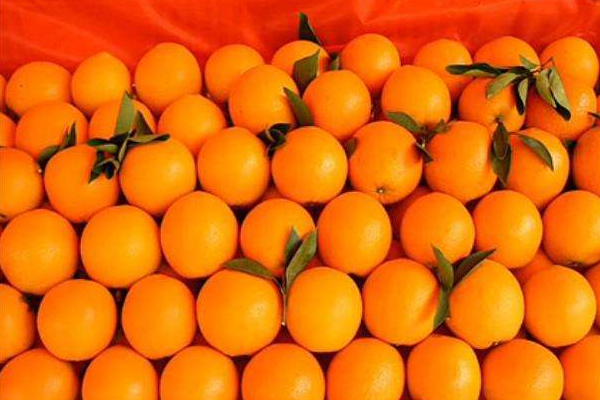
High-yielding oxygen planting point
1 site selection and planning
1. 1 choice of place of production
1. 1. 1 climatic conditions
Subtropical wet monsoon climate with an average annual temperature of 16-20°c, minimum - 6. 0°c, maximum temperature of 37°c, annual rainfall of 1000-1500mm, annual temperature of 4,500-6500°c, annual daylight hours of 1,200-2200h and relative humidity of 60-75% of air。
1. 1. 2 environmental conditions in the workplace
The soil layer is thick, topsoil estuarine, 1 m active thorium, soil ph of 5. 5-6. 5, 2% potassium, 0. 2-0. 25% nitrogen, 0. 15-0. 25% phosphorus, 2. 5-3% organic, micro-acid soil, 60-80% soil water and 10% soil pore。
1. 1. 3 topography
The slopes are less than 25°, 250-450m above sea level, and the slopes are good to the south-west, south-east or positive south。
1. 2 planning of production sites
Soils are wet and fertile, well-drained, away from garbage, factories, etc., drain ditches, reservoirs and their subsidiaries, and fast-growing trees with no symbiotic pests are selected as protected forests。
2 varieties and aluminum
2. 1 varieties selection
It is a choice of a healthy ear that is of high quality, pure variety, productive and disease-free。
2. 2 usual beryllium
It is common for aluminum: small red oranges, gold oranges from sichuan, oranges, upper squawk, earth lemons as the best gills, wild oranges from dow county, red lemons from liuzhou, thin cortex, and oranges from red leather。
3 plantation
3. 1 quality of trees
It requires pure, unsanitary and dangerous pests, well-developed roots, strong trees, well-rehabilitated matrimony wounds, 1 cm dry track, 30 cm high cylindrium, or two years。
3. 2 period of planting
The best planting time is before the bud starts before the leaves begin to fall and the best planting time is at the beginning of autumn and winter。
3. 3 cultivation density
The plant range is 4 m x 3 m at 8° slope and 3 m x 2 m at 9-25° slope。
3. 4 plantation techniques
First, the garden will be deep, 20 cm deep, each 3-4 m wide and 0. 8-1 m deep, with 50 kg of organic fat, such as human urine and hog and cow dung, mixed with lime1-1. 5 kg, calcium perphosphate 1-2kg, cake fat 1-3kg, then continue to go back to the earth, filling up the concrete edges with light seeding, laying down the ground and maintaining close contact with the soil. The post-filled site must be above ground level and must be scarred to the south, with an interface showing 2-3 cm of soil, watering the root until it is wet, and two-3 times thereafter depending on the weather。
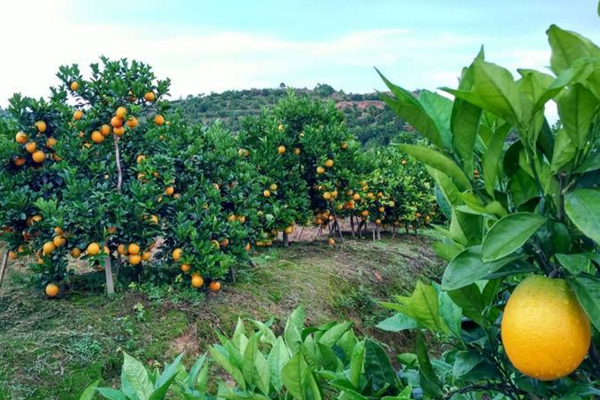
4 fertilized water management
4. 1 soil management
4. 1. 1 deep-spread and fertilized soil
In the autumn, in september-october, the soil was projected vertically from the tree canopy to maintain the soil sterilisation; organic fertilizers were applied and water was poured back into the filling。
4. 1. 2 spectrum or grass
In the three years prior to the establishment of the park, it may be appropriate to plant food between low-dry forests or to plant grass; and to cultivate the soil in a timely manner, with vines covered with tree dishes。
4. 1. 3 cultivation and weeding
Weeding is cultivated 2-3 times a year, and the trees are kept clean。
4. 1. 4 peasant
Each time we plant grass weed, we use fruit-tree-breeding soil, which is 5-10 cm thick。
4. 2 fertilisation
4. 2. 1 fertilizer principles
The application of appropriate trace element fertilizer and the rational application of inorganic fertilizers is mainly based on organic fertilizer。
4. 2. 2 fertilizer methods
A. Soil fertilization
Quality citrus lobe diagnosis: 0. 8% - 1. 5% potassium, 0. 12% - 0. 18% phosphorus, 2. 8% - 3% nitrogen, and 0. 7 - 1% potassium phosphorus nitrous application, depending on soil, tree age and tree direction。
B. Leaf-faced fat
The nutritional needs of tree bodies are supplemented by fattening of the leaves, based on the application of 3-4 sapplings at different stages of growth and development, cloud-mass 120 or 0. 2 per cent of potassium phosphate。
4. 2. 3 period of fertilization
At the time of the larvae, one in each of the weeks before the new gestation, six to seven applied throughout the year, mainly on nitrogen, which was suspended in august. As temperatures are expected to decline after november, a single application of base fat is required to improve the resistance of fruit trees to cold and to increase nutrient accumulation. In the case of adult trees, one in a year is applied to a bulge, one in a fertilizer, and one in a fertiliser, mainly organic。
4. 2. 4 fertilization
In the case of a single production unit of 30 kg, a three-dollar compound fertilizer of 1. 5-2. 0 kg was applied in the case of a strong fruit, and a cake weight of 2 kg and urea of 0. 5 kg were applied in the case of a fruit。
4. 3 water management
4. 3. 1 irrigation
Due to the high-temperature dry period of july-september, timely irrigation can be carried out through ditch or drip irrigation。
4. 3. 2 drainage
Draining measures in the left sea to remove silt in a timely manner to prevent flooding in rainy weather。
5 orthopaedic cuts
5. 1 plastic
Through shearing, shears the trunk and skeleton branches of the tree, and shews the tree form into the main dry layer and the natural happy shape。
5. 2 motion
5. 2. 1 teenage
The gestation of the larvae is done in a timely manner, with long and small branches cut short, thereby increasing the canopy, rooting and forming。
5. 2. 2 outcome period
The long branches are short-cut and contribute to the growth of fruit trees; the wiping of branches helps to increase the rate of sitting fruit and improve the quality of fruit; and the retrenchment of branches facilitates the renewal of strength, as well as the cutting of insect branches, weak branches, twigs, long branches and winters at the top。
6 flower fruit management
6. 1 artificially assisted pollination
Poaching tools, such as pencils and brushes, may be used to extract pollen, so that the pollen will fall evenly on the female's column, with only one or two flowers selected for artificial pollination。
6. 2 plumbing fruit
When flowers are blooming, the trunks of the tree are shaken away from the sick buds, the weak buds and the deforming buds, followed by artificial graft to remove the weak branches, appropriate preservation of the strong branches, and, lastly, by the preservation of the flower promotion king no. 2. New high-fat membranes are sprayed at 80 per cent oatmeal. After the second physiological fallout period, the umbilical figs were sprayed once every 10 to 15 days with 800 times the fluid and 200 to 300 mg/l cactin。
6. 3 fruit packs
At the end of the second physiology period, a single-storey white semi-transparent citrus bag containing 15 cm x 15 cm was selected。
7 pest management
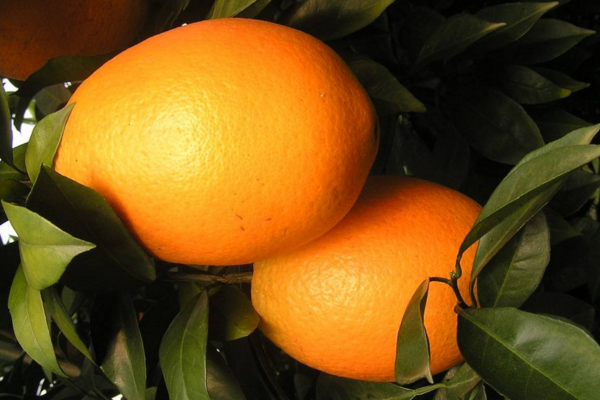
The main diseases are haemorrhagic disease, anthrax, yellow dragon disease, ulcer disease, crony disease, green disease, skin disease, etc
The main pests are red spiders, rusty wall lice, wood lice, orange aluminum, pedestals, leaf moths, yellow roll moths, etc。
7. 1 agriculture prevention and control
Timely removal of weeds; regular deep tillage; dry whiteing of trees during winter hours to effectively prevent pests from laying eggs in winter; intensification of field management and water fertilization measures。
7. 2 physical control
Physical control is the use of natural conditions, manual or mechanical equipment to combat pests and pests, or the enticing of luminous pests with light facilities such as frequency-fibreding lamps, which are not only cost-effective but also simple to operate。
7. 3 biological control
Chickens are raised in fruit, which can be insecticidal, and chicken dung can be used as waste fertilizers to increase fattening, thereby achieving double harvests in stereospace。
7. 4 chemical control
7. 4. 1 scabies: 50 per cent of the ethyl biowettable powder 600-800 times more liquid, 70 per cent of the methyl sulphate filamentary powder 600-1,000 times liquid, and 50 per cent of the remactivated especially humid powder 500-600 times liquid
7. 4. 2 anthrax: thiophthalms, 33. 5% bh2 suspended 1500-2000 times liquid and 10% ethylene acetate dispersed particles 1,500 times liquid
7. 4. 3 hologosis: 400 times the cream of 25 per cent methamidophos and 3,000 times the cream of 2. 5 per cent chlorocyrin
7. 4. 4 erosion: 50% of dichloride humid powder 500 - 1,000 times more liquid, 77% of coronary humid powder 400 - 600 times liquid, 27. 12% of alkaline copper sulphate suspension 400 - 600 times liquid
7. 4. 5 paleaea and corrosive diseases: 45 per cent septide suspension 3,000 to 4,000 times more liquid, 50 per cent metamine manganese salt wettable powder 1000 to 2,000 times liquid, 25 per cent metamine cream 1000 to 1,500 times liquid
7. 4. 6 fragmentation: 5% - 20% bleaching powder, 25% ff, 2% - 5% sodium hydroxide fluid
7. 4. 7 red spiders: 10% dicofuranic humid powder 100 - 200 times liquid, 20% dicofol cream 800 - 1,000 times liquid
7. 4. 8 rusted wall lice: 5% fluorine emulsifiable concentrate 800-1000 times the fluid and 73% acetate cream 2000-2500 times the fluid
7. 4. 9 orange acetate: 0. 5% bitter alkaline water agent 500-1000 times the fluid, 10% isopropyl humid powder 300-400 times the fluid
7. 4. 10 pyramids: 25% eda powder 1000 to 2,000 times liquid
7. 4. 11 leach moths: 80 per cent of dichlorvos emulsions 1000-1500 times liquid; yellow roll moths: 25 per cent of insecticidal double water agent 600-800 times liquid。
7. 4. 12 leices: 70% pyramid iii water dispersant 1000-1500 times liquid, 2. 5% brocythylene cream 3,000-4,000 times liquid
8 fruit harvest
8. 1 harvesting period
Omnicorn maturity generally occurs in december and can be collected during green ripening if the fruit is useful for storage or canning, etc., and not until the fruit is fully mature if it is used to make orange bread, eat directly or keep seed etc。
8. 2 collection methods
The harvest took place in the middle of the morning between the drying and midday。
9 fruit storage and preservation
9. 1 simple conservation
Using tree preservation methods, when the fruit is essentially mature, a certain concentration of a stable fruit agent is sprayed into the tree body, allowing the fruit to remain in the tree for a short period of time and to be collected in batches。
9. 2 chemical preservation
The harvested fruit is preserved by spraying liquid paraffins with 80 (span80) or tween80 (tween80) emulsifiers on the fruit surface。
9. 3 physical preservation
9. 3. 1 vegetable membranes
Vegetables can be packaged to isolate bacteria with polyethylene and polyvinyl chloride, high density polyethylene, polyethylene, etc。
9. 3. 2 temperature
The freezing of fruit in closed reservoirs can effectively control factors such as gas composition, humidity and temperature。
9. 3. 3 refrigerated conservancy
Putting fresh fruits in cold cells has been effective in reducing the incidence of disease and the rate of fruit decay。