Han myung-hye
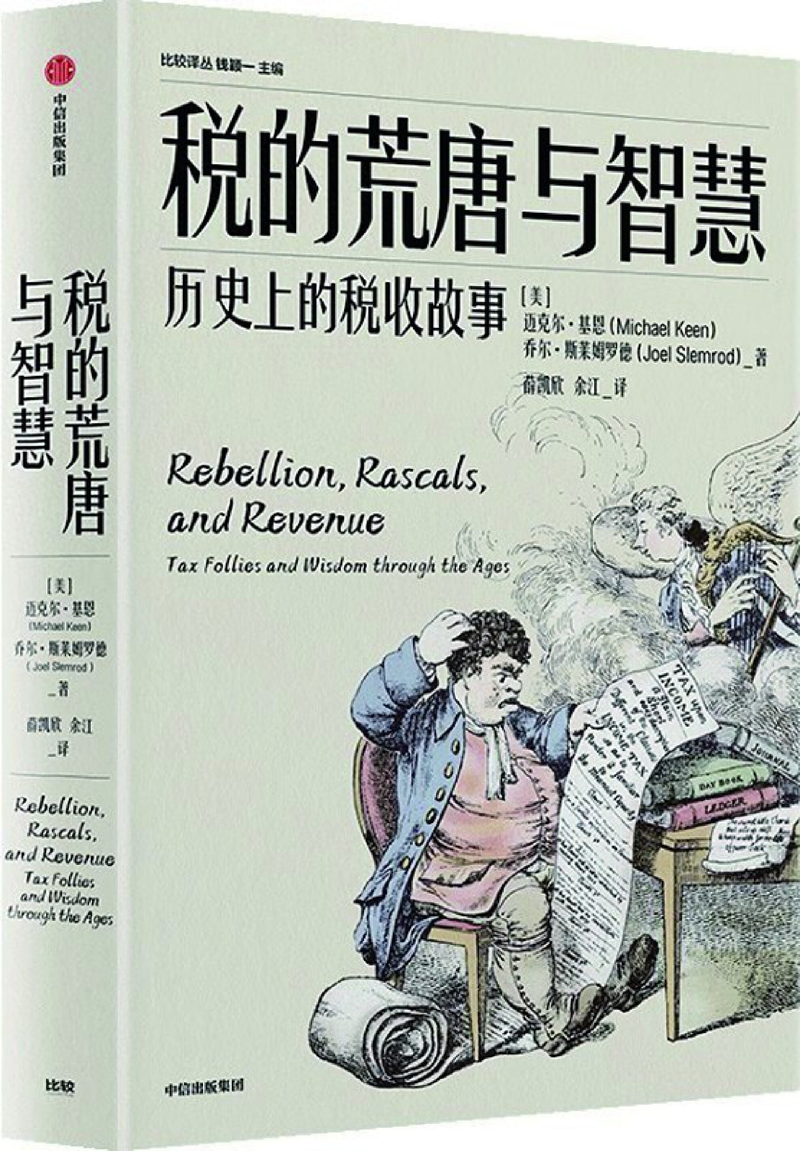
Franklin had a famous saying that only death and taxation could escape the world. The difference between the two as a topic is that taxes are much more boring than death. There are countless cultural creations centred on life and death, and few work on the subject of taxation. With regard to non-fictional books on tax matters, most of them are either teaching people to deal with tax matters or academic research, which is not very lively and few people will read for reasons other than work. But two economists, michael keane and joel slemrod, in their book the rage and wisdom of taxes: a historical tax story, not only incorporated a lot of interesting stories from tax history, but also shared with readers the findings of many studies on taxation in the academic world, which allowed people to learn beyond their entourage。
Tax who
In the past, all governments have had to finance their own expenditures. Common contemporary taxes include corporate and individual income tax, value added tax, etc. Prior to the invention of the monetary system, taxes had been expressed as food collection. In fact, there are far more kinds of taxes in history. If taxation is defined as the government's forced extraction of resources from the private sector, the labour that exists in both the middle and the outside is in fact a tax paid by the people in the form of labour, with the pyramids and the great wall being its vestiges. Military service is a more special form of labour, which is a combat or logistics project, which was called the “blood tax” in the ottoman empire and japan because of the cost of human life. Direct conscription or assessed military service allows the government to avoid having to levy taxes in the form of currency and to attract nationals or mercenaries to provide military manpower services with economic incentives. The two types of taxes are therefore somewhat interchangeable。
The government would never feel that it had too much money in its hands and that, in fact, most of the time, it was unable to fully satisfy its spending aspirations and was often overstretched, so it sometimes resorted to special approaches. When the government issues the currency, it can obtain the difference between the value of the currency and the cost of its issuance, which is known as the “bond tax”. Excessive currency, which reduces the real balance of government debt by inflation, amounts to a further increase in the seigniorage tax. This approach and its rationale are now well known. The government can also limit access to certain industries and sell monopolistic concessions. This was prevalent hundreds of years ago. Trade and colonization from western europe, in the name of companies such as the east india corporation, the african corporation, is the best known example. At that time, within these european countries, there were also such officially authorized monopolies that existed in the salt, vinegar, fish drying and so on in the uk alone. Of course, governments can also directly finance the establishment of monopolies and charge high prices to consumers. In addition, fines have been set up as a source of revenue by governments in a number of places, some of which have gone beyond what is permitted by statute。
Some governments have also imposed more unusual taxes, with different purposes than collecting money. Some want to deal with real or imaginary “social ills”. Among a series of modern reforms introduced in russia by the great peter is the introduction of an annual beard tax, intended to put an end to what he sees as an extremely backward tradition of aristocratic mustache, a prelude to the imposition of special taxes on unhealthy goods such as tobacco, sugar beverages, etc. More of this kind of tax is intended to allow more financially powerful people to take on more taxes, both for the sake of equity and for the sake of the rulers, who, after all, would not receive much from the poor. In the united kingdom, taxes were levied on home stoves on the grounds that more stoves meant that the owners were richer. This, however, makes it necessary for tax collectors to enter the household, has a heavy workload and affects privacy, and is prone to corruption and tax evasion as a result of the concealment of information. The stove tax was subsequently replaced by a window tax, with the same assumption that the number of windows represented a large proportion of the value of the house and was readily known on the street. The openness of windows as tax indicators reduces the problem of tax evasion but cannot be completely eliminated. As economists like to say, people react to incentives. In addition to temporarily covering or blocking windows before the arrival of the tax collectors, strange vents of ventilation and the sharing of an entire window in adjacent rooms are beginning to appear. The question of what constitutes a window, and what kind of window design should be considered as one rather than two windows, suddenly aroused a strong interest between taxpayers and tax authorities. Poland, the netherlands, japan and viet nam used to levy property taxes based on the width of buildings on the street, which also led people to build narrow and high houses。
Historically, rulers have assigned tax lines to taxpayers according to certain identity criteria, most often based on social hierarchies. In medieval england, some monarchs charge more taxes to the upper classes, and the titleman pays a few pounds at a time, and civilians pay at least four pence. Several other western european countries had similar relatively equitable arrangements. But there are times when the elite are honoured. France's louis xiv priced the exemption of nobles and clerics from land taxes in exchange for their relinquishment of important political powers traditionally held. Although nobles and priests still have to pay other taxes like others, their tax burden is generally relatively light. This unfair treatment was one of the major grievances of the third tier in the political struggle on the eve of the french revolution and served as a catalyst for the revolution. Prior to the seizure of the bastille prison, the parisians attacked the tax authorities and burned the tax files。
Another distinction between persons on the basis of their status is the granting of tax advantages or discriminatory treatment to followers of a religion in a multi-ethnic state. Christian states often impose specific taxes on jews. As a result of the religious reform, catholics were treated similarly in protestant countries. Muslim countries impose special taxes on christians who do not wish to convert to islam. Of course, officially sanctioned religions are favoured, but privileges are not necessarily fixed. For a long time, tang dynasty has taxed buddhist temples and monks and exempted them from military service. This incentive has also been responded to, or converted to, real or false faith. At one point, hundreds of thousands of people were found in possession of forged or purchased ultimatums. In the face of the loss of tax sources and the emptiness of the treasury, the court finally lost patience and launched a “punishment”, forcing a large number of monks and nuns to return, demolishing monasteries and nationalizing the temple harvest。
Who's really paying taxes
It is one thing for the law to provide who pays taxes, and another for who actually bears the tax. The issue of tax fate may be the most easily contradicted intuitiveness of tax economics. In the simplest case, if the tax rate on a particular commodity is raised, the seller may, in principle, raise the price by transferring the additional tax to the buyer in whole or in part. The exact proportion that can be shifted out depends on the buyer's demand for commodities and the firmness of the seller's supply in the face of price changes. Economists use the term “flexibility” to describe this intensity. If the price increases are followed by a substantial shift to alternatives, or if the general category of commodities is simply no longer consumed, the seller will not be able to make a significant price increase and the additional tax burden will be borne mainly by the seller or transferred to upstream suppliers。
In 1785, the british government imposed a special tax on families with female servants in order to extract more tax from wealthy families. At that time, many commentators considered that a significant part of the tax had been transferred, since the services of maids were not to be replaced by the work of male servants or family members, and employers were more sensitive to the total amount of tax-bearing wages and were able to cope with them by reducing their post-tax wages。
Some policymakers are clearly aware of the issue of tax coverage and introduce accompanying measures, but they may become ineffective without price controls. The united states introduced retail taxes in the 1930s. In some states, with the lobbying of the business community, tax liabilities have to be borne by the buyer. Retailers, however, can and will have to adjust prices in response to changes in consumer demand, making the regulations meaningless. France reduced the value added rate applicable to restaurant food in 2009 and required a commitment from the merchants to transfer the tax reduction to consumers. This same disregard for economic principles went on。
Sometimes organizations that are supposed to be quite professional also make mistakes on this issue. There is a consensus in the tax economics community that the actual fate of social security contributions falls largely on wages, regardless of the legal ratio between employers and employees. The world bank's doing business report, however, viewed the employer's social security burden as a negative factor in the business environment alone. That is to say, a country where employees are given a nominally higher contribution rate would receive a higher rating without material impact。
Visible and invisible
The taxpayer's response to taxes, in addition to possible attempts at price adjustment to transfer tax burdens, can simply reduce taxable economic activity. These benefits, which are not derived from tax avoidance of goods or services that would otherwise exist, are social losses, often referred to as “unutilized losses” and, in the book, as “additional burdens”. The taxes on stoves and windows mentioned earlier have led to the dismantling or less construction of stoves and windows. Taxes designed on the basis of the principle of equity are difficult to do without compromising the incentives for wealth creation and can easily create a greater “additional burden”. Sometimes this burden falls even on the vulnerable groups that the policy seeks to care for. In 1990, the united states imposed an extravagant tax of 10 per cent on several luxury commodities, including vessels worth more than $100,000, with the intention of drawing more taxes from wealthy people who could afford yachts. Unimaginably, yacht sales and holdings have declined sharply, and the yacht manufacturing industry has reportedly lost thousands of jobs, as well as the loss of a large number of crews of auxiliary service workers who are polishing the yacht decks. The biggest losers in luxury taxes are low- and middle-income workers。
Not all additional burdens are reflected in quantitative dimensions. The united kingdom had for almost a century collected port and lighthouse charges based on the long width of the vessel, without taking into account the actual depth of water consumption. As a result, the owners, like the owners of the narrow houses mentioned earlier, began to set up merchant ships with deep cabins. The effect of this tax avoidance is clearly good, but it is not stable and has significantly increased the incidence of marine casualties. It can also be seen that an unreasonable design tax can result in a qualitative social loss。
Not all of the additional burdens are as obvious as too few house windows or boats. Many countries have taxes to implement slotting rates, such as preferential treatment for micro-enterprises whose turnover or number of employees falls below a certain threshold. This is a negative incentive for the growth of enterprises that have reached the threshold, and it is inevitable that some firms will stop expanding in order to continue to enjoy preferential treatment, so that a scale-based view of the distribution of enterprises can be seen, with the threshold being the peak of a colossal and artificial distortion. Social resources could have been used more efficiently if potentially high-risk enterprises had continued to grow and gained greater market shares. This loss of efficiency, as the 19th-century french economist basshar said in his book, visible and invisible, cannot be directly observed and is easily ignored。
Additional burdens and taxes are generally not linear. An empirical approach that economists prefer to use is that the additional burden created by a taxable subject is the square of its tax burden. This could be done with simple mathematics, with a certain amount of money raised through taxation, preferably by applying a lower and roughly balanced tax rate to the broader tax base rather than by imposing heavy taxes on the narrower tax base. This inference is valid not only horizontally but also in terms of time dimension. In other words, if the government adjusts its tax rates immediately with fluctuations in expenditure, it will have additional burdens of higher rates in part-time periods, rather than maintaining a basic long-term stability of the tax rates, which will be financed in deficit when, for example, a substantial temporary increase in expenditures is required, for example, by war, before fiscal surpluses are used to gradually reduce debt levels。
Many of the tax responses mentioned above can be classified as tax avoidance. Taxpayers do not pay taxes, and the more familiar and direct way is certainly tax evasion. The government naturally deplores this. Since ancient times, many countries have imposed the death penalty as the maximum penalty for tax evasion. In france, during the “old system”, some of the sanctions imposed on private salt dealers were to be run over alive with wheels. Overall, the “tax gap” created by tax evasion is lower in developed countries and higher in developing countries, but no country appears to have achieved zero tax evasion. The united states federal tax office estimates that as many as one sixth of the tax payable remains unpaid. Even the socially clear nordic countries, denmark, has an estimated income tax gap of about 3 per cent. Studies in the united states have found that when property taxes that may be affected by inheritance are declared to be subject to an increase in tax rates, the time of death of a person dying near the point of adjustment is statistically indicative of concentration before that point, while the lower rate is after the point when some people die. Early death may or may not be intentional, but it is clearly not a good thing in either case. The former is tax fraud; the latter means much less and more appalling。
While the sophisticated tax avoidance techniques of large companies, especially transnational corporations, are often a source of controversy, in practice large companies, because of their small number and high percentage of tax contributions, have greatly facilitated tax administration and inspection by tax authorities and have helped governments to promote easier taxation. Moreover, modern countries are generally relying on employers to pay personal income taxes, social insurance premiums, etc., on their employees ' wages, in order to significantly reduce the workload of dealing with each of the large numbers of individuals, and large companies with large numbers of employees have greatly helped the government to raise the tax compliance of natural persons taxpayers. In the case of outright tax evasion, it is the small businesses and self-employed groups that are not readily and fully taken into account by the tax authorities. In response to these difficult taxpayers, some countries now attempt to target tax evasion that is otherwise “unseeable” by obtaining and analysing information from third parties with which they have dealings。
In addition to tax fate, fairness and administration, the authors also used the same economic sense to explain the best tax design, international tax competition and cooperation, and government debt. Optimistic professional readers may feel that the tax absurdity and wisdom does not cover the political economy of the relationship between taxation and state-building, nor does it seem unfortunate that there is a discussion of the long-term cost to economic growth of the impact of an unreasonable tax burden. But in terms of spreading knowledge of tax economics to the general public, the book is sufficiently solid and comprehensive and pleasant and is a masterpiece that will be difficult to overcome for a long time to come. Han ming-swee