Life of a line
It was recalled that the author of the principles of professional speculation had studied the question of the longevity of the practice, the idea of which was to measure the length of life of the practice, and he believed that each line had a lifespan, as was the case with a human life。
Life of a line
1 price cycles:
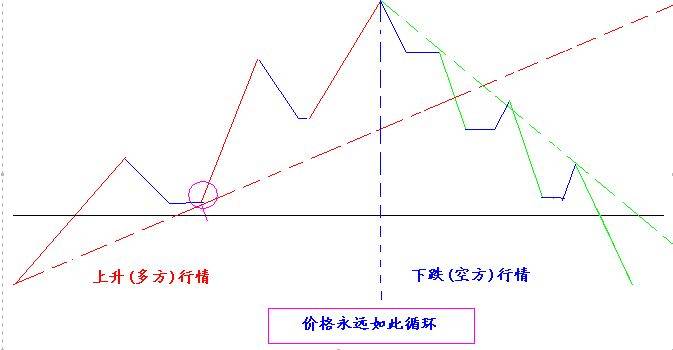
The stock price always works like this: multiple to empty, multiple to empty, back and forth. This being said, the intermediate changes can result in different outcomes depending on multiple factors or forces。
The price patterns we see on a day-to-day basis are extremely variable and unpredictable, because of the different time cycles in which we choose to look at them. Or 1 minute of the cycle。
My main reference periods in daily operations are: day, week, 30 minutes of the k line, with three main lines. The next study is the life expectancy on the solar line。
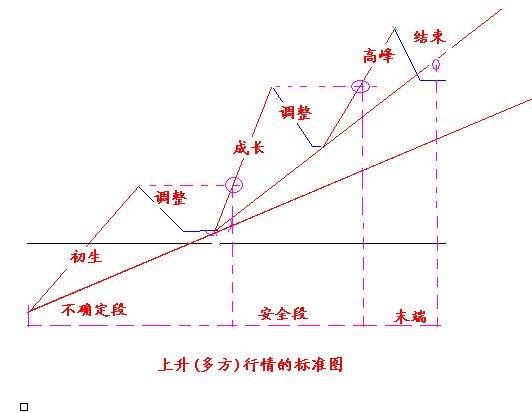
2. Upside (multiple) lines figure
3. Falling (air) figure
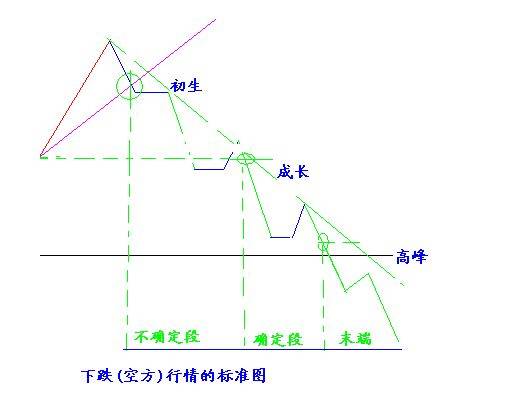
(the above drawings are standard maps, which are not the same. I'm not sure
The focus of the study is on finding the right business and the right buying point。
Three points of victory and failure: one criterion for the identification of multispace; two positions in the ascending (multiple) pattern; and three performance criteria。
4. How can all stages of a life cycle be identified
A. Price breakthroughs (splits) are the most visible signs
B. Changes in patterns are also tools for identification
C. Life expectancy, which requires professional statistics。
Investors have made considerable efforts to address the life expectancy of a situation. For example, there are figures such as livemore, charles henry dow, jiang, elliot, founder of the wave theory, victor, author of the principles of professional speculation。
I do not understand how long they are talking about, nor how long they are today。
This is how i think about life:
1) there is no need to know the exact length of life of the business
2) how long is our primary concern not to live, but to be at the stage of life? Where is it safe? Where is it uncertain? Where's the end of the line? Just know those three points。
What investors would most like to know is where is the safest and most profitable
The answer is: before the end of the line is set。
Well, as long as we know how to judge, “before the end of the line is determined”, we operate short-line bands, and we can profit quickly。
The position of the case is determined by the signal of the trend theory plus price breakthrough:
The first wave is an uncertain segment, and when the first wave's high point breaks, it enters a “safe zone” until the “end of the line life”, which is a good opportunity to operate. When prices enter the “end-of-the-life” scenario, caution is needed to stop the damage。
It is a matter of great regret that the length of life of a line is not resolved, but i have already told readers where it is safe and where it is end. These standards are enough for me. What do you think
Repeat the right point of sale: opening a warehouse in the safe section of the business (buy-in), at the end of the business (sale-out)。