Introduction
In the previous chapter, chapter iv: hatree-fock equation | 2026 new version of the vasp basic curriculum, our system has learned the hartree-fock approach, understanding how it constructs wave functions and solves them with a single electron approximation, which provides an important foundation for quantum chemistry calculations. However, the hartree-fock approach has inherent limitations in dealing with electronic-related effects, and the volume of calculations increases dramatically with systems, making it difficult to describe complex material systems efficiently。
This chapter will formally introduce the core-density general communication theory of modern first-class calculations. From the basic point of view, we will elaborate on how the energy of a multi-electronic system can be expressed as a general message of electronic density, focusing on the construction of the kohn-sham equation and the physical significance and common form of exchanging related general letters。
Density general letter theory
The density general communication theory is a quantum mechanic method for studying electronic structures of multielectronic systems (e. G. Atoms, molecules and solids). It is one of the most common methods currently used in the chemical, physical and material sciences to calculate from scratch (ab initio) and has become an indispensable tool in these fields。
Core thinking: from wave function to electron density
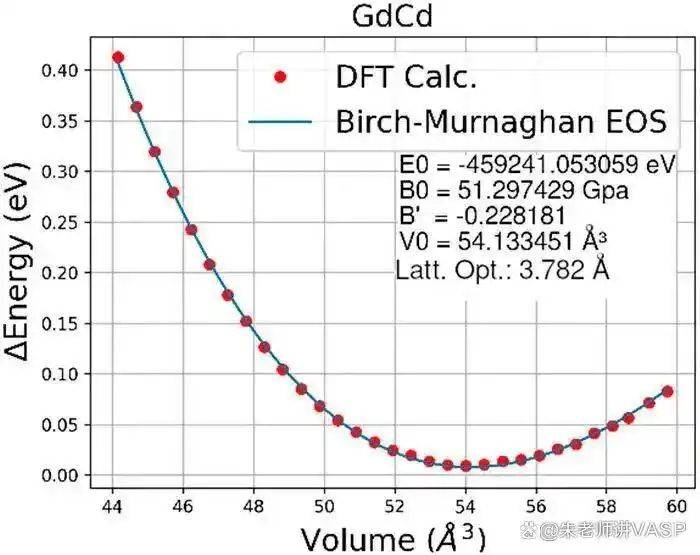
Traditional electronic structure calculations (such as the hartree-fock method) usually rely on wave functions to describe the state of the system. For a system containing n-electronics, the wave function is a function of 3nd, which is extremely difficult to calculate. The central innovation of dft is the introduction of the concept of edensity。
Definitions
Electronic density is a function that relies on only three spatial coordinates (x,y,z) and describes the distribution of electrons in space。
Advantages
Compared to wave functions, electron density requires only three variables, significantly reducing the complexity of calculations。
Basic theorem
Dft is based on the hohenberg-kohn theorem, which indicates a single correspondence between electron density and external power. This means that all the physical properties of the system can be determined by the known electron density of the base state, and vice versa。
Calculating frame: kohn-sham method
Despite the simplification of the density general communication theory, it is still difficult to calculate energy directly from electron density. To address this problem, kohn and sham presented the kohn-sham equation as the standard framework for modern dft calculations。
Thought
The kohn-sham method assumes the existence of a fictional “non-interactive electronic system” with the same base-state electronic density as the real system。
Core equation
Electronic density and system energy can be obtained by solving a single electron equation (kohn-sham equation) similar to hartree-fock。
Energy expression
The total energy of the system is broken down into several parts, the most critical of which is the exchange-connectivity energy (exchange-correlation energy, xc). The xc, which can encompass all the complex electronic-electronic interactions, is the central difficulty of the theory。
Exchange - related general
Because precise xcs are unknown, approximation models must be used in actual calculations, which are collectively referred to as generic letters。
Lda (local density approximation)
It is assumed that the electron density of the system at each point is the same as the flat electron gas. Lda is the earliest approximation and is efficiently calculated but with limited precision。
Gga (approximate gradient)
On the basis of lda, amendments to the e-density gradient have been introduced. Gga has significantly improved molecular geometry and predictive accuracy of reaction, which is one of the most commonly used at present。
MEta-gga and mixed generals
The kinetic energy density has been further introduced or the precision exchange of hartree-ffock has been mixed into gga to improve accuracy. For example, the famous b3lyp general letter。
Challenges
Despite near-continuous improvements, new general communications tend to sacrifice the accuracy of electron density when increasing energy accuracy, especially in stimulating behaviour calculations。
Main areas of application
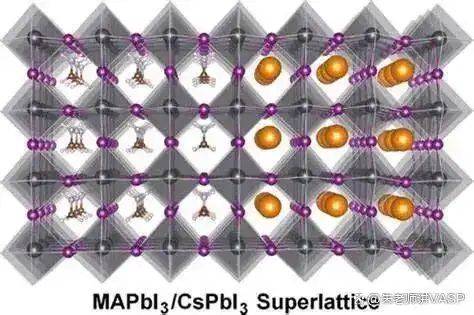
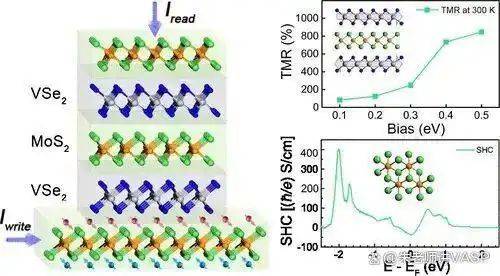
The density general communication theory has been widely applied in a number of scientific and industrial fields because of its efficient computing (as compared to wave function methods) and precision。
Material sciences
Electronic structure, lacuna, magnetic and optical properties for predicting materials. It is the preferred tool for the design of new semiconductors and photovoltaic materials。
Calculator chemistry
Study molecular geometry, vibration frequency, reaction mechanisms, adsorption energy and spectral properties. Widely used in the institutional analysis of drug design and organic synthesis。
Catalyst research
In particular, in the field of electro-catalytic and photo-catalytics, dfts are used to reveal response mechanisms, calculate response power bases, and screen high-activity catalysts (e. G. Water-gas conversion, co2 reduction, etc.)。
Electrochemicals and electrocatalytics
It is used to simulate semiconductor catalysts and electrochemical interfaces, to address issues that can be curved and electronically transferred, and to accelerate new material discovery in conjunction with machine learning。
Gas sensors
Simulate interaction of gas molecules with the surface of sensor materials and design high sensitivity gas sensors。
Modern progress and challenges
Despite the fact that the dft is very mature, it still faces challenges in dealing with particular complex systems and scientists are actively exploring new solutions。
Multistate density generic theory (msdft)
Msdft has introduced matrix density as the basic variable for the failure of traditional dfts in dealing with stimulating, powerfully associated systems (e. G. Transitioning metal compounds). It has successfully addressed the fundamental difficulties in stimulating behaviour calculations through the non-modern interaction (nosi) algorithm and the minimum active space (mas) concept。
Machine learning integration
Using machine learning (ml) to model structural-performance relationships, combined with large-scale data generated by dft calculations. The screening of catalysts and the discovery of new materials has been greatly accelerated by forecasting key parameters such as d-centres and adsorption energy。
High precision calculation
As computing capacity increases, researchers are committed to developing more precise generic correspondence and methods to address micro-effects such as vdw interaction (vanderwald) and electronic-to-blank coupling。
Summary of highlights of this chapter
Density-wide theoretical knowledge point combo
Basic thinking: presentation of the electron density, hogenberg-konn theorem
Khon-sham equation: presentation of ideas, core equations, energy expression
Exchange of general communications on linkages: presentation of lda, gga, mEta-gga association
Recommendations for next steps in learning
The next chapter will formally introduce the core-density generalist theory of the course. We will elaborate on the density communication theory and its application to its unique advantages in dealing with different material systems from the perspective of basic thinking, the khon-sham equation, and the exchange of related general letters. Please look forward