(continuing)
Ii. The core of the chips theory
I don't know。
(1). Cobalt (price) distribution
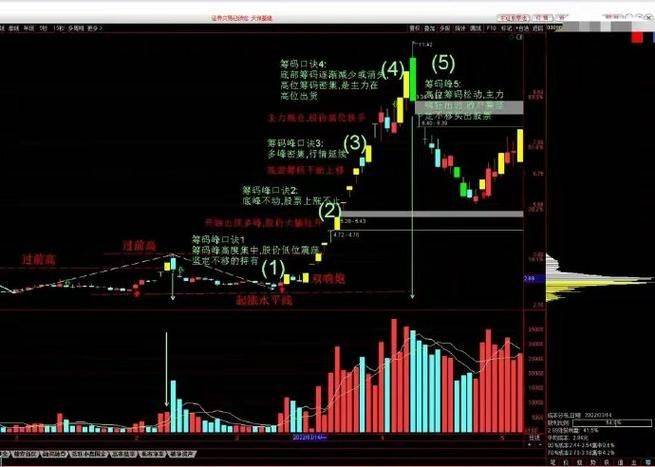
A. Definition: the leverage distribution is also known as the cost distribution, i. E. The number of shares in the stock exchange at different prices. The distribution of chips is based on funding costs, and 80 per cent of the chips are concentrated in 20 per cent of the spatial area, which is typically peak-intensive. This is the foundation and essence of the chips theory and is one of the important bases for studying the nature of the patterns of stock price movements. On the basis of the cost of holding, we can study the distribution of all negotiable chips held in a single stock at a price-high and low-cost scale, and further measure and in-depth analysis of the ratio of leverage to profit. We can also look more closely at the distribution of chips at different price heights, thus obtaining more valuable analytical bases and accurately predicting the trends in stock prices。
B. Estimation principles for leverage distribution
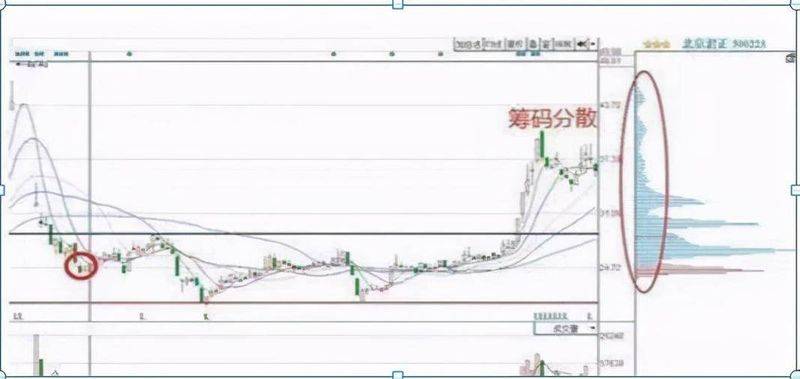
The distribution of chips is to add together amounts that have historically been traded at each price level, and to judge the holding costs of all negotiable shares in the current market. Of course, part of the deal in history will be thrown out on later trading days, which means that the previous deal cannot simply be accumulated to the present, but should be reduced. This decline is the rate of change per day. For example, 10 million dishes, with a daily average price of 10 dollars a day, and a trade rate of 2 million, or 20 per cent a hand exchange rate; 3 million at 11 yesterday, or 30 per cent a hand exchange rate; and 2 million a day. The cost analysis assumed that 2 million dollars a day had been replaced by 30 per cent yesterday with 11 dollars, leaving a balance of 20* (1-30 per cent) = 1. 4 million a day with 10 dollars, and that if today's 12 dollars an average of 4 million, the leverage distribution is now 200* (1-30 per cent)* (1-4 per cent) = 840,000, 300* (1-4 per cent) = 1. 8 million, 12 dollars。
C. Determination of where the chips are located
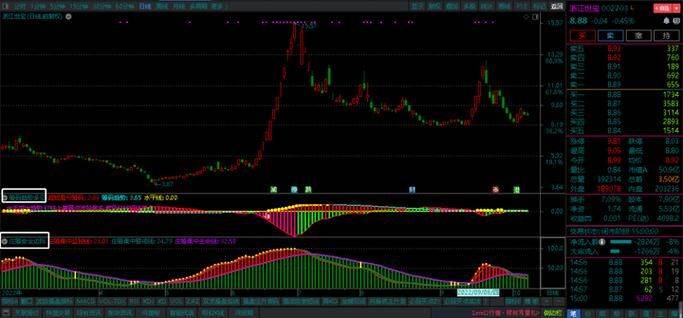
First, there is a relative change in position between two different types of chips, namely, floating chips and locking chips. The fact that most of the floating chips of a stock are lower than the locked chips suggests that the unit is in a declining path - - most of the bulk accounts are ensnared; secondly, the position of the two chips relative to the historical height of the unit; and thirdly, the problem of the distribution belt of the chips: “floating chips determine speed, locking them into space”。
(continued)