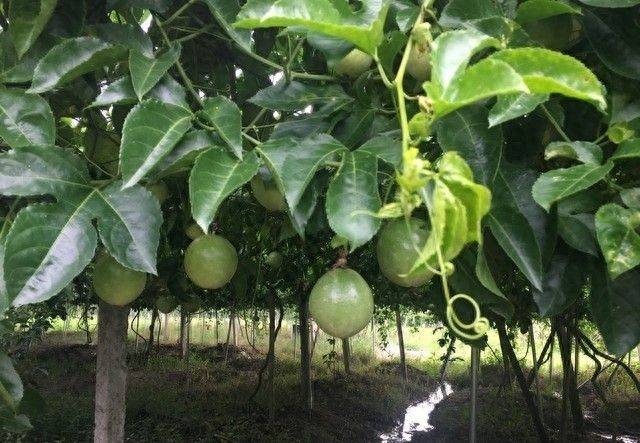
I. Building parks
When planting summer and black grapes, they should be at a flat ground, with a good drainage system in the garden, a good permeability of the soil and a loose, fertile and organic soil. Pre-plantation is preceded by deep tillage and the digging of dens at a distance of 3 m, followed by the application of base fat in the ditch, with the option of decomposed farmer fatting with an appropriate mass of fertilizer. The soil is covered by the application of base fat and water is poured once, until the drain is dried and the ditch is filled。
Ii. Standing
Following the selection of the black summer grape seedlings, planting needs to be done as quickly as possible in order to avoid excessive water evaporation and thus affect the rate of survival. At the time of planting, the depth is the same as in the nursery, not too shallow or too deep. Once established, it will be given a watering of its roots, with the aim of achieving closer contact between the soil and its roots and faster survival of the plant。
Iii. Motion
After planting, the chickens must be made available in a timely manner, and summer shears muster must be made, mainly in the form of sprouts, stings, heartbreaks, rollers and tie-ups. The sprouts, mainly the malformations, the weak sprouts, will remain strong. The reservation shall be made before the flower blooms and shall be cut off for new items that are not well-growing, too dense and weak. When the new steps up to 50 cm, the chicken must be tied in time to avoid breakage. In addition, winter shears are performed half month after the fall of the leaves, resulting in two or three short sprouts of the branches, the remainder of which are trimmed and cut down the weak branches, the sick branches, the dead branches and the secret branches on the plant。
Iv. Flower fruit management
One or two bouquets are kept on the new top of the summer black grapes, and the rest is trimmed, such as sprouts, ill-growing sprouts and spores. In order to improve the sit-in rate and to perform the task of defoliating the fruit, it is usually necessary to trim the small, excessive, deformed, dense, insect and pest particles, which can save nutrients and thereby stimulate the growth of the fruit。