Fat water management
Re-entry management. As a result of the shock, garlic returns to the ground and the more suitable early springs do not have to be watered back in order not to affect the warming. If you're in a bad mood, you have to water and fertilize. A combination of watering followed up with ammonium phosphate, 20 kilograms per acre or 25 kilograms of compound fat。
Before and after the festival, if there is a yellow tip of the leaf, a second fat chase is carried out in a timely manner and the number of waters are increased, usually every 10 to 15 days, leading to plant growth。
At the end of march-early april, if the temperature continues to be high, the water is low in the field, and when the garlic is growing more frequently, a warm weather can be chosen to properly water the defecated mother's hair and garlic water, so that the water can be utilised in such a small quantity that the acre (or precipitation) can be combined with urea 12-15 kg + 6-8 kg of potassium phosphate (which can also be flushed)。
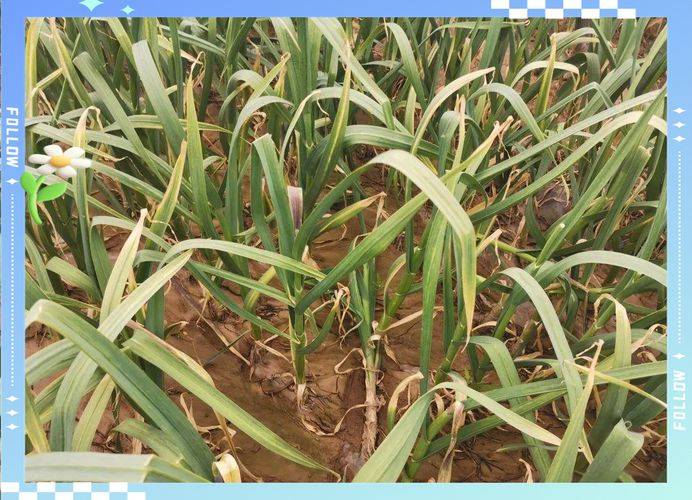
In mid-april, the high water levels of the paste and garlic, combined with the application of 12 kg of urea + 6-8 kg of potassium dihydrophosphate in the acre, contributed to the rapid growth of garlic and the expansion of the phosphorus trachea, which should be humid after the extraction. A combination of potassium phosphate, 150-200 g + ethrin, with 50 kg of water, is used to spray leaves, one in five to seven days and two to three in a row, thus preventing premature decay and boosting the preservation of the leaves, thereby contributing significantly to increased production。
It's long-term management. At the beginning of may, garlic began to divide, and after the summer, it entered a rich and long life, during which time the management of manure would be increased, and the timely application of staggers would allow plant poles to grow thick, foliage to be thick, leaf to be fresh, growing strong and of high natural taste. At the same time, a third fat chase should be carried out when the garlic is not reaching the mouth of the leaf, and the acre should be applied to a three dollar compound fatty of 25 kg. Once the garlic is out of the mouth, it is necessary to pour water on a continuous basis, so that it can be pumped with water, so that it can be swung back and forth, and so that it can be lifted in time。
Magnificent period management. After harvesting, the garlic petals began to expand, requiring increased water, in order to water the soil in a timely manner, keep the soil wet and prevent early decay, while the sprouting of the ground fruit tirex makes the underground fruit nutrient transport catheter thicker, increases the vitality of the ground fruit transport, smooths the face of the fruit, is robust and has high quality production; and stops watering for 5-7 days before the garlic harvest in order to prevent the soil from being wet enough to cause it to rot and its garlic to loose。
The membrane garlic shall be removed from the membrane and weed after the “cleaning” and the temperature has stabilized, and 20 kilograms of ammonium or potassium per acre shall be followed and high-efficiency leaf fertilizers shall be sprayed and then watered once. Take care to stop watering a week before the drop, for the sake of the draw。
Garlic pest control
1, fungal diseases

Garbage is mainly associated with folate, albinism and nuclei, purple and folic diseases. Before or after the onset of the disease, 70 per cent of the acreage uses 500 times the acetate, 70 per cent of the acetene zinc (antai) 500 times the aluminum, or 75 per cent of the acne. Aphrodisiac (stable for the enemy) water dispersants range from 3,000 to 5,000 times the fluid, with a fungicide being used interchangeably, once in 5-7 days and 2-3 times in succession。
2. Bacteria morbid disease
Before or after the onset of the disease, 72 per cent of the acre was used in agricultural sulphate cytoxin, 4,000 times, or 20 per cent of the leaves were dead 20-25 grams, sprayed once in a period of 7-10 days, and protected 2-3 times depending on the condition。
Three, garlic maggots
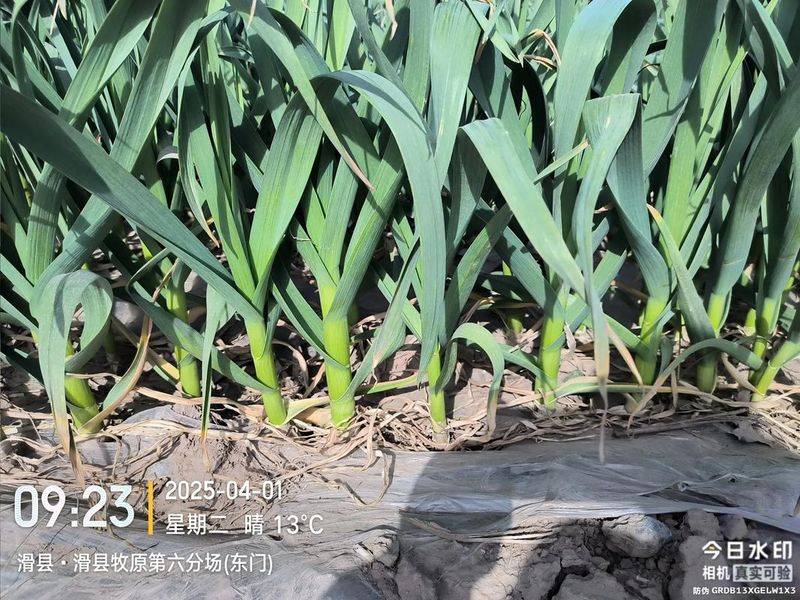
In the early larvae, combined water-suppressant agent, with 40% thiophos-methyl emulsion at 400 ml/m, or with high-efficiency chlorocypermethrin 100-150 ml per acre to 30 kg water sprayed 1-2 times。
In april, the long-term management of garlic sprouts began to combat onions and seed flies, spraying them once every 7-10 days and twice in a row. Since late april, the prevention and treatment of garlic death, ashilosis, etc., has been administered every 10 days or so, with pre-powder sprayed 2-3 times。
Respondent: sacrifice time: 2017/11/3