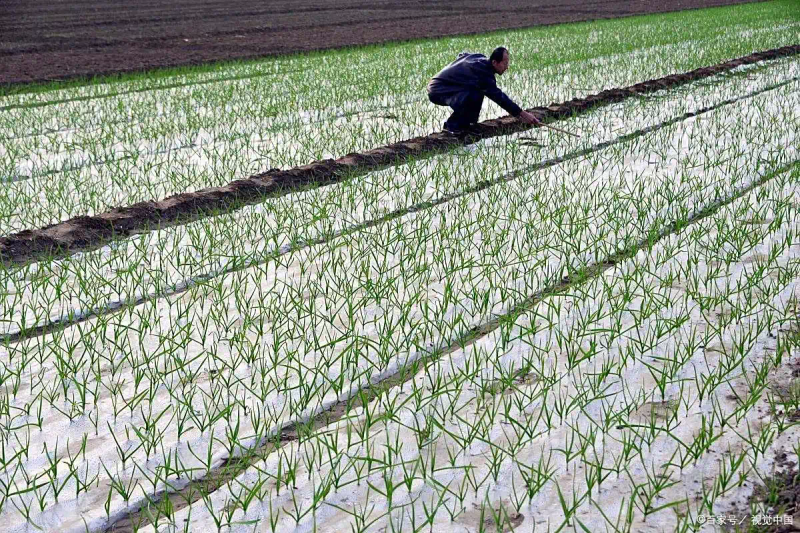
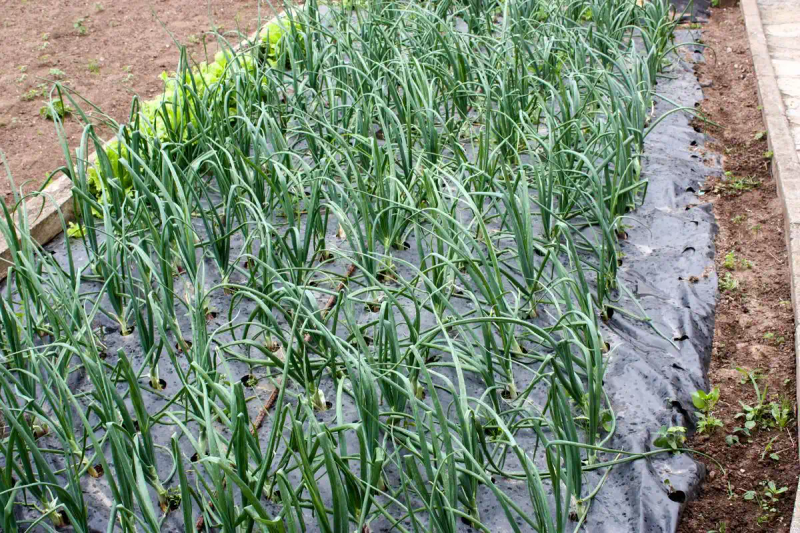
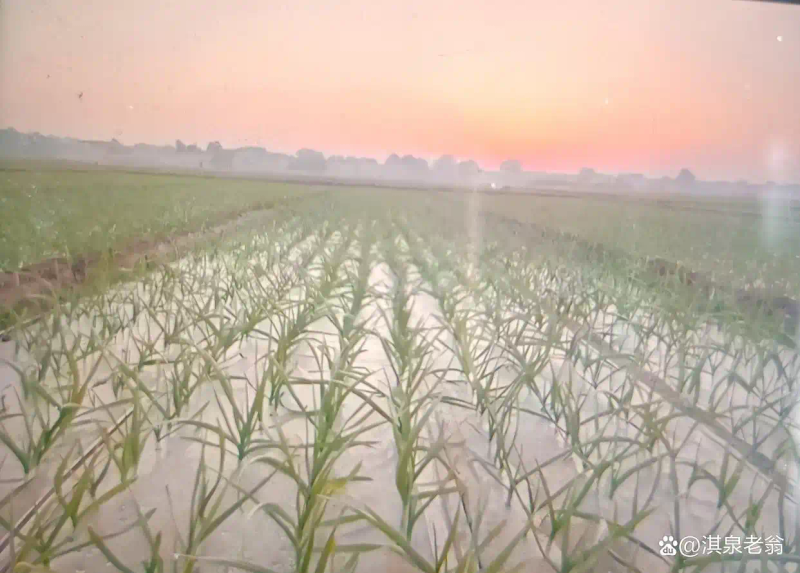
The membrane cover technology has become one of the core tools for improving garlic production and quality, with the advantages of increasing temperature protection, inhibiting weeds and reducing pests. In order to achieve the full application of membrane cover technology and the high-quality production of garlic, the critical elements of control selection, land preparation, seed management, field care, green pest control and harvesting need to be strictly applied. This paper will elaborate on the elements of core technical measures for high-yield membrane garlic cultivation。
I. The best selection of varieties: laying the foundation for high productivity
Varieties are an intrinsically central factor in determining the production and quality of garlic, and the selection of well-suited and resilient varieties is a prerequisite for high levels of membrane garlic production。
(i) diversity selection criteria
1. Regional suitability: needs to be combined with climatic conditions, soil types and cropping system selection. In the cold regions of the north, preference should be given to species that are cold-resistant and have long hibernation periods, such as the “golden garlic” and the “gang garlic” in the warm and humid areas of the south, which are well-resilient and well developed, such as the “sichuan red garlic” and the “gangdong garlic”。
2. Resilientness is weak: emphasis is placed on the selection of varieties that are resistant to the main diseases and pests of garlic, such as root rotor disease, folate disease and garlic mackerel, taking into account the characteristics of drought resistance, salin resistance and reducing the difficulty of field management and production risks。
3. Commodity nature and production: priority is given to saturated, uniform garlic, bright garlic-skinned, store-resistant varieties, with moderate and high levels of garlic, ensuring that production and commodity values are increased。
(ii) garlic processing techniques
1. Selection of petals: before seeding, garlic is screened, carcasses, worms, broken and too small are removed, and healthy garlic, with a single petal weight of 5-8 grams, is selected as a petal. Stewardship by garlic petals to avoid uneven growth of field plants and facilitate uniform management。
2. Sterilization: placing a later staged petal into 50% more than 500 times more filamentable powder or 70% more than 800 times more methyl tobuzin humid powder, immersing for two to three hours, extracting dry and dry seeding, can effectively kill the fungus carried by the petals and prevent the disease during the seed season。
3. Drum treatment: drum treatment is possible if seeding is late or at lower temperatures. Placing the disinfected petals in an environment of 20-25°c, with a thickness of not more than 10 cm, maintaining a moderate humidity, sowing them when the petals are lumbered (0. 5-1 cm long) and promoting the smoothing of seedlings。
Land block preparation: creating an adequate environment for growth
Garlic roots are requiring roots, are less distributed and require higher soil conditions. Scientific land preparation improves soil physicochemicality and provides good conditions for root growth and nutrient absorption。
(i) land selection
The choice is for flat ground, easy drainage, deep, thin and fertile sandy soil or border soil. A three-to-five-year rotational system is required for cartilage crops such as wheat, maize and beans, to avoid high levels of disease and infestation due to soil nutrient imbalances and pathogen accumulation。
(ii) whole fertilization
1. Deep tilling: after the harvest of the former crop, the soil is ploughed 25-30 cm in time to break the bottom of the plough and to improve the soil's permeability. Deep tillage is followed by 15-20 days of sunbath and uses sunlight to kill some soil pathogens and eggs and to improve soil structure。
Scientific fertilization: garlic is long-lived and requires high levels of fertilization, and should adhere to the principle of “basic fertilisation as a complement”. A combination of 4,000-5,000 kg of high-quality farm fat, 20-25 kg of urea, 50-60 kg of calcium perphosphate and 30-35 kg of potassium sulphate is applied to the whole acre. Farmers need to be fully decomposed to avoid the root causes of damage to harmful substances from unfertilized fertilizers. For acid soils, lime modulation ph to 6. 5-7. 5 can be applied in appropriate quantities, which is more conducive to garlic growth。
Quite finely: fertilizer is followed by fine dredges, which bring the soil to a state of “soft, fine, loose and soft”, ensures that the fertilizer is evenly mixed with the soil and avoids the concentration of the fertilizer in root burning. At the same time, it is made with a width of 1. 2-1. 5 metres and a length of 10-15 metres and a height of 20-25 cm to facilitate membrane cover and drainage management。
Iii. Precision seeding: building a reasonable group structure
The quality of seeding directly affects the seed rate and group structure of garlic, and reasonable planting times, density and modes are key to achieving high yields。
(i) determination of suitable planting periods
The membrane garlic planting period needs to be determined in combination with local climatic conditions and the characteristics of the species, with the core principle being to make garlic five to six real leaves by winter, with greater resilience to cold. The northern regions generally sow between late september and early october, while the southern regions sow in mid-october. In the case of premature seeding, pre-winter growth and vulnerability to freezing; late seeding, low pre-winter temperatures, weak seedlings, and slow return to winter, affect production。
(ii) reasonable secrecy
Cultivation density needs to be adjusted to the characteristics of the species, soil fertility and planting period. In the middle and late stages, 30,000-35 million varieties are grown per acre, while 35,000-40,000 are grown per acre in the early and small petals. The seeding is based on a specification of 15-20 cm range and 10-12 cm range, suitable for depths of 3-4 cm, and covers 1-2 cm thick fine soil after seeding, ensuring that the garlic petals are up and down in such a way as to avoid inconsistencies in seed production。
(iii) sowing and membrane coverage
1. Seeding methods: use of gutter-pointing or cave-sowning methods to sow the abdomen of the petals in a manner consistent with their direction, to facilitate the spread of garlic leaves and to increase light utilization. The seeding is followed by the timely watering of the bottom water, and membrane cover is provided when the soil is suitable (in groups of hands and in the ground)。
Membrane selection and coverage: select a transparent polyethylene membrane or black membrane with a thickness of 0. 004-0. 008 mm and a width matching the acetone. Black membranes have a better effect on weeds, but the effect of warming is slightly less than that of transparent membranes, which can be selected according to demand. The cover will be stretched to the ground, which will be closely bound to the surface and sealed with earth, preventing the loss of the wind and heat. The introduction of mechanized seeding will result in the integration of seeding, fertilization and membrane operations, with greater efficiency。
Iv. Field care: enhancing growth process regulation
Garlic is produced over a long period of sapling, re-entry, scrawl and tubing, and needs for moisture and nutrients vary from one reproductive period to another, requiring targeted field care。
(i) shrimp management
1. Fragmentation seedlings: 7-10 days after seeding, seedlings begin to come out of the membrane when the pedestal of the seedlings is punctuated with a knife or bamboo stamp, which removes the seedlings from the membrane and then closes the mouth with earth to prevent heat loss and weed breeding. Diffusion seedlings are required to take place in the morning or afternoon of the sun to avoid high-temperature burning of young children。
2. Hydrological management: smaller water is required during the seeding season, and when bottom water is sufficient, water is generally not required. In the event of a dry weather, a small water can be poured in a ditch and the soil moist. Freezing water can be watered once before winter, the ability of young seedlings to withstand colds can be enhanced and the membranes can be sealed in a timely manner。
3. Weed protection: membrane cover can effectively inhibit most weed growth, and for a small number of weeds drilled from the mouth of the membrane, timely artificial removal to avoid competition between weed and seedlings for nutrients。
(ii) management back to life
1. Timely watering: the return of spring temperatures and the return of garlic to youth require the timely rewatering of fresh water to promote the growth of seedlings. The water should be distributed in a clear morning with a moderate amount of water to avoid flooding。
2. Recovery of fertilizer: a combination of fresh water, 10-15 kg of urea per acre, supplementary nutrients, and promotion of leaf-leaf growth. Fertilizers can be applied either in the form of caves or with water to ensure a balanced distribution of fertilizers。
3. Cultivated pine soil: if the membrane is broken or the soil is clogged, it can be used to practice shallow pine soil, improve soil permeability and promote root system development. When farming, it avoids damage to roots and membranes。
(iii) drawback management
1. Water fattening: the pumping period is one in which garlic thrives, with peaks in demand for water and fertilizer. The soil should be humid during this period and water should be poured every 7 to 10 days to ensure adequate water supply. Combining water with the pursuit of compound fertilizer per acre (15:15:15) 20-25 kg and potassium sulphate 10-15 kg, promoting garlic growth and tubing。
2. Pumping in due course: when the garlic is 25-30 cm in length and the top bend is bent, it is performed in a timely manner. The suction shall be carried out in the morning of the sun, and the garlic base shall be squeezed with its hand, and it shall be gently removed from the top, avoiding damage to the leaves and rods. Water is poured in time to replenish the moisture and nutrients。
(iv) magnificent management
1. Reasonable control of water: reduction in the amount of water required during the expansion of the tubing, with proper control over watering and soil moisture. Overwatering can easily lead to rotting rods, affecting quality and production. Water is stopped 7 to 10 days before harvest to promote maturity and sustainability。
2. Follow-up on fattening: 10-15 days after the suction, 15-20 kg of compound fattening per acre, 5-10 kg of potassium sulphate, supplementing the nutrients needed to expand the tuber. In case of defertilization of the plant, 0. 2% potassium phosphate solution is sprayed 2-3 times at intervals of 5-7 days to increase photo-efficiency。
3. Protection of leaves: during the expansion period, luminous co-operative nutrients are mainly based on blades, which require the protection of functional leaves against pest hazards and mechanical damage. In the event of premature decay of the leaf blades, it can be sprayed to slow the ageing。
V. Green control of pests and pests: ensuring healthy growth of plants
The most common diseases and pests in garlic include leaf deadness, root diseases, garlic mackerel, aphids, etc., and pest control requires adherence to the principle of “preventive and integrated management”, giving priority to agricultural, physical and biological control and rational use of chemical control。
(i) agricultural control
Improve field ecology and reduce pathogen and pest base numbers through such measures as rational rotation, deep tan, scientific fertilization, clean fields, etc. Timely removal of disease and insect strains and their central destruction from the fields to prevent the spread of pests and pests。
(ii) physical control
Using insect light, the field is equipped with a frequency-fibrous pest-killer lamp, with one per acre, to trap pests such as garlic mackerel and aphids. For aphids, a yellow sticky sheet can be used to trap them with 20-30 pieces per acre and a height of up to the top of the plant。
(iii) biological control
Protection and use of natural enemies, such as weeds, grasshoppers, etc., to combat aphids. Biopesticides are used to combat pests and pests, such as garlic mackerel (bt), foliacin, mucus, and chemical pesticide use。
(iv) chemical control
1. Disease control: in the early stages of folate disease, 75 per cent of the bacterial wettable powder is sprayed with 600 times the fluid or 50 per cent of the heisobacty humid powder is sprayed with 1,000 times the fluid, once at intervals of 7 to 10 days and two to three times. At the beginning of the root disease, 50 per cent of the more than 50 per cent fungus filamentable powders 500 times the fluid or 70 per cent of the fungus humid powders 1,000 times the root, 200-300 ml per irrigation fluid。
2. Pest control: garlic mackerel control can be applied to the soil with 3 per cent of the thiophos-methyl granule agent 3-4 kg in combination with the base fertilizer before seeding, or with 1,000 times the dose of venomous cream during the larvae. In the early stages of aphids, 10% of aphids were sprayed with 2,000 times more humid powder or 3000 times more with 25% of aphids water dispersible particles。
Chemical control requires strict adherence to the safe use of pesticides, control of dose and frequency of medications, prohibition of pesticide use 15-20 days prior to harvest, and safety of garlic products。