Pcr expansion
Pcr augmentation system:
1. 0 ml template dna
2. 5 m10 x taqbuffer
1. 0 μldntp
0. 5 ml quote1
0. 5 ml quote2
0. 2 mltaq
19. 3 mldh
Pcr augmentation process:
95°c, 3min
94°c, 40cc
I'm 40sec
72°c, nmin, 35 cycles
72°c, 10min
16°c temperature, 30 minutes。
Of which, tm depends on the induction temperature, extended time n depends on the length of the increased target segment
Done。
Note:
1) pcr rationale and application
2) type of pcr
3) the formulation of the augmentation system (including taq selection, dntp usage, taqbuffer selection, etc.)
4) design of augmentation procedures
5) design of quotes
6) other details can be found in molecular cloning
Http://. Bioon/z/beginner/pcr/
Basic pcr concept
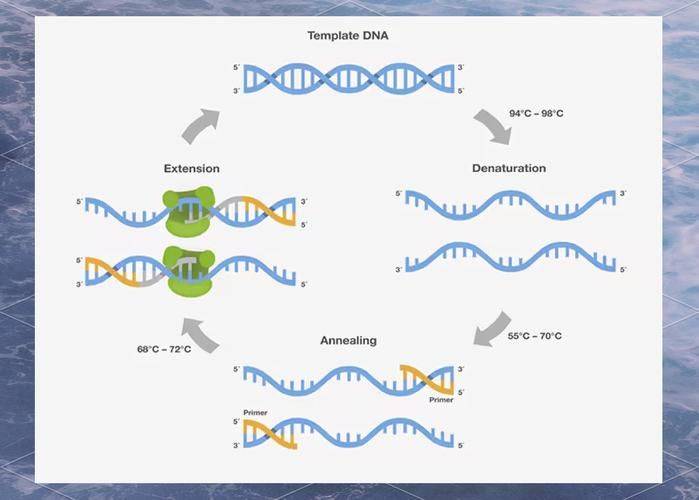
Polymerasechainreaction, pcr is a molecular biology technique for in vitro expansion of specific dna fragments。
The main process of pcr technology is to combine a small single-chain dna fraction (known as a quote) synthesized by humans with the specific regional specificity of the dna of the template, and in turn four dntps
For the bottom, the process of exhilaration of dna through a 3 ' end polymerization of the double-chain segment formed by dna polymerase along the quotations and templates. Of which, the most important
It's thermal stable dna polymerase, which can be stabilized at a temperature above 97 degrees
Form a single chain, and then cool (normally 50-55 degrees depending on the quotation) until the appropriate amount of the quotation is combined into the template. Last temperature rises to 72 degrees
The enzymes aggregate into double-chain dna。
Classic methods
Pcr system component
Dna template (template) contains dna fragments that need to be expanded。
Two quotations (primer) determine the starting and termination positions that need to be expanded。
Dna polymerase (polymerase), areas where reproduction needs to be expanded。
Deoxynuclear triphosphate (dntp) means four deoxyribose nucleic acids used to construct new and complementary chains。
A buffer system providing a chemical environment suitable for the operation of polymerase。
H2o water dilution in the system to maintain concentration of various components
Note: some brand buffers do not contain mg2+, and corresponding concentrations of mg2+ are also required. The enzyme is the last to be added, the water is the first to be added。
Pcr step
1. Dna mutation (90°c-96°c): double-chain dna templates are heat-activated and hydrogen keys break to form single-chain dna。
2. Repulsion (25°c-65°c): system temperature is reduced and the quotations are combined with dna templates to form local double chains。
3. Extension (70°c-75°c): using dntp as a feedstock under taq enzyme (in the vicinity of 72°c, most active) extending from 5'3' of the quote to synthesis
Dna chains complementary to templates。
Pcr circular parameters
1. Prevarication
The complete transformation of the template dna and the complete activation of the pcr enzymes are essential to the success of the pcr, and reference is made to reagent instructions for heating time, generally unmodified taq enzymes. Live
The time is two minutes。
2. Diversity steps in the cycle
Normal 95°c in the cycle, 30 seconds, is enough to completely alter the dna sequence of the various targets, possibly shortened. The duration of the procedure, the duration of the variation, the duration of the process, the duration of the process, the duration of the process, the duration of the process, the duration of the process, the duration of the process, the duration of the process, the duration of the process, the duration of the process, the duration of the process, the duration of the process, the duration of the process, the duration of the process, the duration of the process, the duration of the process, the duration of the process, the duration of the procedure, the duration of the process, the duration of the process, the duration of the process, the duration of the process, the duration of the process, the duration of the process, the duration of the process, the duration of the process, the duration of the process, the duration of the process, the duration of the procedure, the duration of the process, the duration of the process, the duration of the process, the duration of the procedure, the duration of the process, the duration of the process, the damage to the activity of the enzyne activity
Target sequence variability is incomplete and prone to proliferation failures。
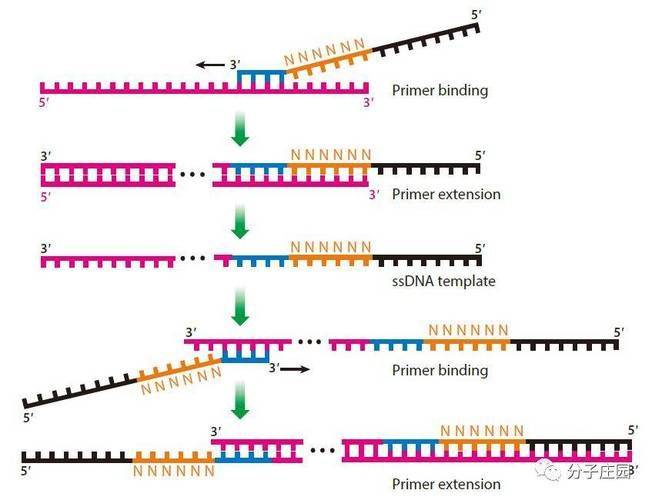
3. Primerannealing
Repulsion temperatures need to be determined in multiple ways, generally based on the tm value of the introduction as a reference and adjusted downwards to the length of the increase. And then on the basis of this experiment
An estimate is made。
Repulsion temperatures have a significant impact on pcr specificity。
4. Quoted extension
The extension of the quotes is generally carried out at 72°c (taq enzymes at the highest temperature). However, this step will save the extension time over the length of the amplification segment when the increase is short and the fire is cooler
Depending on the circumstances, it is generally recommended at more than 1000 bp, with 1 min/kbp for derivatives containing pfu and its derivatives。
5. Cycles
Most pcrs have 25-40 cycles and are too susceptible to non-specific enhancements。
Final extension
After the last cycle, the reaction is maintained at 72°c for 5-15 minutes ... To complete the extension of the quotation and to re-fire the single chain into a double chain。
Results analysis
1. False negative, no magnification and..
The key elements of the pcr response are the preparation of 1 template nucleic acid, the quality and specificity of 2 quotes, the quality of 3 enzymes and the 4pcr circulation conditions. We need to find out why
• analysis of the links。
Template: 1 template contains impurity protein, 2 template contains taq enzyme inhibitors, 3 template proteins are not digested and depurated, especially group proteins in chromosomes, 4 in
Too many templates were removed or phenols were inhaled. 5 template nucleic acid variability is incomplete. When enzymes and inducing substances are in good quantity, no amplification bands appear, most likely the digestion of specimens
The process of extracting the nucleic acid from the template has been flawed, so that effective and stable digestive treatment fluids are prepared and their procedures should be fixed and not subject to arbitrary changes。
Ease failure: new enzymes need to be replaced, or both old and new enzymes need to be used simultaneously to analyse whether false negatives are caused by loss or inadequacy of the enzyme activity. It's important to note that sometimes taq enzymes are forgotten
Or bromine。
Quotes: the amount of the substance quoted, the concentration of the quotation, and whether the concentration of the two quotes is symmetrical are common reasons for the failure of the pcr or the unsatisfactory and easily dispersible expansion of the strip. Some batch numbers
Quality problems in the synthesis of quotations, with two quotations having a high concentration and a low concentration, resulting in an inefficient asymmetric build-up, were met by:。
The concentration of the 2 quotes should focus not only on od values, but also on glucose glucose bathing in the original fluids, which must be accompanied by a lead strip, and the brightness of the two quotation strips should be approximately one
If, for example, a quotation has a strip and a quotation is not stripped, the pcr is likely to fail and should be negotiated with the unit that synthesizes the quotation. It's as bright as a quote
The concentration is balanced when diluted. 3 reference should be stored in high concentrations and in small quantities to prevent repeated freezing or long-term cooling of refrigerators, leading to deterioration of the reference
Expiry. The design of the quotations is not reasonable, e. G., the length of the quotations is not sufficient, and a dichotomy is formed between the quotations。
Mg2+ concentration: mg2+ion concentration has a significant impact on pcr enhancement efficiency, high concentrations reduce the specificity of pcr expansion and low concentrations affect pcr productivity
The pcr expansion failed without adding a belt。
Response volume change: the volume normally used for pcr enhancements is 20ul, 30ul, 50ul. Or 100ul, application of multiple mass for pcr build-up based on scientific research
For different purposes, clinical tests establish that when a small size of 20ul is done, then the bulk is done, the conditions must be modelled, otherwise it is easy to fail。
Physical causes: variables are important for pcr expansion, such as low variability temperatures, short variability times, and high probability of false negatives; low repulsion temperatures can increase non-specificity
Reduce pcr efficiency by increasing, and reducing, the speciality-enhancement efficiency retreating temperature, which influences the combination of high-intensity exposures and templates. Sometimes it's necessary to test it with a standard thermometer
This is also one of the reasons for the failure of pcrs in terms of variability, defusing and extended temperature in amplifiers or water solutors。
Target sequence mutations: pcr for example, if the target sequence mutates or is missing, influences the link between the subject matter and the specific characteristics of the template, or loses the subject matter and the template to the complementary sequence due to a missing part of the target series
Expansion will not succeed。
2. False positive
The pcr amplification bands that appear are consistent with the target sequence strips, sometimes with better alignment and greater light。
Inappropriate design of quotations: the selected amplification sequence is of the same origin as the non-purpose enhancement sequence, so that the expanded pcr product is a non-purpose sequence during the pcr expansion。
Target sequences are too short or quotations are too short to be proficient. Quotes need to be redesigned。
Cross-contaminated target sequence or amplified product: there are two reasons for this contamination: the first is the cross-contamination of entire genomes or large segments, resulting in false positives. It's a fake positive
The method is to resolve the problem: operations should be carried out with caution and with a view to preventing the inhaling of target sequences into a gun or spilling out of the centrifuge. All reagents or devices except enzymes and materials that cannot withstand high temperatures
They should be sterilized at high pressure. Both the centrifugal tubes used and the gun bearings used should be used once. If necessary, before adding the specimen, the tubes and reagents are uv-lit to destroy their presence
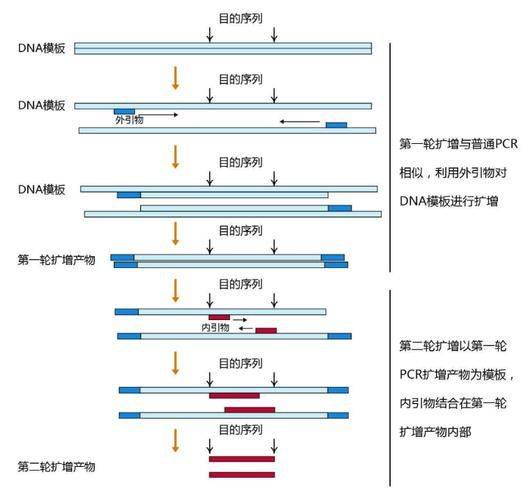
Nucleic acid. Second is the contamination of small segments of the air with nucleic acid, which are shorter than the target sequence, but of a certain homogeneity. The pcr can be expanded by collating each other and complementing the quotations
The product, which results in the creation of a false positive, can be mitigated or eliminated by nesting pcr。
3. The emergence of non-specific amplification bands
Pcr does not follow the expected size of the increase, either large or small, or a combination of special and non-specific increments. The appearance of non-specific stripes
This is due to the fact that the quotations and the target sequences are not fully complementary or that the quotations aggregate into a dichotomy. Second, the mg2+ion concentration is too high, the temperature of the fire is too low, and the pcr cycle is too high
Too much about it. The second is the quality and quantity of enzymes, often from some sources, which are prone to non-specific strips and not from another source, and sometimes from excessive enzymes
Sexual expansion. The response consists of redesigning quotations where necessary. Reduce enzymes or switch enzymes from another source. Reduce the volume of quotations, increase the number of templates as appropriate and reduce the number of cycles. Chi
When the cooling-off temperature is increased or a two-temperature point method is used (93 °c variability, about 65 °c retreat and extension)。
4. Spills or smears and..
Pcr amplifications sometimes occur with lacerations or strips or carpet strips. This is often due to excessive enzymes or poor enzymes, high dntp concentrations, high mg2+ concentrations, retreat
The temperature of the fire is too low and the number of cycles is too high. The response is to reduce enzyme volumes or switch enzymes from another source. 2 reduced concentration of dntp. Mg2+ concentrations are appropriately reduced. Increase
Add templates to reduce the number of cycles。