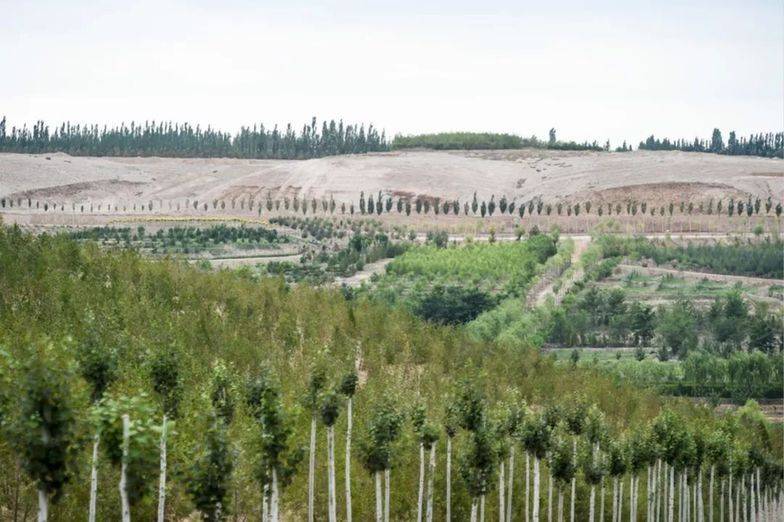
(i) there are two photographs of the old kubushi desert that are set here, in stark contrast to the world's eyes。
One is the kubushi before governance: the bare ground, the grass, "like a big scar on the ground." the palms of the yellow sand cut off all the purple reds, leaving the earth desolate, leaving nothing to nature, leaving nothing to man。
One is the governance of kubuchi: large areas of green land appear in the desert, and the roads are no longer dunes on either side of the road, but scrambleded through trees and bushes. The magical transformation of nature from yellow to green warms the loner, gives life to the lamented and gives hope to the hard。
The seventh largest desert in china, such as a yellow dragon, was in the northern part of the ordos plateau, once called “a sand basin hanging over the capital”. On a few occasions, the wind and sand have been shifting and floods have hit the area, seriously threatening the plains of the “extra-extra-scuba” and the yellow river. Today, one third of the desert is in a green dress, and the beauty of the wind and wind is slowly re-emerging, with 100,000 farmers and pastoralists in the sand region becoming rich and poor, becoming one of the best windows for the world to observe “a beautiful china”。
How did these amazing ecological changes happen? What kind of thinking does the world give us
(ii) the dramatic transformation of the land deserves careful historical scrutiny。
“human beings walk on the earth and leave a wilderness where they walk.” who knows that the desert, the place of death, was once the home of man. It is a gathering place for civilization and a burial ground for civilization. From the abundance of water and grass 2,000 years ago, to the clearing of pasture 200 years ago, to the erosion of sand and sand 40 years ago, kubushi's transformation became the most realistic and vivid footnote of “an ecological boom and a civilization decay”。
“desertification is a product of the lack of human vision of nature.” when the desert became a training ground for the false notion of “human conquest of nature”, the pandora's box opened: the deterioration of the climate, the desertification of the land and the subsequent impoverishment of life. Following a historical study of desertification in western inner mongolia, historians ho-yeon concluded that the formation of the desert “is significant and must be taken into account by the impact of human activities”。
Desertification, such as the sword of damocles with the same sharp handle, hangs high on the heads of chinese. The country has more than one quarter of its land area and the interior mongolia has more than one half of its land area. The tengri desert, the maususha land and the kubuchi desert, like three yellow dragons, lie on the side of the mother's river, pouring tens of thousands of cubic metres of sand each year。
Desertification, the “cancer of the earth”, threatens the survival and development of two thirds of the world's population, one in five, and spreads at the rate of 32 football stadiums per minute, amounting to the loss of one irish territory per year。
Desertification, which has been shown to humanity, requires our utmost attention to alert us。
In 2007, we launched the biennial qubchi international desert forum, bringing together the world's leading experts to explore ways to advance the world's desertification control and green economy. On 29 july 2017, the president, xi jinping, addressed a message to the sixth forum, stressing that desertification was a serious global challenge. Combating desertification is a great cause of contemporary, millennia of human endeavour. It is hoped that delegates will pool their ideas and make a positive contribution to the building of a green “across the road” and the improvement of the global ecological environment。
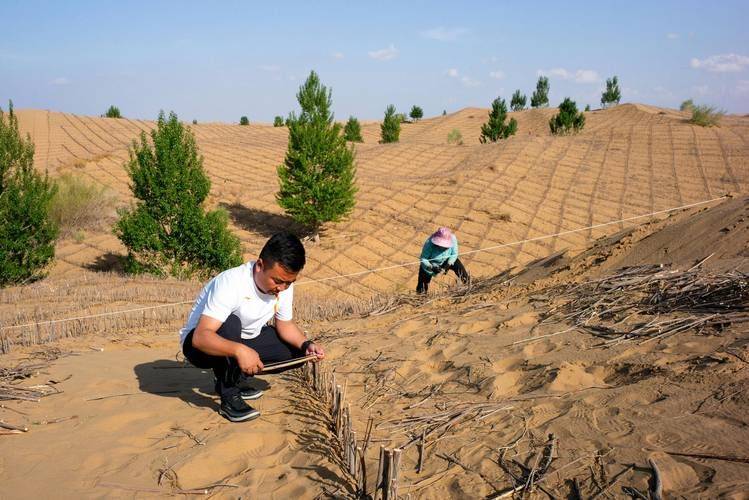
War on land desertification has become the global consensus of humankind to preserve its common home and guard its common destiny。
(iii) the twentieth century has been summed up as the beginning of a new life in which humankind has done two major things: to climb the moon and to march towards the desert。
For many years, containing the desert and changing the environment have been the dream and struggle of the kubu people, but in the absence of a coherent scientific planning and system-based governance model, they have passed the curve in desert governance, and local areas have been caught up in the circle of “governance-deteriorating-regulating-deteriorating.” "can the desert be our friend?" this is a problem that chen hae-sun has thrown at the u. S. And at the heart of desert governance。
The 19th congress of the party, “assisting on living in harmony with nature” as one of the 14 fundamental strategies of the new era to uphold and develop china's special socialism, stressed that “the modernization we want to build is the modernization of living in harmony with nature”, thus also proposing new ideas for desert governance. The insistence on living in harmony with nature means that we must resolutely reject the notion that man must prevail over nature. In the face of the desert, it is not simply the idea of the triumph of man, but the search for another form of dialogue between man and nature, in harmony with the desert。
The “greening” and “riching” of the sand in kubuchi provide a profound insight into the nature of the relationship between development and protection. The preservation of nature is the process of protecting its values and adding value to its natural capital; the protection of the environment is the process of preserving the potential and strength of economic and social development. It has been shown that new thinking about deserts can “create in the vast desert a cause that can produce hundreds of billions of yuan”. Kubuchi combats the sand, a reality of xi jinping's ecological civilization, and a vivid interpretation of the concept of green green green mountain as silver mountain。
From deforestation to tree cultivation, from fear of deserts to proximity to deserts, from conquest to submission to nature. For centuries, the spiritual world of the kubuti people has undergone profound change, struggled with nature's simpleness and evolved into harmonious dialogue and convergence。
The sense of sand fighting, sand fixation, sand use and desert governance rises when the sand settles; the energy of nature is built up with respect for nature, its adaptation to nature, and its conservation。
(iv) paris climate conference, 2015. An ecological gift from china was solemnly recommended to the world — china's report on ecological wealth creation patterns and results。
This is the first ecological wealth report to be produced and published by the united nations and the first scientific quantitative evaluation to confirm china's achievements in ecological civilization. From this report, it is gratifying to find that the desert is rich in ecological governance and wealth from poverty, which is “affordable and affordable”。
From this, we see promising ecological benefits. Over the past decades, the qubuchi sand cover more than 6,000 square kilometres, cover 24,376 million cubic metres of water, release 18. 3 million tons of oxygen, conserve biodiversity with a value of 349 million yuan and create more than 500 billion yuan in ecological wealth, and achieve a win-win between human beings and nature。
From this, we see substantial economic benefits. From “talking about the change of sand” to “single love” to “single love” for sand, kubuchi's insistence on protecting the ecological environment is to protect productivity and improve it is to develop productivity, create more than $30 billion in desert eco-economic industries, reverse ecological governance and win-win economic development and ecological protection。
From this we see significant social benefits. Kubuchi has integrated desert governance with poverty eradication, providing employment for more than 1 million (a few times), lifting 100,000 farmers and pastoralists out of poverty, significantly improving their productive living conditions and achieving win-win gains for sand control and farmers。
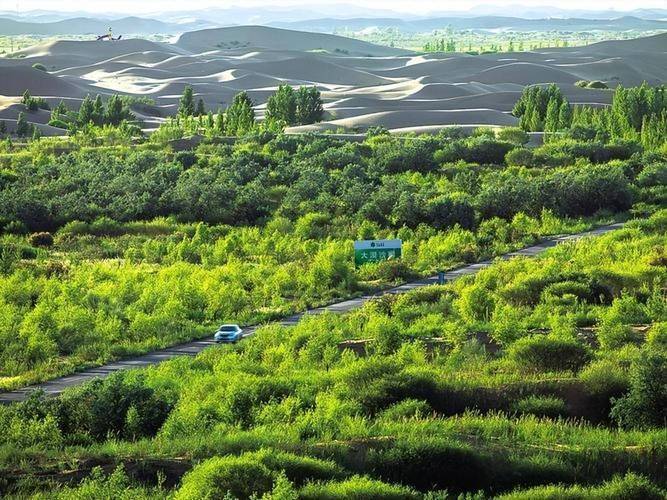
The balance of ecology, livelihood and economy is driven by the turn of desert negative assets into green assets for the economic development of the region, and yellow sands into green and green mountains and gold mountains. This is also the dual contribution of the sand management of kubuchhi, which has not only created hundreds of billions of ecological wealth, but has given humankind a renewed sense and use of the desert, offering possibilities and hope for more deserts in the world to become oasis。
(v) the restoration and management of ecosystems in desertification areas is a universal challenge。
The struggle of humankind against desertification is doomed to a lasting war. The fight against sand and sand cannot be confined to the mechanical level of “saloon retreat” or “human retreat”, and the best balance between man and sand must be found. The success of kubuchi's sand management lies in the exploration of a four-wheel-drive kubuchi desert governance model, “policy-led party government, industrialization investment in business, market participation of farmers and pastoralists, and continuous innovation in science and technology”。
This is the path to the sand that relies on the policy support of the party government. Over the years, the party and the government have strengthened their policy direction, optimized the allocation of resources, focused on promoting governance in the field of desertification control by promoting the convergence of factors of production, such as finance, technology, labour and management, into a multi-channel, multisectoral and multi-sectoral approach to combating desertification。
This is the path to combating desertification by insisting on industrial investment in enterprises. The development of a green economy in the desert is slow, long-term and heavily invested and cannot be sustained solely by government inputs. Scaled and industrialized sand management addresses the issues of where money comes from, where benefits come from, how sustainable, and creates a sample of green development in desert areas。
This is the way to combat desertification by engaging farmers and pastoralists in market participation. Sand management is a matter of survival, with the ultimate aim of giving the people of the region a better life. Businesses have mobilized farmers and pastoralists through land-tenure, contract-to-plant and worker-to-house models. Peasant farmers and pastoralists have become the broadest participants, the most committed supporters and the greatest beneficiaries of sand management。
This is the path to change through technology. From the attempt to plant trees, to the introduction of scientific and technological tools, to the innovation of institutional mechanisms, it is the respect for nature, science, sand management, and continuous innovation that kubchi explores a sand management programme of mature science that has led to historic changes from a life-ban zone to a desert oasis。
“exploiting the development opportunities offered by desert resources and environments is a key secret to the success of the kubushi model.” the kubushi desert governance model, which is “four-wheel-drive”, is a precursor to the new environmental governance system proposed by the 19th congress of the party, and is highly compatible with the 19th congress report, “building an environmental governance system that is owned by the government, with corporate ownership, social organizations and public participation”. The four “wheels” have worked together to achieve an organic harmonization of ecological, economic and social benefits, moving beyond an ecologically and economically balanced road to combat sand and sand in china, and to demonstrate the wisdom of china to inspire humanity and show the future。
(vi) a great green wall, spread out in a scroll, and a great spirit, rising in the heavens and the earth。
Green in the sand, always stories, always miracles. From the hard work of the national sandshire hero yingyu-jin, who “never let the trees die, let the sands do it”, to the intellectual struggle of the head of the business, wang wen-chung, who “must keep his job, he must take care of the sands”, to the obsession of the japanese sand specialist jung-hwan, who “governed and developed the engbe desert as the last wish of his lifetime” ... The sandmakers on all sides, who for decades have fought the desert and poverty with perseverance, as if the colours of thousands of people had been woven together into a historical roll。
The moving chapter of the kubchi people's pursuit of a green dream has inspired the spiritual strength of “watching each other, relentlessly, scientifically innovative, green and prosperous” and has injected new energy into the implementation of the core values of socialism as a token of this historical scroll. It is a spiritual great wall that is cohesive, that supports each other and that unites itself into greatness; it is a spiritual force that is strong, that is relentless and that is repulsive; it is a spiritual asset that is creative, scientific and innovative and that makes the waste green; and it is a spiritual light that is life, green and prosperous and protects development。
The aim of this watch is to keep in mind the instructions of the secretary-general of xi, who told the people of the country that they would turn into a rope, that they would do their utmost to keep the good fields, that they would keep their spiritual home, that they would guard the green and green mountains, that they would keep the ecological security barrier in the north of the country, that they would think, study and develop, and that the grasslands would be given a new vitality。
The goal is to make desertification management a long-term priority for the preservation of the ecological environment under the strong leadership of the party, without fear or hardship, year after year, from generation to generation, and consistently to green development。
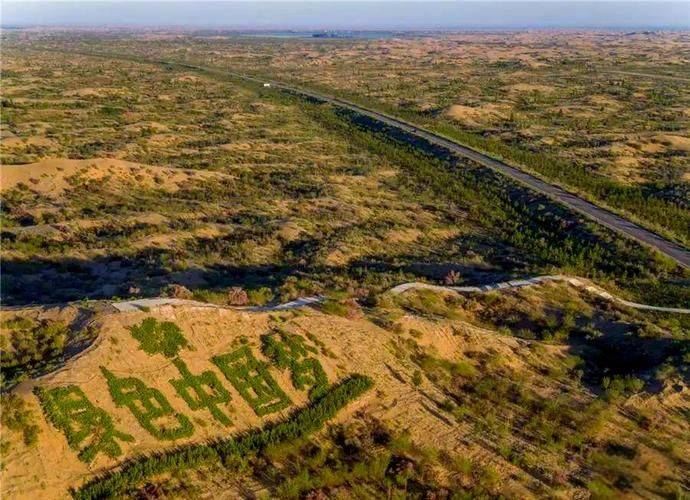
Scientific innovation is about firmly establishing an ecological civilization that respects nature, responds to it and protects it. It respects the principles of priority protection, scientific governance and proper utilization, respects the rules, is innovative and continues to build the path of ecological civilization。
The green and the green and the rich are the ones who always pursue the values of the green and green mountain as the silver mountain, and who insist on eco-friendly, eco-friendly and eco-friendly, and who accelerates the formation of green and green development methods, raising the “face value” of green and green mountains and serving as the “value” of the silver mountain of the great golden mountain, continuing to pursue the path of productive development and well-off and eco-friendly。
Gathering under the banner of green development, large ecologically fragile areas are on the new road of ecological priority: arrazon has the “forests” visible in the fly-in zone, and doron of the syringollian league has a mountain full of sorghum pines, and hullenberg continues to possess the prairie of the intoxicated prairie ... The spiritual value of kubushi is being increasingly practiced and validated on the ground in the interior of mongolia, unleashing the power of ecological civilization。
The new era has promoted the spirit of kubuchi, and the members of the communist party in general and the leadership at all levels in particular have high responsibilities. The promotion of green development is a profound change in production patterns, lifestyles, ways of thinking and values. The implementation of the new concept of development, which places the construction of ecological civilization at the forefront of the overall effort to accelerate the development of a green development approach and way of life, will continue to consolidate and expand the effectiveness of desertification management in our region and to construct a great green wall on the northern part of the country。
The new era, which promotes the spirit of kubuch, needs to rely on the people of all communities. Everyone is the protector, builder and beneficiary of the ecological environment, and the concept of “green water is silver mountains” should be a common and conscious act of society as a whole. Everyone acts to protect the ecological environment like the eyes, to treat it like life, and it is incumbent upon them to shoulder their responsibility to protect and build their homes in the interior of mongolia。
(vii) shared governance and the creation of a community of human destiny, which is moving and clear in the sand-management model of kubchi。
At a time when global desertification is becoming increasingly acute, countries around the world are exploring good ways to develop governance and use deserts. The 2015 united nations summit on sustainable development made clear the need to work towards a land-degradation-neutral world by 2030。
“china has always attached great importance to combating desertification and has made remarkable achievements. It has made a positive contribution to the advancement of beautiful china and has provided the international community with its experience in managing the ecological environment. The sand in kubuchi is a successful practice.” china has developed a “china medicine formula” to combat desertification and a “china programme” to achieve the world goal of zero land degradation growth. Desert governance became china's third card to go to the world after nuclear power and high iron, kubuchi, giving the card even more radiant。
The green legend written by kubuchi offers a way to combat desertification. This road to integrated desert management, based on china and benefiting the world, has led a growing number of people from afar to one another. In the provinces of gansu, xinjiang, tibet and qinghai, and in countries and regions along the “one way”, such as saudi arabia, mongolia and australia, the kubushi model leapfrogs the river, bringing green hope to the wider areas of desertification。
(viii) “how can you prevent the extinction of endangered animals? How can the forest be restored to the desert?" at the united nations conference on environment and development in rio de janeiro in 1992, the little girl sanvin of canada threw such questions at the adults present. Twenty years later, wang wen piao sent an invitation to sanvin to inform him that “in kubuchi, china, we have found a possibility of returning forests to the desert”
The decades of struggle of the present generation have changed the centuries of kubashi history. Deserts have been green and far away, and green is the ideal future of deserts. The golden key — balance and harmony — to the opening of the treasure of nature was finally found in the middle of the yellow and green watch。
Kubushi's green, passing the air of history and encouraging confidence in the future. Guided by the idea of xi's ecological civilization, the modern echo of a cold and pitiful tune of benz is already raging between the green barriers in northern china. In moving towards ecological civilization and building beautiful inner mongolia, history has witnessed the struggles and legends of the kubchi people and will ultimately record the beliefs and dreams of our generation。