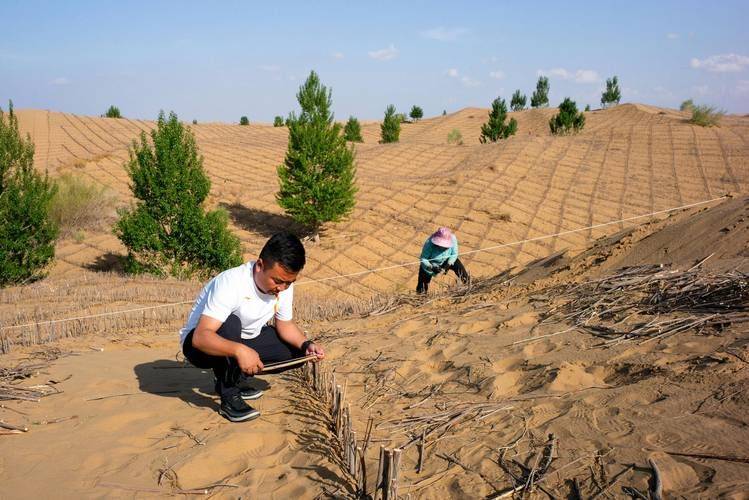
The fifth national monitoring of desertification and sanded land shows that the area of desertification and sanded land in the country has been declining for 10 consecutive years since 2004. In february 2019, a nasa study based on satellite data showed that about one quarter of the global greening of the new area from 2000 to 2017 came from china, with the highest contribution。
The north-west region is the most widely spread area of desertification and desertification. Twenty years of major development in the west and 20 years of rapid development of ecological governance in the north-west. The land area of desertification and desertification in the north-west has been declining year after year, and many regions have seen “green and yellow”. However, the north-west is ecologically fragile, ecological governance still has a long way to go, and the governance path that combines desertification and poverty still needs to function continuously。
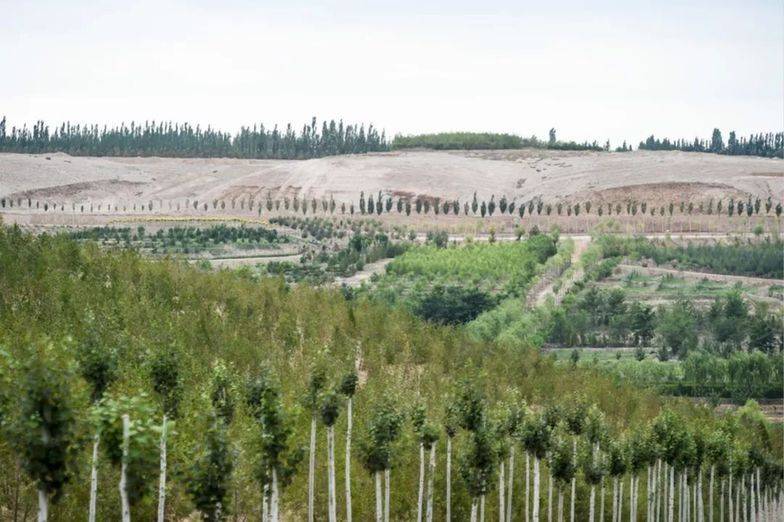
Ningxialing wubai beach, at the edge of the mau sousa, has a national reserve for the saddle mountain forest
"neither the wind nor the wind nor the sand."
The village is a small village on the edge of the kubuchi desert. In the 1980s, the land was heavily sanded, leaving the village with only one single willow。
Today, the rate of ecological governance of the kubuchi desert has reached 25 per cent, leading to a shift in human retreat. Successful practices in combating desertification are reflected in the ordos declaration, which was jointly drafted by representatives of the parties to the united nations convention to combat desertification. Today's official village is surrounded by green forests, with a tree turning into 190,000 acres。
In the great north-west of china, the ecological miracles of yellow to green continue。
In the early morning, the mau soo fields woke up with a whirlwinding wind, and yin yu-jin went up to a 10-metre-high watchtow, and looked round, and the forest was rising. It is located at the southern end of the maususha, and more than 30 years ago it was a rare yellow sand. In 1985, yin yu-jin, 19 years old, was married to salausu village, the village of antananarivo, where the new house was half buried in the sand
"i'd rather die than let the sand die." from planting the first tree seedling, she and her husband risked more than 30 cold and cold summers, worn more than 10 pairs of shoes each year, turned nearly 60,000 acres of sandland into oasis with a broken pair of shovels, hammers and shears, and planted over 2 million trees。
The ecological rehabilitation of the north-west is dependent on the contribution of a generation of sand-makers. With their faith and their strength, they have spent their lives sowing green hopes in the desert。
In 1957, a young man, who had just graduated from university, came to the takramak desert in response to the call for young people to go to the border to fight the sand. His name is liu jing ting. Between 1959 and 1983, he discovered five more. New species of willows and methods of sand stabilization using willows have been developed. He has been known as liu red willow, who is now 85 years old, because of one thing he's committed to。
The red willow, also known as the “willows”, is a plant that is widely scattered in the north-west desert-semi-desert region of the country and is drought-resistant, salin-resistant, infertile, wind-resistant and sand-bursted and one of the most resilient in yellow sand. For more than half a century, liu yi ting and his colleagues have taken root deep in the desert, using red willows to block a single attack on towns and cities, and have also started a pilot manual inoculation study of red willow meat。
Today, the desert team of the xinjiang institute of ecology and geography of the chinese academy of sciences, known as the xinjiang living land, has been extended to the fourth generation. Not only did they sow green throughout china, but they also brought experience and techniques of sand management to regions such as africa, central asia and other regions to participate in the construction of the great green wall in africa。
The success of liu yingyu-jin in the sand management is a microcosm of the continuous ecological improvement in the north-western region of china. The area of desertification in china has expanded at an average annual rate of 1. 04 million square kilometres. Today, china's sanded land area is reduced by an annual average of 1980 square kilometres。
“from resistance to harmonious coexistence”
Wang tao, director of the north-west institute of ecological environmental resources of the chinese academy of sciences, stated that the desert and sand area of our arid zone had increased before 1990 and decreased since 1990 to the level of the 1960s by 2010。
In inner mongolia, ecological rehabilitation has been carried out through integrated measures such as sealing of mountain forests and fly-planting of forests, with a focus on the governance of the areas initially forming a regional protective system that combines joegrass, dots and webs. The three major sands of mausu, koltan and huronbel have all made a historic reversal in the net reduction of sanded land and have entered a new phase of re-entry into the desert。
The head of the desertification control and control division of the xinjiang uighur autonomous region, türson tokotti, said: “sinjiang has completed 1. 4173 million acres of sanded land management since the 13th century”. Twenty years ago, only 0. 4 per cent of the forest cover in the field has now risen to 1. 62 per cent. Catastrophe weather ranges from more than 260 days in the worst year to more than 170 days today, reducing sand and dust weather by about 90 days。
“from resistance to harmonious coexistence.” the director and researcher of the szøle desert research station in xinjiang said that the profound readjustment of human and sand relations had encouraged scientists to expand the scope and depth of research. As a result of wind and sand-related disasters, some of the farmers on the desert have not been lifted out of poverty. In addition to continuously optimizing wind and sand control techniques, scientists are also working on scientific oasis farming。
At present, about 15 of them are born every year at the kisher station in xinjiang, where, in addition to scientific research, they organize scientific and technical training for local farmers。
The researchers at xinjiang land said, “most of the better-off areas are already in basic governance, while the remaining areas are far-flung sands, extreme drought and increasingly difficult to manage”
Adapting to the needs of ecological governance in the new environment requires a full spectrum of scientific and technological power, rather than blindly “profiling for performance and achievement”. Our country has taken the lead in research on the theory of salinization governance and the technique of salinization control, but some of the specific problems in practical application are still under-researched and there is a long way to go in terms of scientific and technological solutions。
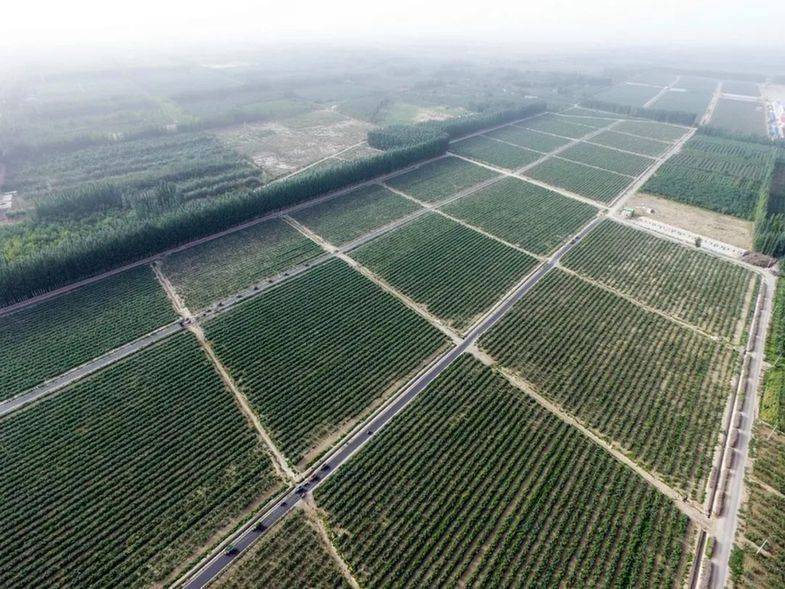
The green pocket tightened the wind, forcing down the yellow sand - the red-tree base of the village of aishishi, tsale district, xinjiang and tanya
New ecological governance for desert doctors
The 45-year-old maquilin, who spends more than 200 days a year in the desert, has been living for more than 20 years. As vice-president of the gansu provincial institute for desert ecology and desertification control, he has been leading a team throughout the year to become a truly “desert doctor”. “in combating desertification, we need to improve the ecological environment in the sands by precisioning both engineering and biological measures to combat desertification, as well as boosting the productivity of the population by cultivating cash crops in sands”
Onion and sammy are wild sandy food plants that are unique to arid desert areas and are distributed in places such as mandarin, ancient waves, etc., and are popular with the local population. “wood plants are uprooted, destroying their own reproduction and ecological environment. To that end, we have studied artificial farming techniques to solve the problem of high yields and to find a better way to develop the industry for the people of the sand。
Since 2018, maquilin has continuously demonstrated the promotion of sandy plant cultivation, leading many farmers, such as those in the field, to become rich。
Today's desert governance is no longer purely sand-triggering and greening, and more and more scientists, like the maallin, are working to explore a combination of “darking” and “poverty-control”。
Only about 3. 7 per cent of oases are available in xinjiang and the remaining 90 per cent are deserts. Local changes in desertification management, scientific planning and governance, and the expansion of living spaces and industrial platforms offer possibilities for industrial landing and embedded development. At present, there are 300,000 acres of red willows and approximately 20,000 acres of sous-soo in the field, and many sand-based construction materials have been built。
Tarson topotty: “we are working to build a number of special forest and fruit bases, to develop deep processing industries, energy, desert tourism, etc., and to build sand belts, with strict protection and effective governance. The development of the sand industry will not only contribute to the restructuring of the sand-zone industry, increase the incomes of sand-fed farmers and pastoralists, but also to the ecological construction of the `anti-grain' sand-zones, and consolidate and expand the desertification control gains.”
The north-west ecosystem governance model is undergoing a profound transformation, afforestation is shifting to industrial development in harmony with ecological governance, and the resource value of sand is constantly being tapped. The sand industry, like fire, can be “green” and more “rich”. (reporter wei jingwoo, zhang wen jing, qi bai)