Violations of intellectual property rights are generally considered to include violations of intellectual property rights such as copyrights, trademarks, patents, trade secrets, anti-improper competition rights, etc. Intellectual property law is a lex specialis vis-à-vis civil law, which generally sets out the criteria or conditions for the identification of torts, while intellectual property law more specifically specifies the manifestations of torts of intellectual property. The task of applying the law in cases of intellectual property infringement can only be fulfilled if the patterns and criteria for identification of the violation are generally determined in accordance with civil and tort law, and if the specifications and elements for the determination of each type of infringement of intellectual property are specifically captured in line with the ministry's intellectual property law。
A study of various intellectual property laws, such as patent law, trademark law, copyright law, etc., shows that legislators generally specify the types and specific manifestations of the corresponding violations in these laws. Although there are also so-called flexibility provisions in these provisions, in general intellectual property law provides an exhaustive description of the tort and normative provisions for the tort, which also constitute a statutory standard for the determination of an ipr tort. We therefore look at the finding of a violation and must first study and discuss the legal criteria for determining a violation of intellectual property rights。
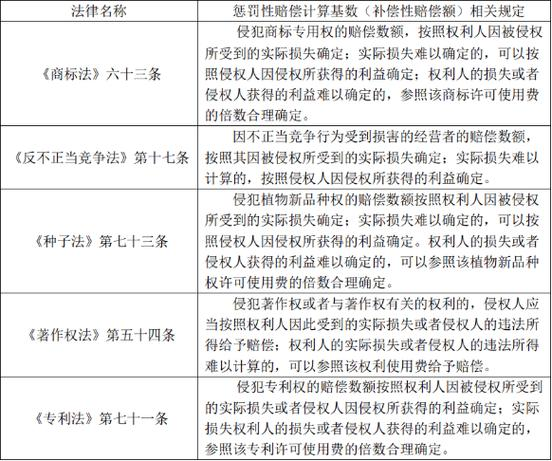
In existing intellectual property law, there are four formulations of tort in intellectual property: one is to specify, in the chapter on legal liability of the corresponding law, the list of violations subject to civil liability, such as copyright laws and regulations for the protection of computer software, after the same provision for civil liability, etc. The second provision, in the chapter on the protection of intellectual property, deals specifically with torts and the other with legal liability for such acts, such as the trademark law. The third part of the general section of the law specifically deals with infringement of patent rights that is prohibited by law, while the chapter on the protection of rights lists acts that are not considered as infringement of patent rights and acts that are not liable, and establishes legal liability in that chapter, such as the fourth chapter of the patent law, which provides for torts or violations, and the other chapter, which provides for legal liability, such as, in general, anti-improper competition law, intellectual property law generally provides for the content of the rights of the corresponding intellectual property rights, lists the torts and exceptions, as well as legal liability. Legal liability is generally civil and administrative. Thus, in finding a violation of an intellectual property right, we must pay attention to all the legal facts required by the law of intellectual property to establish the facts of a violation, i. E. The system of legal facts necessary for the violation. To avoid any one-sided and subjective view of the issue. This is particularly important for trial judges。
Generally speaking, the rights conferred by law are those measures of conduct permitted by law and guaranteed by the legal obligations of other persons in order to satisfy his interests, i. E. Those which the law permits to act. It usually consists of the right to positive conduct, the right to request (the right to passive conduct) and the right to claim protection from the state ... These three parts of the structure of rights exist independently and are inextricably linked and in an indivisible unity. It should be said that the law first affirms the right of the parties to positive conduct, which is at the centre of the structure of rights, and that its realization depends on the state's protection in case of non-performance of the obligations and obligations of the duty-bearers. In the field of intellectual property law, the above-mentioned expression of rights conferred by national law on the parties ' corresponding intellectual property rights is particularly evident。
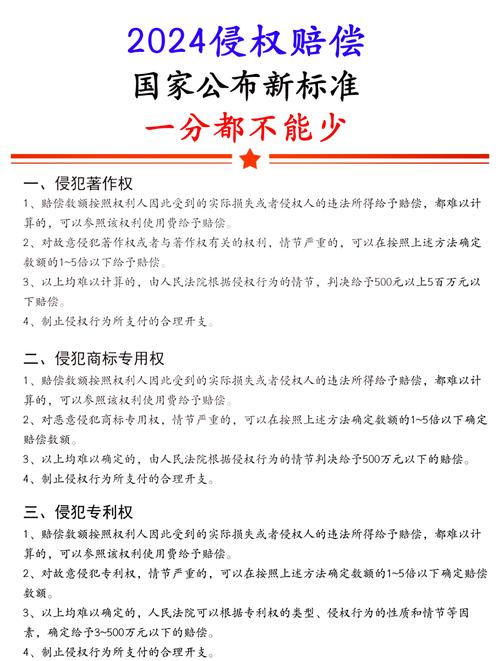
In granting rights to the parties, intellectual property law generally clearly defines the positive rights of the rights holder and the scope of the powers of such rights. At the same time, due to the intangible nature of intellectual property, the law grants a clear scope of protection to each right at the centre of its powers. The scope of protection is clearly distinct from the scope of competence by its technical and professional nature. For example, an invention patent protects an invention technology programme that meets patent conditions; the patent claim sets out the exact scope of the technically protected programme. In the case of a right to register a trademark, the trademark law protects the right-holder's application for the trademark's registration of a graphic or text that meets the requirements of the trademark, or their combination. In the protection of copyright, the scope of its protection is concentrated on work that meets the conditions of the work. The protection of commercial secrets lies in technical programmes or know-how that meet the requirements of commercial secrecy, as well as other commercial information, and the key is to distinguish them from known technologies. In finding a violation of intellectual property rights, the first priority is to determine the extent to which the intellectual property right alleged to have been violated is protected by law; the scope is determined and the scope of the right's powers is analysed. As some scholars have analysed the finding of patent torts, “a product does not infringe upon another product, it would infringe upon a patent claim (patent claim); therefore, identification of the tort must first determine the scope of the right to claim (scope of the claims)”. This is clearly distinct from the scope of protection of property rights, which is the starting point for the determination of a tort in intellectual property rights and, more importantly, one of the difficulties in determining a tort in intellectual property rights. In intellectual property trial practice, some cases are difficult to deal with, and many first have difficulty determining the scope of protection of rights。
In general, the determination of the various types of intellectual property rights violations has a largely identical identification process, in which judges generally base their objective judgement on whether or not the conduct to be determined is a violation, either carefully or narrowly. This determination process integrates the subjective will of the judge into a relatively fixed mindset, allowing the judge's awareness to enter a visible and operational process that ensures that the judge's inner conviction is more objective and realistic and that it is more realistic. While the various types of intellectual property violations are identified as unique, their commonality determines that the basic steps of the determination process are: first step, determination of the rights and the scope of protection; second step, analysis of the constituent elements of the scope of protection; third step, formulation and determination of the extent of the realization of the rights in respect of the alleged infringement; fourth step, analysis of the constituent elements of the realization of the rights in question; fifth step, comparison of the scope and specific constituent elements identified and precise application of the principles and methods of judgement; sixth step, determination of the same or similarity; seventh step, outcome of the determination of the violation or failure to identify the violation. While the identification process is slightly different in the determination of the infringement of intellectual property rights, it is consistent in the formulation of the basic thinking and the process of judgement of the judge, which plays a decisive role in the identification of the infringement of intellectual property rights, in many cases。
(by the fifth intermediate people's court of chongqing city)