It is common practice for tax authorities to “assembly” tax prices by means of a set of formulas, as provided by tax laws, when the taxpayer does not have the actual sales price or when the sales price is clearly low and unjustified. It is a “virtual” or “approved” price specifically set to calculate taxable amounts (mainly vat and excise taxes)。
Core premise: use when “normal sales prices” are missing or unavailable。
Why is it necessary to make up a tax collection price
The main aim is to address the problem of the uncertainty of the tax base in a given case:
1. No sales price: for example, enterprises use their own products for employee benefits, donations, sponsorships, advertising samples, etc., which in themselves do not generate cash inflows and no market price。
2. The sale price is clearly low and unjustified: in order to prevent enterprises from evading taxes by lowering prices, for example, by means of related transactions, tax authorities have the power to approve their sales in a reasonable manner。
3. Imported goods: imported goods have not been sold in-country at the time they enter the customs border, and a uniform methodology for calculating customs duties, excise taxes and value added taxes is required。
Main application scenario and calculation formula
The formula is different for the calculation of the two taxes that make up the tax rate。
Scenario one: in calculating the excise tax (used for home-made, commissioning, etc.)
The excise tax is the in-price tax, and its components include profit and excise tax per se。
1. Self-employed taxable consumption products
• situations in which enterprises use their own high-grade cosmetics, cars and other taxable consumer goods for their own employee benefits, incentives, etc., rather than for direct sale。
• formula:
= (cost + profit) / (1 - excise tax rate)
• formula resolution:
• cost: the actual cost of producing the product。
:: profit: profits calculated on the basis of the national average cost margin for taxable consumer goods (as determined by the national tax administration)。
• (1 - consumption tax ratio rate): the purpose of this division is to include the excise tax itself in tax-bearing prices. Since excise taxes are within-price taxes, the tax price itself should be equal to “cost + profit + excise tax”。
• examples:
A new batch of white wine is used in a wine factory for employee benefits. The cost of production is $10,000, the cost-profit rate is set at 10 per cent (approved by the national tax administration) and the consumption tax rate for white wine is 20 per cent。
Profit = 10,000 x 10% = 1,000 yuan
= (10,000 + 1,000) / (1 - 20%) = 11,000 / 0. 8 = 13,750
· excise tax payable = 13,750 x 20% = $2,750
2. Commissioning the processing of taxable consumer goods
• scenario: the client provides raw materials and the trustee only charges processing fees. The client is required to collect excise taxes on behalf of the processor. This formula is used if there is no sales price for the same product。
• formula:
= (material cost + processing fee) / (1 - excise tax rate)
Scenario 2: in calculating the value added tax (when prices are clearly low and unjustified)
Vat is an extra-price tax, and the logic behind tax pricing is to restore a reasonable sales price。
• situations: taxpayers selling goods and providing labour are clearly underpriced and unjustified (e. G., tax avoidance on related transactions)。
• formula:
= cost x (1 + cost profit)
• formula resolution:
• cost: the sale of self-produced goods is the actual cost of production and the sale of outsourced goods is the actual cost of procurement。
• cost profit margin: usually provided by national tax authorities, for example, 10 per cent. This amounts to a simulation of a fair trade price on a cost basis, plus a reasonable profit。
One comprehensive case: imported goods
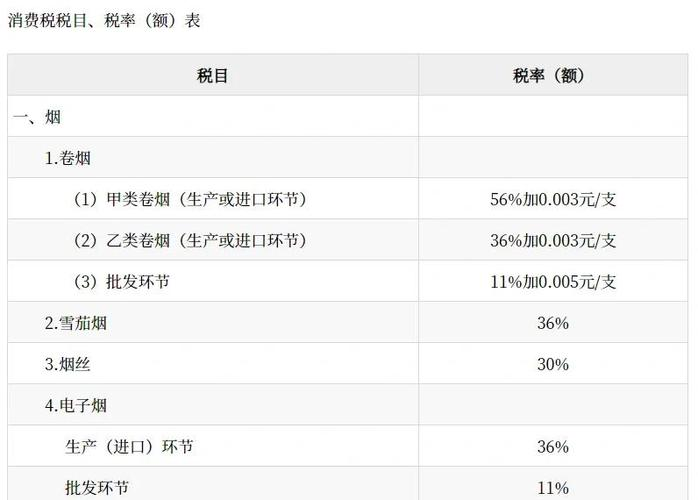
Imported goods are the most typical applications that make up tax-paying prices because they involve both customs duties, excise taxes and value added taxes。
The computational chain is as follows:
1. Composition of tax-based prices (used for calculating excise and value added taxes) = (tariff excise prices + tariffs) / (1 - excise taxes) rate i'm not sure
Tariff = tariff completion price x tariff rate
3. Excise tax = the amount of excise tax on which the tax is calculated
Value added tax (vat) = value added tax (vat) rate
• examples:
A company imports high-end cosmetics at a tariff completion price of $1 million. The tariff rate is 10 per cent, the excise rate 15 per cent and the vat rate 13 per cent。
:: first step: calculation of tariffs
Customs duties = 1 million x 10 per cent = 100,000
• step 2: computation of the taxable price (as the basis for excise and value added tax)
= (1 million + 100,000) / (1 - 15%) = 1. 1 million / 0. 85 ≈ 129. 41 million
:: step three: calculating excise taxes
Consumption tax = 129. 41 million x 15% ≈ 19. 41 million
:: step 4: calculation of value added tax
Vat = 129. 41 million x 13% ≈ 16. 82 million