Evening is a very special time in chinese history. The traditional dynasty is following its historical inertia to the “deep waters” and, like past dynastys, faces a series of difficult problems — increasingly acute social contradictions that cannot be avoided, but yet the images of the former dynasty that were rare — are reminiscent of it. The growth of the commodity economy and the rise of the civil class have led to a flourishing urban culture. The european catholics who entered china during this period brought new cultural shocks to the then chinese elite. This diversity of social contexts has determined the complexity of the spirit world of the late ming, which deserves further elaboration from a variety of points of view. Dr. Wang kaimoto's new book, the test of the night-to-buddhist church, began at home and created for us a phantom path to the spiritual world of the late ming。
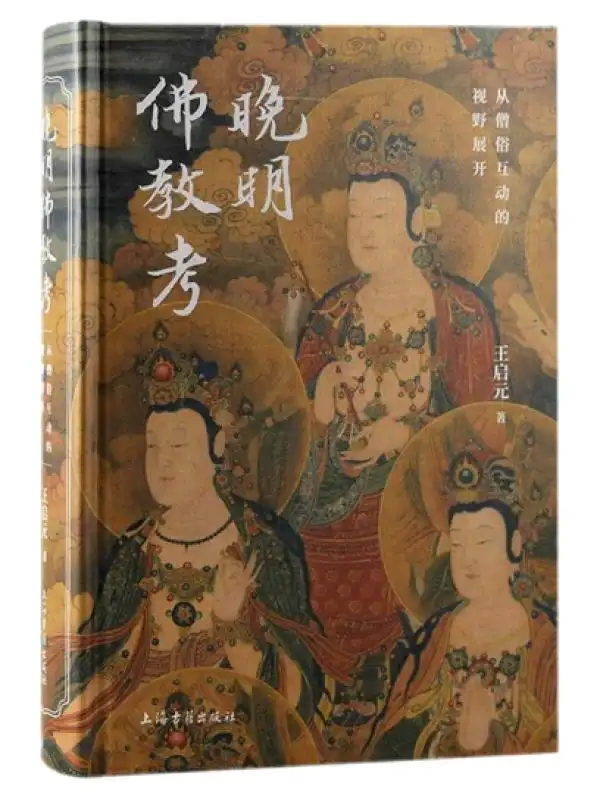
The night buddhist examination is divided into three chapters: the previous edition, inter-buddhist and upper court, with five chapters; and the chinese editor, monk interactions - - the development of a collection of squares, with three chapters; the next edition, multi-faith and the late age, with four chapters。
The editor-in-chief began her interaction with the first monks of the year by discussing the political aspects of the revival and evolution of buddhistism in the evening。
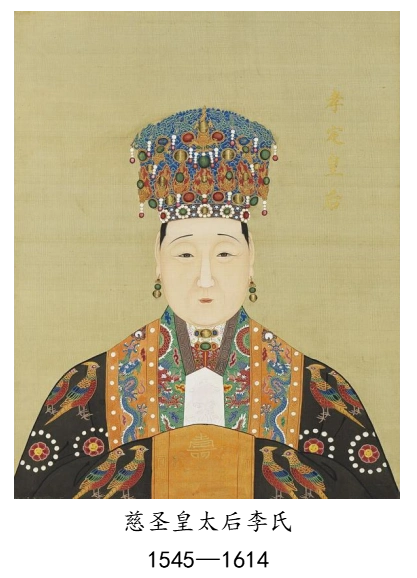
The queen mother of mercy, li, is the mother of the gods. The queen queen of the holy queen, who lives in the inner palace, still has a significant influence on politics throughout the dynasty. The queen queen of queens, who struck after tang moo, wanted to change the old court pattern, to nurture proselytism, to support proselytists like zhang zheng zheng zheng zheng, to change the political map left by the mozhong dynasty, and to work in the same way as the regime that changed when the emperor, the late emperor, took over the throne. And since the beginning of the day, when hindu buddhism, which has been plentiful, was revived, nature was closely related to the evolution of the queen of mercy herself and the political situation at that time. The queen mother of mercy was thus also the subject of the evening monks, and many of the queens were connected to the mountains, the purple and the clouds. The queen mother of mercy, by comparing herself to the buddha of the violin and the buddha of the nine lins, has created an image of the hearing in the folk faith. Following the monarchy, which had conflicted with the queen in the matter of storage, the holy father had chosen his son zheng zheng zheng zheng, who had supported his son zhu zhu zhangro by means of due process, and had split into two groups, creating a political wave known at a late age — the “national race”. The buddhist monks were also involved, and the latter side of the station had been closely associated with the political dispute since the well-known publication of kaing's hideout. The author, through his reading of the sunshine year book, discovered the pens that were buried therein, pointing out that the cause of the matter of mount sunshine and the violet was that it was the intention of shasun to heal the holy virgin, which was repudiated by the pope. Following the death of the queen of mercy, the pope did not care about buddhism, which, after a brief renaissance, was silenced at the court level, while the exchange of monks and doctors continued in various ways. At that time, european catholics had entered china and were active in seeking the support of the emperor for catholicism. The author compares the withdrawal of buddha's statues in his first year's palace with the catholic influence of his holiness, who later received the buddha's statues by means of “salary payments”, “retired children” and “visibility”. It reflects the complexity of the spiritual life of historic, while the evacuation was a recent collision between traditional buddhist beliefs in china and the protestant catholic church。
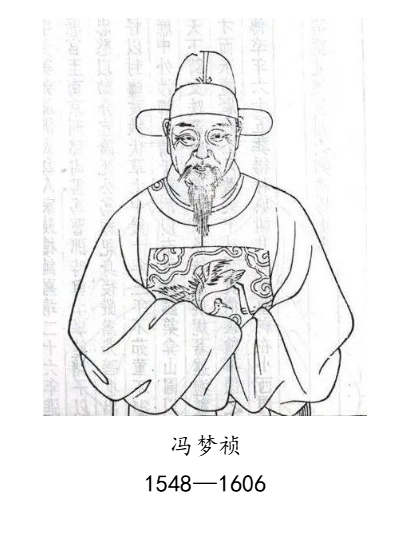
Editor-in-chief's post was published in the evening around ka-hingshire. It's made up to open a secret channel to communicate with feng man-chul. My diary is the basis of my history, and the specific planning process for reading the journal with the journal, cauzo's site of the kachin-hinhi factory, is the central issue, and the interaction of the monks surrounding the buddhist book, which reveals the common role of the political, secular, economic and other synergies, other than religious factors, in the etiquette of the buddhist magazine, and demonstrates the contradictions and the ripple effects of the issue on the followers of the monks, who play a very important role in this process。
The following is an entry from a number of angles to discuss the state of faith in the evening society。
The first is to explore the construction of the concept of the four monks in the evening. This is the first of its kind to be constructed of the hysteria of the monks, the “two masters” of shen deok-hyun's "episode of manu nunaga" — the clouds and purple. At that time, the doctor's attitude towards cloud habitats and purples implied a subtext that the monks needed not only a reputation but also a great variety of forms and styles. Such a group of high monks could represent the spirit of the buddha. This description shows that, at the very beginning of the construction of the high monks, the elite tried to judge the high monks and buddhists at the time with a secular perspective other than buddhism. Shen deutsche, in turn, adds subordinates to the presence of the monks, who are either subordinates or, in turn, are the subject of narratives of the monks. It should be noted that under the shendell pen, the famous mountain of the hereafter has not yet reached position c. By the time of mingqing ei, the situation in xianshan had changed under the letter of cheng jianxi. The collection of poems from the queen's divinity covers the four monks of the evening, who in turn are shaanshan, purple, lotus and snow wave. It is clear that, in order of choice and order, the first three of the first three were the “three monks” identified by money to be humbled, and the snow wave was a teacher outside chan's side and was also a classmate at sunshan. In the order of chan's qiang, haoshan has jumped to the top, surpassing the "two lords" written by shen deutsche, and when the poetry of the pilgrimages chooses its poems, it is only in his favour. By the time of kikuyama, the list of the “four monks” had been adjusted. The snow wave disappeared from the ranks of the then-governor pentecostal and was replaced with a new version of the “four monks” alongside the “three monks” set by the money. He was chosen, closely related to his creation in the doctrine of clean earth, when the wind of buddha's studies was devoted to it. The buddhist history of the peng tsing era has profoundly influenced the “four monks” of the post-pang shrine, which have continued in recent times to shape the “conclusion” of the academic history of today. The evolution of the structure of the high monks shows a marked trend: the “two majors” of shen deutsche are presenting a collection of images of the modern high monks in a different manner, intended for buddhist law itself; the “four high monks” of the modesty have much to do with the secular achievements of the high monk community; but by the time of peng tsing tsing, the intellectuals were chosen to benefit from their own achievements in the net land, while the other three masters appear to have been obscured to the level of masters。
The second focus is on the "external life" of feng monk. Fong has multiple identities in his daily life, and in the public sphere von fong is a doctor and a court official, and in the private sphere is much richer: a theatre critic, a book collector and an active participant and sponsor of various activities of buddhism and taoism - in addition to actively running for the magazine ka xinga, he has also been enthusiastically involved in the internal and external studies of taoistism, and is keen to document the “psychiatry” of the various kinds of belief that manifests the pluralist state of faith in feng monk, which is a microcosm of the spiritual life of dr. Ming。
Finally, the tibetan buddhist tradition of “discovery” in recent life. Since yuanming, tibetan buddhism has gained an absolute advantage over hindu buddhism in the country's political and upper society, but the traces of buddhistism are less visible in everyday life. Zhongxiang xuxia visited lijiang, where he had a long history with the chinese, while at the same time building a friendship with toshimok, a buddhist believer, and promoting the writing of the western shao buddha's revue, " the queue of hua " , in gangnam. Monarchs in the south-east, such as yuki, chen and mao jin, have been involved in various forms of buddhist writings, echoing the distance of wood growing far south-west, creating a gap between han and tibetan buddhism. In addition, there are traces of the influence of buddhism in popular literature aimed at the lower and middle classes. The author introduces here the geo-coordinate of "ussy" in the western tribune, which says it's an undisguised "cultural familiarity" between the two dynastys. – usher is an important country extraterritorially, and an example of the convergence of hindu buddhism. The secular life of mindehan is also partly informed by tibetan buddhism, while the handi intellectuals are biased, maintaining a considerable degree of rejection of these facts and leading to deliberate and unintentional neglect of the next。
As for the recent history of han zhi buddhistism, there is also a slight feeling when reading the book, so as to teach the family。
It is mentioned that catholics in beijing, once the monks have been reported, have written to distinguish between their teachings and buddhism in order to avoid a possible “broadening of the fight” from the mingting, and have actively promoted catholicism, running around and seeking refuge at the top. This is also due to the monastic case, which provides a good opportunity for catholicism to follow up on developments in china. In fact, european catholics from minghua often took a buddhist stand, often for the sake of the believers, and provoked a debate with buddhist monks. Of course, catholics are exposed to han buddhist teachings and their monks. The relationship between catholicism and hindu buddhism, catholics and buddhist monks is quite competitive。
Later than the catholics, russian orthodoxs who arrived in qinghua and were given permission to stay in beijing are acting differently, and some details are taken for illustrative purposes。
In 1716, the russian government and the orthodox church of the holy episcopal church (in order to find me as soon as possible) permitted the dispatch to china of the first orthodox priests, the most direct aim of which was to serve the religious needs of the russians who stayed in kyoto (the russians were prisoners of war in jacquesa and were incorporated into the manchuria yellow flag and the russians were called the albazins). The russian government has imposed severe restrictions on orthodox missionary activities in order not to stimulate the court in religious terms, as a result of the violent clashes that had just erupted between orthodox and catholic communities prior to the arrival of the orthodox church. On the question of identity, both in the treaty of chateau and in the code of the council of state, orthodox christians are regarded as “the lama” and the hymns of the orthodox church are considered as “hymns of buddha”. Since then, the orthodox church has become an important source of information on the chinese side for russia, but throughout the eighteenth century the russian government has not paid much attention to orthodox activities in china。
At the beginning of the nineteenth century, because of the situation in europe, russia urgently needed a trade breakthrough in china. To that end, the russian government sent a mission to china in 1805, headed by count golovkin (1762-1846). Upon arrival in kurun (now ulaanbaatar, mongolia), the mission was expelled by the qing party on the grounds of courtesy. It was only then that the russian government was aware of the possible role of the orthodox church in diplomatic activities. In 1818, the russian government issued a directive to the imperial orthodox church, which specified the collection of information on books in china and required the orthodox church to use its “brand” status in the qingting to seek access to prominent chinese figures. The instruction specifically states that mission doctors are required to use their medical skills to treat diseases such as smallpox in their contacts with dignitaries。
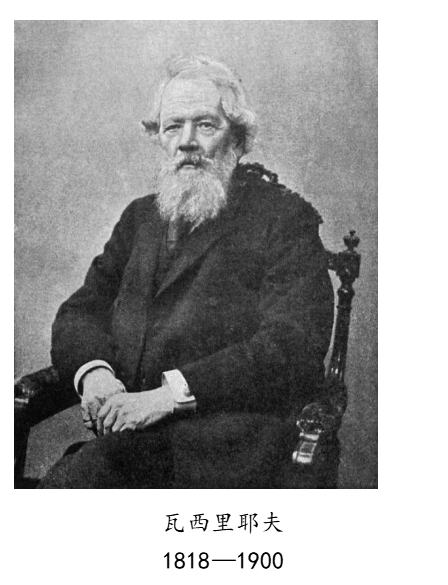
Thus, as can be seen from the russian records, the kazuotra (1796-1850) is in and out of the yellow temple. The ninth orthodox church (1807-1821) was headed by the chief of the bicholin (1777-1853) who studied the tibetan language at the yellow mosque and had frequent contacts with the monks in the temple and had a very close relationship. The doctors of the orthodox church are more frequent visitors to the temple. In the 1920s, the tenth orthodox church in kyoto (1821-1831) was accompanied by a medical doctor, vojsjøwsky (1793-1850), who had discussed the similarities between orthodox and tibetan buddhist teachings with the fourth minjul buddha (1789-1838), and even gave them the new testament, which had already been translated into full and mongolian, and had reached a common understanding that religious teachings had interoperable features. The living buddha, on the other hand, has shown great interest in the outside world by obtaining from orthodoxians world geography from a european perspective. In 1831, shortly after arriving in kyoto, dr. Kirilov (1801-1864) of the 11th orthodox church (1831-1840) visited min joll hoof at the huang temple, at the initiative of his former colleague, and received the name “qin siu” from the nephew of the living buddha. Among those who arrived with the 11th orthodox church in exchange for their shift were kowalevsky, a professor at the then kazan university and a monkist (1800-1878), who was also acquainted with minjul yaof through the orthodoxians and obtained a large number of tibetan copies in beijing. By the time the twelfth orthodox church (1841-1849) was in kyoto in the 1840s, the iv minjul hof had passed away, without prejudice to the friendship between the orthodox and the lama. Later, the russian han scrutinist vassilyev (1818-1900) spoke with his division kovalevsky many times while in kyoto, and then returned home to write "the han scripts of the university of st. Petersburg" and "i forget" and "i forget" and "i forget" and "i forget" and "i love" and "i love" and "i love" and "i love" and "i love" and "i love you." in a letter dated 1 march 1841, vasiliev stated: “if the lama had a good book in tibetan, it would be a secret, though there would be no one else. Therefore, it may be futile and useful to know only the lama.” by 1848, vasiliev had established good relations with the high-class lama in beijing and had thus acquired a number of collections。
It is clear that, in view of china's “single legal status”, orthodox priests do not display a clear buddhist position, but rather are guests of the tibetan buddhist temple in beijing. While it is natural that the reasons for the different attitudes of chinese catholics and orthodox christians in the face of buddhism are multiple — in terms of the prevailing climate, the path to china, the purpose of their activities, the sphere of travel, the means of mission, etc. — there is no doubt that the political status of the modern world's buddhist and tibetan buddhist divide is a key factor in this attitude. Catholic movement in china requires a higher level of asylum, as does orthodoxism, and tibetan buddhism is precisely at the upper level that can provide asylum to foreign missionaries, an advantage not available at the time at the han buddhist church. For catholics, hindu buddhism is a competitor for their activities in china, while for orthodoxists tibetan buddhism is a refuge for their activities in china。
Since the arrival of the orthodox church, there has been a high level of contact with catholics. The catholic movement in china was restricted by the chongxi conflict, and the orthodox church became the medium of communication between catholics and europe at that time. The orthodox movement in china seems to have drawn on a number of experiences of former catholics operating in china: unlike catholics, the orthodox community did not choose a doctor as its object, but rather managed to reach out to the king of manchuria, who had long been in contact with the princes, zhao and the family of the wise. During his mission to the 10th orthodox church, daniel severov (1798-1871) translated the preacher's good book into chinese. Only a copy of the book is available, and there are two existing sections, the library of the eastern department of the national university of st. Petersburg (xyl 129 and xyl 6, respectively). One of them (xyl 6) opens with a large book, with a blouse, an angglomeration, and is copied in a work model on the paper of uxy, white and fine, which is very similar to the internal copy. The preamble refers to the beginning of the beginning of the orthodox church: “in the presence of the state, the people have been blessed, the world has been manchuria, and it has been a long time. As long as they are devoted to the proper religion of the lord, the emperor has given them the same authority to do so, and has given them a place to burn down the book, and has followed the old religion in their studies. Repeat the decree of the emperor of the holy zion, which was written in the russian state, sent a total of 10 priests and academics to kyoto. It is interesting to read the text in detail, the wording of which is obfuscated by the words of the subject to be used as a book entry form. The author believes that the book of orthodoxism hidden at st. Petersburg university should be a copy of the original transcript of the submission, which was already in the capital but was not kept in china. It can be seen that, in terms of court support, the orthodox and catholic movements have been very different, but the same. However, an orthodox with the status of a lama would not, of course, act as if the catholics had inspired the emperor to “disengage”。
The book, entitled “the night buddhist examination”, is not limited to the late dawn, but rather focuses on the buddhist family (which is, to be precise, the han buddhist religion) and on buddhism and the taoism and catholic church, taking into account the new world and the broader dimensions of the spiritual world and spiritual life of the people. The book is based on historical evidence from traditional literature, based on the history of the evening and other collections, and combined with a new western historical approach, starting from small sections and spread out from buddhism, in an effort to reveal the diverse and complex life of the evening and the spiritual world, providing us with an excellent set of case studies based on religious history and ultimately on socio-cultural history. I have also been inspired by the wide scope of the study: clarity does not block communication between central europe, but rather presents a diverse and complex picture. There may be little to gain if the development of buddhism in the near world is examined against this background。
Min-sung yan (ph. D., department of oriental sciences, st. Petersburg state university, russia)