This is an issue of concern to you, namely, the place of buddhism in world religions。
Since the beginning of the twentieth century, in the context of the convergence of east-west cultures, chinese intellectuals have been looking at buddhism from its original pattern of confucianism to that of frey-trithism, and there has been a very interesting “judgmental” approach, namely, the non-recognition of buddhism as a religion and the shame of equating buddhism with christianity, which has never been the case since the tri-religious rhetoric was presented in the tri-national monopoly。
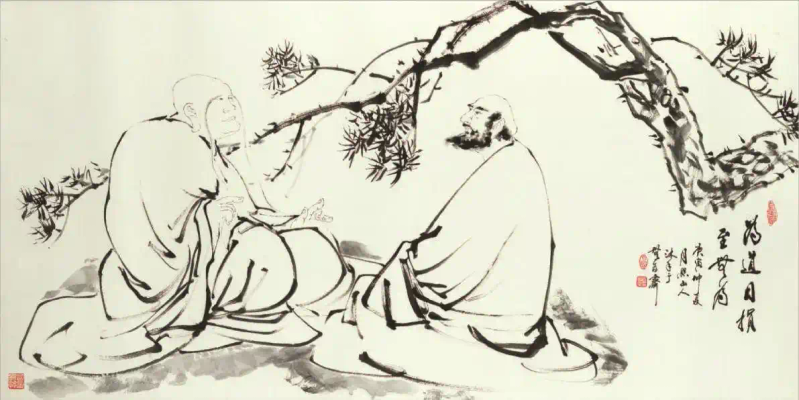
In the past, buddhism had always lived in the same pattern as the three religions, and in the twentieth century, what was the point that it was not a religion? Since china's intellectual community has been dominated by democracy and science, and religion is widely regarded as a superstition and as an accompaniment of imperialism and colonialism, buddhist intellectuals are reluctant to regard buddhism as a religion, which, in addition to nationalistic factors, reflects buddhist intellectuals' self-confidence in buddhistism based on reason and promotes the revival of religious spirituality based on rational purity。

For example, mr. Zhang tai chi gave a lecture in japan on " fukugo should consider religion? Biology? " , which considered buddhism to be a philosophy of thought, “there is ultimately a religion in the philosophy, not a philosophy in the religion”. Mr. Ouyang gyu went further and gave a famous lecture at the nanjing higher teacher's college on " the unphilosophical nature of buddhist law for science today " . This way of teaching leads to two problems: first, the non-recognition of buddhism as a religion, indicating a crisis in existing religions, so what exactly is religion and what should it be? Secondly, this way of teaching demonstrates the sense of buddhist superiority, so what is the place of buddhism in world religions
I think buddhism is supposed to be a religion, and although the world's religions are of different forms, they share some common features:
1. Religions are a negative entry into life to see the fundamental flaws of real life, such as suffering and guilt. These fundamental deficiencies are the result of people's sensory desires and experience of animal nature。

2. All religions move beyond the ideal of life through religious consciousness and conduct, such as belief, prayer and practice. This ideal is possible only if the animal nature of the human being is overcome and the divine or buddhist nature of the human being is enhanced。
In order to advance this ideal situation, all religions must rely on various means of organization, power and cultural facilities of secular society. This has resulted in the formation of religious organizations and religious teachings from different regions, different ethnic groups and different forms。