Less than 30 days before the spring festival was a race against time for the construction industry's masters. This is not just a rush war, but a precise time management and rhythm control battle。
I. Why is the golden window 30 days before spring festival
Let us begin with a basic logic: why are these 30 days before spring
First, this is the “psychological window period of payment” for a. In traditional chinese culture, spring festivals are important nodes of the settlement cycle. Most enterprises had established the practice and psychological expectations of clearing their current accounts before the spring festival. A portion of the funds will normally be set aside by the finance department for payments to suppliers before the savings。
Secondly, this is “the best time for pressure transfer”. The pressure on rural workers to pay wages, the pressure on suppliers, and the need for financial resources within the enterprise ... The pressures peaked before the spring. These pressures are transmitted upwards along the industrial chain and ultimately create a strong incentive for payment on the a side。
Thirdly, missing this window may be waiting for next year. After spring holidays, enterprises usually need time to resume operations and restart payment processes. Payment approvals for many enterprises are delayed after spring seasons, sometimes even until march/april. This means that if you don't collect the money before the festival, you may face a financial gap of up to four or five months。
The data show that the successful recovery of works within the first 30 days of the spring festival accounted for more than 40 per cent of the year's collection success rate. This figure is sufficient to illustrate the importance of this time window。
Countdown to 30 days: a phased reminder strategy
Smart aggregates do not make blind calls in the last 30 days, but develop precise phased strategies。
Phase i: moderate reminder period
The central strategy at this stage is “a reminder, not pressure”. A jiangsu construction company has a unique approach: “a formal pre-friday working letter was sent to a on the countdown of 30 days, which appears to be a pre- and post-communication arrangement, effectively embedding payments”
This is done by listing in the correspondence the tasks to be performed before the section, one of which is “to complete the payment of the works and ensure a smooth resumption of work after the section”. This is both formal and straightforward, and has given a lot of visibility to a。
Phase ii: focused coverage period
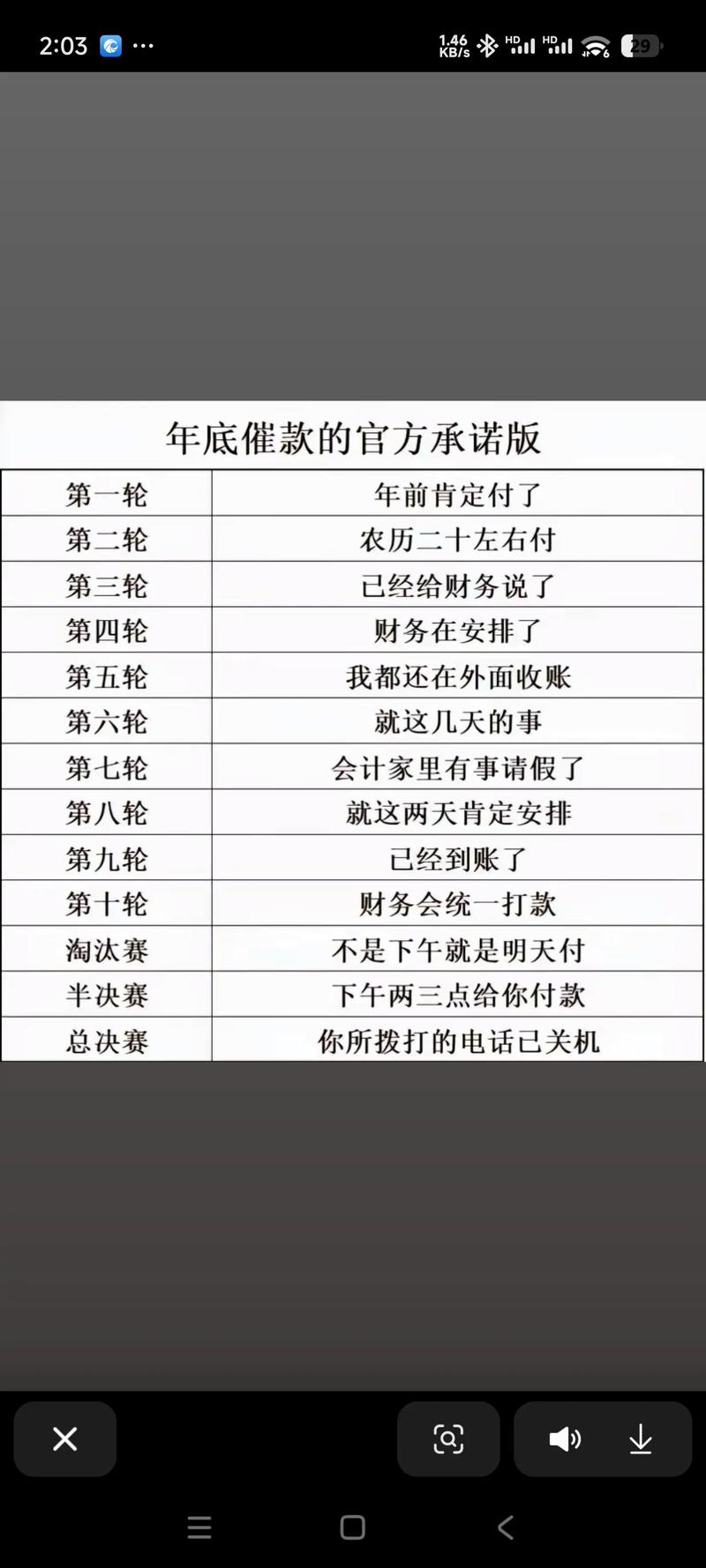
If the first stage is slow-cooking, then the first stage is hot fire。
"i'm going to start the multilayer interface at this stage." a construction company owner in guangdong shared his experience, “the project manager versus the engineering department of a, the finance department of a, and myself directly against the top of a”
The advantage of doing so is to create a stereotypic catalytic pressure to make the urgency and importance of the matter felt by the party. However, attention needs to be paid to rhythm control, with time lags at different levels of docking to avoid creating a feeling of “siege” on the a side。
Phase iii: final sprinting period
In the last 10 days, conventional methods may have failed and more robust measures are needed。
“a formal reminder was sent on the tenth day of the countdown, clearly setting out the terms of the contract and the consequences of the breach of contract, not for the immediate prosecution, but to demonstrate our seriousness.”
At the same time, this stage could consider “regressive” to show to a that they understand their difficulties, and then propose a partial payment by the spring festival that would allow workers to get their wages back home for a year, with the rest to be discussed later. This demonstrates both a cooperative approach and a minimum level of financial recovery。
Time management techniques: making each call right
The more the money is, the better it is, the more it is。
Skill one: avoiding the " busy period" on a
“on monday morning, there are regular meetings on a, and on friday afternoon, the heart may have flown, and these are not the time for a reminder.” experienced project managers will choose to communicate between tuesday and thursday around 10 a. M. “at this point in time, the a side has taken care of urgent matters and has sufficient time to discuss payments”
Skills ii: "72 hours of follow-up law"
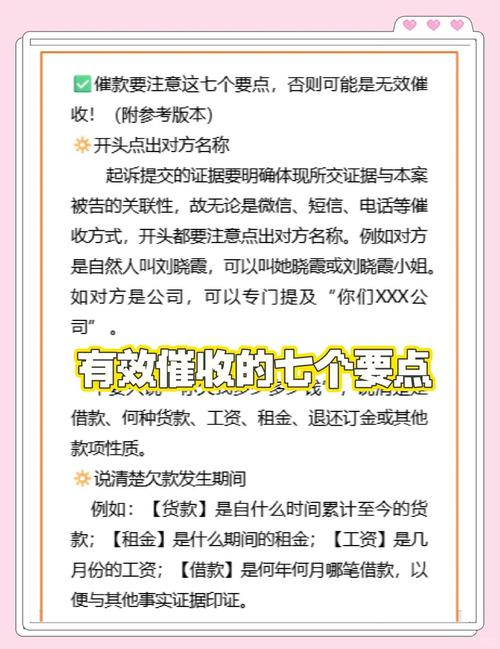
Follow-up is necessary within 72 hours of each reminder communication, regardless of the response of the counterparty. “even if a says `in the process', three days later ask where the process is.” this constant moderate pressure is often more effective than one-off strong pressure。
Skills iii: creating a sense of “payment ritual”
A construction company in zhejiang offered a small thanks session for long-term cooperative a before the spring festival. “in a relaxed atmosphere, it is natural that we speak of one year of cooperation and, incidentally, of payments, tend to be more effective than formal reminders.”
Responses to special situations
Not all a will follow your rhythm, and special circumstances require special strategies。
(1) when the a side says “we have no money” — in such cases, hard-line reminders may be counterproductive. The practice of a construction company owner in zhejiang is: “i will offer to help a to find a source of financing, or accept partial payment in kind. This, while not immediately recoverable in full, would at least partially recover and maintain customer relations.”
(2) when the a side “disappears” - if the a leader starts not to answer the phone and does not reply to the letter, the response will need to be upgraded. “we will do three things at the same time: a formal letter requiring a deadline response; indirect pressure through a trade association or other partner; and starting to prepare legal material.” a corporate law proposal。
(3) when there is a “pumping ball”, it is most common for departments within the a to push each other. “our response is to `take it to the end'.” one project manager said, “the ministry of finance is pushing the ministry of engineering, we are going to the ministry of engineering, and the ministry of works is going to the ministry of procurement, we are going to the ministry of procurement. Each communication was recorded and eventually aggregated to the top of the line.”
Three “no” pre-spring reminders
Some mined areas must be avoided during the pre-spring campaign。
(1) do not wait until the last moment to act
“many lead firms mistakenly believe that the closer they come to the pressure of springtime, the better. In fact, the last week before the festival, the a side was often busy with wrap-up and arrangements, rather than having enough time to process payments.” an experienced reminder expert suggested that “the optimal start time would be 30-45 days before the festival, and the last 30 days should be the closing stage”
(2) do not place all hope in a project let's go
The “decentralized focus” is an effective risk reduction strategy. One construction enterprise in jiangsu classified projects to be collected into categories a, b and c: category a was the most likely to be recovered before the festival, with 70 per cent of its energy invested; category b was difficult, with 20 per cent of its energy invested; and category c was largely hopeless, with 10 per cent of its efforts devoted to maintaining relationships。
(3) do not undermine long-standing cooperative relationships by provoking funds
“the pre-spring reminder is well founded”, a 20-year-old construction firm owner stressed, “our principle is that money must be pressed and relationships must not be harmed. After all, cooperation will continue after spring.”
Vi. Post-spring connections: laying the groundwork for next year
Smart aggregates do not treat pre-spring reminders as isolated events, but rather link them to post-spring jobs。
“we shall, in parallel with the call for funds, communicate with a's post-recovery plans and cooperative intentions.” the approach of a shanghai enterprise is forward-looking, “it sends a message that we are not only here to ask for money, but also to talk about future cooperation”
There are also enterprises that will be aware of the project plans of the country for the coming year at a pre-spring call. “this will not only help us judge the ability of the party to pay, but also inform our business outreach next year.”
At the end
Before spring, each of these 30 days was valuable and each communication was important. The pre-spring reminder is both a race against time and a test of wisdom and perseverance。
For the lump-sum enterprise, managing the 30-day “gold window” is not only about this year's cash flow, but also about survival and development next year。
Your company, are you ready for this race with time
# project money to collect # spring # construction industry # cash flow management # master package management # accounts receivable