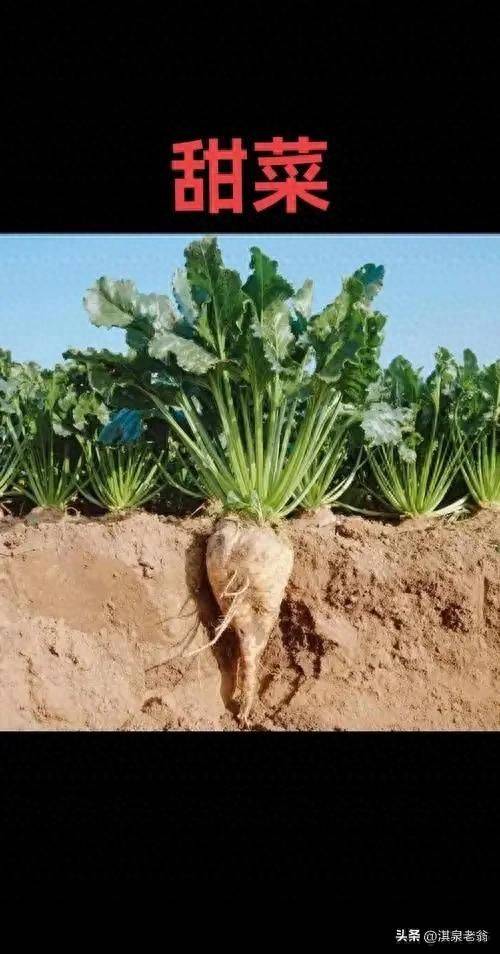
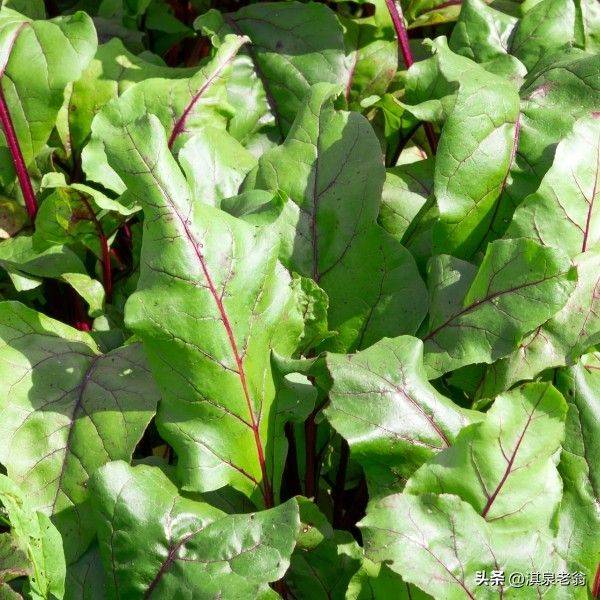
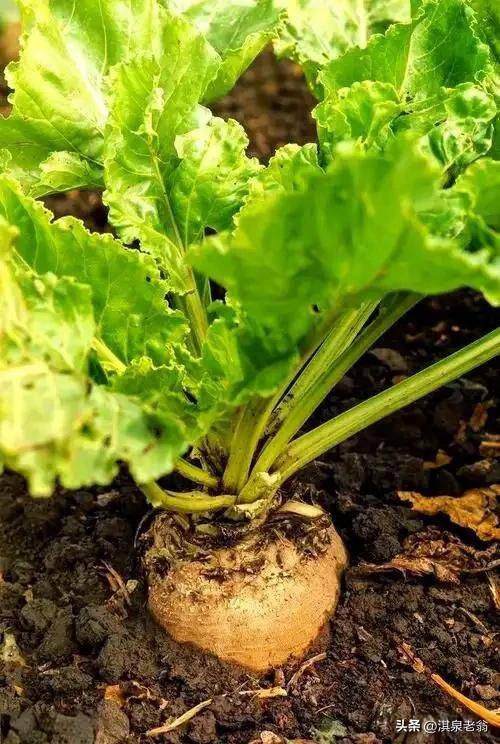
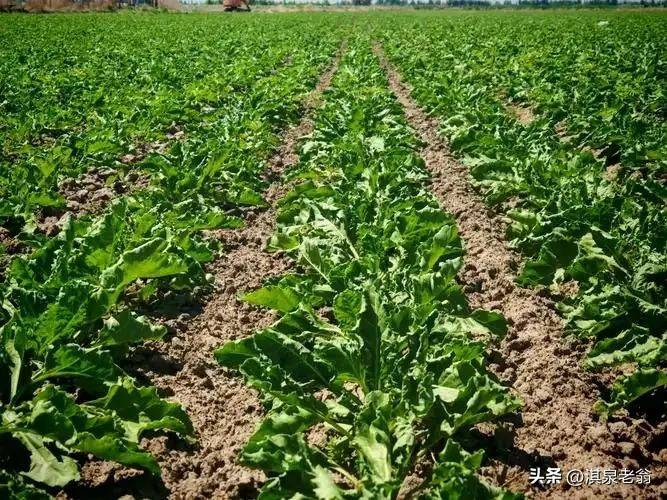
Beet is the second-year grasshopper of quinoa and the world's second-largest sugar crop after sugar cane, with multiple values such as food, feed, industrial processing and so forth, and a very high economic crop. The following is a comprehensive analysis of beet-related knowledge from the five dimensions of origin, distribution, growth properties, product performance and planting techniques。
I. Origin of beet
Beta maritima, the natural ancestor of beet, is a wild herbivorous plant that grows on salty beaches along the mediterranean coast and in the western part of europe and reproduces on the marginal coasts with strong salt resistance and resilience, which is the root cause of its subsequent salin resistance。
As early as 3,000 b. C., ancient mediterranean civilizations, such as egypt and greece, began to use wild beet, initially extracting only their leaves for vegetable consumption and not developing their roots. In the fourth century a. D., artificially domesticated beet varieties gradually emerged, disaggregating varieties such as white beet and red beet, which continue to be dominated by leaf and root vegetables。
In 1747, german scientist maglav first found sugar in the root of beet, opening the history of beet as a sugar crop; in 1786, his student adhad developed his first sugary beet variety, the world's first beet factory being established in germany and the official transformation of beet from vegetable crop to major cash crop。
Beets have been imported into china for a long time, with leaves being imported from the arab states about 1,500 years ago, while sugar beets were officially introduced in 1906, taking the lead in seeding in the north-east and then gradually spreading to the north, becoming the core sugar crop in the north of the country。
Distribution of beets
(i) world distribution
Beet is cold and suitable for cultivation in temperate and cold zones within latitude 30°-65° n and latitude 45° s, with global cultivation accounting for about 48% of the total area of sugar crops, mainly in europe, north america and northern asia。
Europe is the centrepiece of beet production, with france, russia, germany, poland and other countries growing the largest and most industrialization; north america is dominated by the united states and canada; and asia is concentrated in china, turkey and iran, with a pattern of “centralization” in the northern hemisphere as a whole。
(ii) china distribution
Our beet is a spring-breeding crop in the north, with the main production areas concentrated in the three major regions of the north-east, north-west and north-west china, accounting for more than 90 per cent of the country's beet cultivation:
1. The north-east sector: the largest beet-producing area in the country, dominated by heilong river, jilin and liaoning, with approximately 65 per cent of the country's area under cultivation, fertile soil, cold weather and excellent conditions for the accumulation of sugar
2. North-western production areas: covering xinjiang, gansu, ningxia, with sufficient light, high temperature differentials in day and night, high sugar content and high quality sugar beet production
3. North china: mainly in inner mongolia and the north-west of the mountain, the land is flat and vast and suitable for scale cultivation。
In addition, some high-altitude areas in the south-west (e. G. Kiju, sichuan dam) are also growing a small amount of beet due to cold weather。
Iii. Beets growth characteristics
Beet is a two-year herbivate with a growth cycle of two stages, with a strong overall growth character and a cool environment:
1. Growth cycle characteristics
The first year is a long-term nutrition cycle, with the primary growth of leaves and meat roots and the accumulation of sugar and nutrients; the second year is a long-term reproductive cycle, with roots that bloom and produce seeds。
2. Climate adaptation
High temperature conditions lead to lower root quality, white coils and lower sugar content。
3. Soil adaptation
Soil requirements are not stringent and are most suitable for growth in deep, perturbated, well drained or sandy soils, neutral to micro-alkali soils (ph values 7-8), saline resistance is high, normal growth in light saline and one of the preferred crops for improved saline。
4. Water and nutrient needs
More drought-resistant and less water-resistant, soil water holding is optimal at 60-70 per cent; long-term demand is high, followed by demand for potassium fertilizer, followed by nitrogen and phosphorus fertilizer, along with trace elements such as boron and zinc, and the lack of boron can lead to a loss of root and quality。
Iv. Product role of beets
Beet is a treasure, with its roots, blades and by-products being processed, and it covers many areas of food, feed, industry and agriculture:
1. Core sugar raw materials
Sugar beet blocks contain 14-20 per cent sugar content and are the only source of sugar in the northern part of the country. They are processed and made of white sugar, which is widely used for food processing, catering and daily consumption, and is easily absorbed by humans and is an important human good。
2. Food and nutritional values
Root beet (fresh beet) can be used directly as a vegetable, with cooling, steaming and cuisine available, rich in dietary fibres, vitamin c, beet erythrocyte and minerals, which are resistant to oxidation and supplementary nutrients; and beet blades, which are fresh and can be eaten as green leaves, with clear tastes and nutrients。
3. High-quality feed raw materials
Beet leaves, root processed beet and honey are good-quality, juicy feed for livestock, poultry, protein, carbohydrates, good taste, livestock, meat and milk, and a good-quality feed source for agriculture。
4. Industrial process uses
By-products of beet processing can be extracted from alcohol, glycerine, lemon acid, etc., for use in the food industry, the chemical industry, beet erythrochlor, which is natural edible, non-toxic, and widely used in food, cosmetic dyeing, and beet slag can also be used in the production of biomass fuels, paper materials and resource recycling。
5. Agricultural improvement
Beet root is well developed, defusing soils, and the fallow-back crop can increase soil organicity and increase soil fertility; its saline-resistant properties can effectively improve light saline land, improve soil physicochemicality and saline-appropriate agricultural development。
Technology for beet cultivation
Beet cultivation needs to combine its growth characteristics to achieve high productivity and quality by integrating land selection, seeding, field management, pest and disease control, and harvesting five key components:
(i) land selection and landscape
1. Land selection: selection of flat, well-drained and deep earthed plots, rotation for more than four years, pre-selecting wheat, maize and pulse crops, strictly prohibited, avoiding infestation; preference to be given to light saline and neutral soils, avoiding low-lying flooding。
2. In the field as a whole: ploughing at depths of over 30 cm in the autumn, breaking the slabs and removing the rocks and weeds; applying a whole area of foot-based fertilizers, with a corroded farm weight of between 2000 and 3,000 kg per acre and a compound of 30 to 40 kg, ensuring that the soil is sufficiently fertile and that before planting in the spring, the shallow tillage is levelled so that the soil is sore and soaked。
(ii) varieties selection and seeding
1. Varieties selection: selection of high-quality varieties according to the climate of the production zone, preference for highly pathogenic, sugar-bearing and productive genetic single or multiple species, such as the kws series, the kuhn series, etc., to ensure 90% seed sprouts。
2. Seeding time: 5 cm of soil temperature stability in spring sows at 5°c and at temperatures above 10°c, mostly in the north-east and north-west producing regions in mid-april and no later than early may to avoid the effects of the frost。
Cultivation methods: mechanized barcasting, 50-55 cm, approximately 2 cm after deep sowning, with a seeding volume of 0. 6-0. 8 kg per acre; timely suppression after sowing, preservation of temperature, promotion of seed seed seeding。
(iii) field management
1. Saplings: the seedlings produce one pair of time seedlings, two pairs of time seedlings at a distance of 18-22 cm and 5500-6500 seedlings per acre to ensure ventilation and balance of nutrients。
Weed eradication in chinese: 2-3 plantings in the sapling season, soil decomposition, temperature upgrading and weed removal; weed 3-4 leaf periods, spraying with beet-specific herbicides (e. G., sweet serenity, e. G., e. G., precipital alachlor) to avoid weed competition for nutrients。
3. Fertilizer management: fast-growing long-term (6-8 leaf) urea fertilization, 10-15 kg urea per acre; heavy root expansion, 15 kg potassium sulphate per acre, combined with the application of 0. 5% potassium phosphate + 0. 1% boron fertilizer to prevent deficiency; timely irrigation in prolonged drought, timely drainage during rainy season, and prevention of decomposition of water in fields。
(iv) pest management
The main diseases of beet are lignot, powder, rot, bush disease, and pests such as beet elephants, kale night moths, tigers, twigs. The principle of “preventive, integrated” is observed:
1. Disease prevention and treatment: before seeding, seeding is carried out with a combination of herbicides such as bok mi and seng to prevent root and adhesive diseases; at the beginning of a brunette disease, spraying with a combination of fluorosiliac and ether acetate was administered at intervals of 10 to 15 days and two to three times; and platinum spraying with a sulphate formulation。
2. Pest control: ground pests are sprayed with fenthion granular agents with base fertilizers; ground pests are sprayed with chlorobenzo-methamide, poisons, etc., to combat beetles, beetheads, cabal night moths, while rotation is implemented to reduce the accumulation of insects。
(v) timely collection
When the average temperature dropped to 5°c that day, the beet root stopped growing and the sugar content peaked, with most of the northern-producing areas picking up from late september to late october for the optimal harvest period. At the time of harvest, the blades are removed mechanically or manually, then the roots are excavated to avoid damage; after harvesting, they are cleaned up, sold for processing, or they cover soil, foliage storage, freezing, water loss, anti-mony。