I. Growing environment requirements (1) temperature
Episode: seeds can start at 4-6°c and start normal growth at a temperature above 20-25°c and 8°c。
Euphoria: for short periods of low temperatures of 3 ~ 4 °c, it is possible to grow at high temperatures above 27 °c, but suitable temperatures are 18 ~ 23 °c during the day and 13 ~ 18 °c at night。
The maximum temperature is 18 ~ 23 °c during the day and 13 ~ 18 °c at night, less than 3 °c。
Seeding period: the suitable temperature is 22-28°c during the day, 15-20°c at night, and over 35°c cannot be pollinated。
(2) light
Lights above medium strength are long-sun-light plants, and insufficient light leads to long leaves and large-scale expansion of the meat root。
(3) water
Seeding period: keep the soil wet to promote proper seedling。
Euphoria: the principle of “dry-and-wet” is followed to balance upper ground growth and root-based aerobics。
(b) the period of expansion of the root mass: the greatest amount of water is required, and the water needs to be evenly distributed to avoid the loss of the roots as a result of dry and wet。
Pre-harvest: stop watering and reduce cracking 10-15 days in advance。
(4) soil
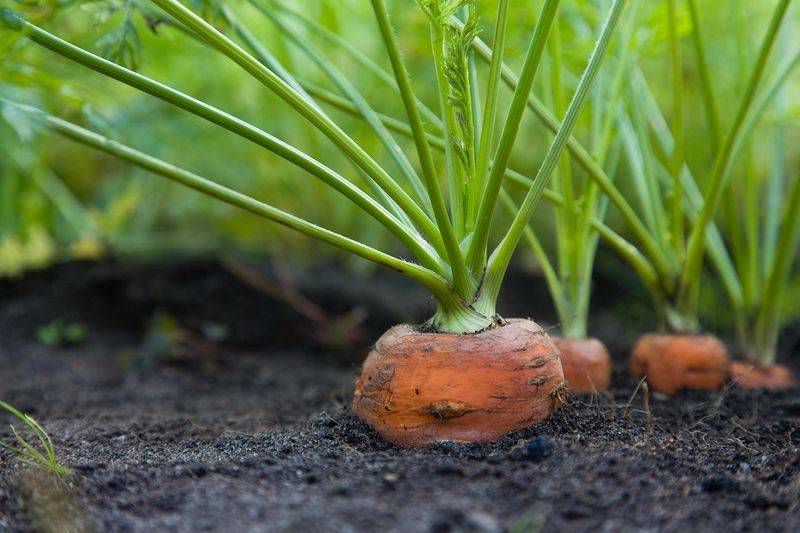
Type: preferably deep earth mass (25 cm), loose air, well drained sandy or bordery soil, which can lead to deformity。
Alkylity: adapting to ph 5-8, most appropriate for ph 6. 5~7. 5。
Fertilizers: need to be rich in decomposition, with base fats dominated by organic fertilizers and balanced with potassium nitrogen phosphorus (e. G., consumable organic fat 2500 kg/acre + compound fat 40 ~ 50 kg/acre)。
Ii. Varieties
Pre-literate varieties (80-90 days old): spring-based seed-resistant varieties such as “red core six” “red red one”。
Mid- and late-literate varieties (born 100-120 days): autumn broadcasts are available for the selection of “nine kuroda, japan, 5 inches” “super red crown”。
Characteristics: purple carrots (rich with nymphorus), mini carrots (basket or dense plant)。
Iii. Employment time
Spring broadcasts: most of the northern regions seeded from late february to early march (dural cover can be advanced until late january) and the southern region can be extended until early april。
Autumn broadcasts: planting in the north and north-west regions from early july to late july, planting in the north-east region in june and planting in the high-temperature areas of guangdong and fujian in august-october。
Miscreasing: some production areas use timed seeding (e. G., late may and late july) to avoid centralization。
Land as a whole (1)
Deep tillage and earth-turning: deep tilling takes more than 30 cm to break the bottom of the plough and to promote root-laying and avoid corrosive roots. After conversion by manual or mechanical means, fine dredges are required to remove miscellaneous objects, such as stones, roots and so forth, and to ensure that the soil is so thin。
Base fertilizer application: 4000 - 5,000 kg per acre of corroded organic fat, combined with 20 - 30 kg per acre of potassium sulphate compound fat, is evenly integrated into the soil when farming. Glubous soils can increase the application of grasswood ash or river sand and improve air permeability。
Heavy tracts need to be disinfected: lime (60-75 kg/acre) is tanned 7-15 days10. The soil is sprayed with agents such as multibactrin, thiophos-methyl, and pests are treated。
(2) start
The ground was exposed for three to five days, the disease was eliminated, organic fertilization was promoted and soil laxity was increased。
Pyramids: suitable for good drainage, 60-80 cm wide and 15-20 cm deep。
High: recommending a plant 15-20 cm tall and 60 cm wide, which is conducive to the expansion of the roots of the meat and the increase in its commercial nature。

Seeding techniques (1)
Absorption: 37°c warm water immersed for 12-16 hours, strangulation followed by a gushing to dew。
Mixed sand seeding: seeds mixed with 3-4 times thin sand, increasing evenness。
(2) sowing methods
Mechanical cord broadcasting: weave seeds into water-dissolved paper ropes to achieve precision seeding。
(c) radio/caves: 3-4cm deep, 1-1. 5cm overland, 4-50,000 acres/acre density。
Vi. Field management
Interstellar seedlings: during the 2-3 leaf period, the seedlings are removed from the weak and the sick; during the 4-5 leaf, the seedlings range from 8 to 10 cm (large varieties can be increased to 12 cm)。
Watering: soil moist during gestation periods; heavy water requirements during bulge periods (40-60 days after seeding) and a lack of dry and wetness。
Base manure: 4000 kg/acre of decomposition organic fertilizer + 25kg per phosphate + 10kg potassium sulphate。
Fertilizer pursuit: 10 kg/acre urea after seeding; 15 kg + 10 kg/acre of potassium sulphate for extended periods。
Cultivated land in china: two or three times before the seals, combined with the weeding of grass and the cultivation of green head when the roots of the flesh appear。
Vii. Pest management
Black decomposition: 75% of 100 microcreage 600 times more liquid or 50% more than 800 times more liquid. The root causes of the disease are removed before storage to avoid mechanical damage during harvest。
Softly decomposed diseases: 72 per cent of agrocytoxin 3,000 times or 4,000 times new cocin。
(c) root nematode disease: 0. 5% avm granular agent ~ 3-5 kg per acre before seeding. Rotation with wheat, using its roots to suppress nematodes。
B. Bacillus nuclei: deep-sliding soil to bury the fungi nuclei, 50% of which are sprayed with 1,500 times more liquids。
Underground pests (polymerium, thorium, golden needle insects): before seeding, application is carried out with a pyramid granule agent + octhion. Booby bait: 90 per cent of trichlorfon crystals mixed with fragrance pies in the field。
Vegetables/beetling night moths: 0. 3 per cent of influoride cream 1,000 times or 15 per cent of fluorine emulsion 1,500 times. 20% cyanide pyrethrin 2500 times more liquid or 5% more amphibian dichlorfon 2000。
Aphids/black lice: cedar baiting to insects, spraying 10% of aphids to 2,000 times fluid。
Viii. Harvesting and storage
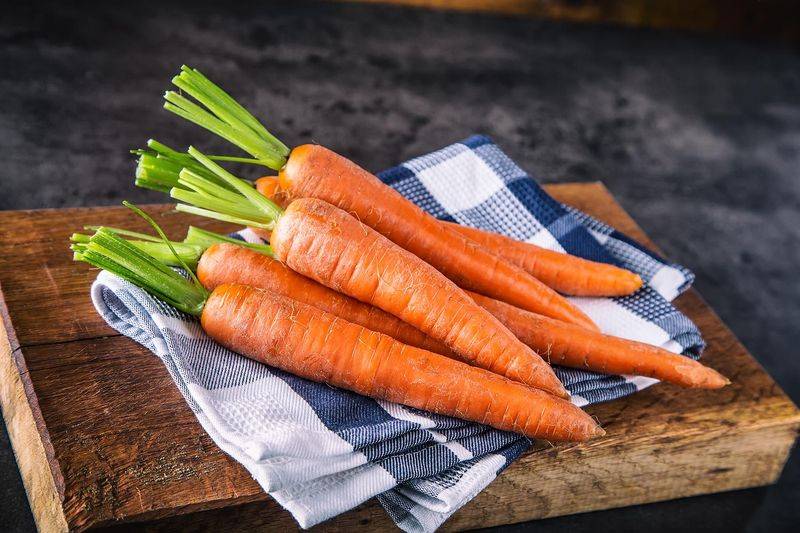
North: carrot planted in late july to early august and collected from late october to early december。
South: may be extended to february-march of the following year。
Spring-run carrots: may-july harvest; fall-run carrots: november-december harvest。
Ix. Responses to common problems
Fragmentation root: balanced watering, large periods of expansion to avoid sudden flooding after drought。
Fork root: deep tilling of soil, avoiding application of undecomposed organic fertilizers。
Scratch: in the spring, seeding is done to avoid premature seeding。