Intellectual property rights are emerging as a means of protecting originality and encouraging innovation; and the dilemma facing china, as a late-starter in the field, may be even more challenging。
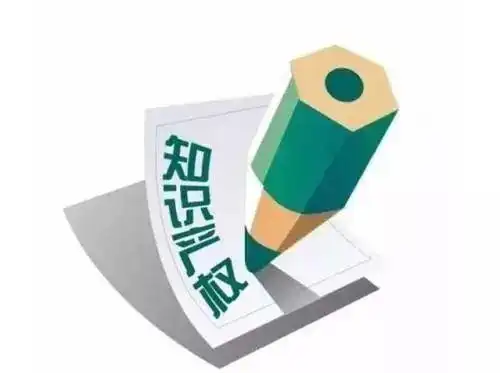
On the evening of 13 december, the new zealand office issued a statement by china on the first phase of the trade agreement between china and the united states, stating that agreement had been reached on the text of the first phase of the agreement。
In this context, the two sides have explored in depth the strengthening of intellectual property rights and have reached consensus on a number of areas, including the protection of commercial secrets, the issue of pharmaceutical-related intellectual property rights, the extension of patent validity, geographical indications, the fight against piracy and counterfeiting on e-commerce platforms, the fight against the production and export of pirated and counterfeit products, the fight against the malicious registration of trademarks and the strengthening of intellectual property judicial enforcement and procedures。
So far, the two sides have reached consensus on one of the core differences in the negotiations, namely, the mandatory transfer of technology and the protection of intellectual property rights。
Behind this is the question of intellectual property rights in the world and china. Whether this year's video of the black hole in china or china's internet takeover of almost all the chinese literature, the chinese people have been arguing。
Internationally, chase and apple, as close partners, have also been caught up in protracted tort litigation and the ensuing anti-monopoly investigations and heavy fines, which can be described as “both patent and patent”。
Intellectual property rights, as a means of protecting originals to encourage innovation, are gradually emerging as the back of its “unlight”。

"aberrant" play
As the copyright market matures, it has long gone beyond the original umbrella to the “post-protection age” of the title war. To a certain extent, it is the objective situation that has given rise to the practice of “mature”。
First, in competition, patents can retain old customers and conquer new ones。
Businesses are all profit-oriented, while patents are a means of taking possession of and monopolizing markets. For the semiconductor industry, the upstream chip technology of the industrial chain is almost exclusively in the hands of united states firms。
In the upcoming 5g era, the required fpga chips for its communications base are largely monopolized by two american companies, serings and altra. They have been involved in the fpga since the 1980s, with more than 9,000 related patents, making “closed” potential competitors an option for downstream firms。
Second, the “war on property rights” itself implies a profit-making space。
The “rogue rights” non-governmental entity (npe) has made a living through tort litigation, such as vringo, who received a one-time $21. 5 million settlement from china by the end of 2015, through a series of lawsuits around the globe。
In fact, in addition to “one-size-fits-all”, patent unions based on relevant patent technologies, such as apple, sony, microsoft, ericsson and rockstar, which are organized along the lines of blackberry, have further increased patent margins by gathering sand towers under a joint external mandate。
Thirdly, it is the inevitable consequence of the retreat of globalization and the rise of nationalism。
In the post-financial crisis era, the economy has continued to weaken and the prominence of national interests has naturally become a priority. From a historical perspective, the power of markets and governments is always greater。
However, unlike in the past, intellectual property is now an intangible asset that is also under the wing of the state. In a highly globalized context, restrictions on the free flow of technology have become a powerful “soft sanctions” — a lifeline that has been held hostage and has been compromised in the last round; china will also face the test of “extreme survival”。
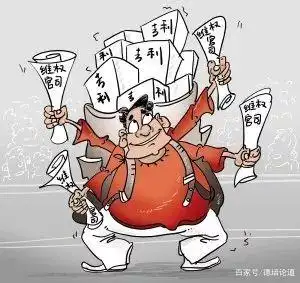
Negative aspects of intellectual property rights
The above-mentioned “war on property rights” has fully exposed the negative aspects of the intellectual property regime。
First, its exclusive nature overprotects property owners。
The division of labour in modern industries rarely requires an enterprise to develop research and development “whole knowledge” and it is more common to buy existing patent rights and go further。
However, when an enterprise is able to take on a large number of key patents in its industry in volume like chase in the telecommunications sector, patent authorization will generate considerable profits - while high patent licensing fees represented only 23 per cent of revenue in the 2018 fiscal year, the profit margin was as high as 68 per cent, well above the chip sector。
A giant like hauptung does not have to comply with standards, as it is a standard. Technical exclusion not only prevents innovation in r & d by other enterprises in the industrial chain, but also transforms its protection into a “golden bell” for enterprises, making self-breakers less urgent。
Second, for enterprises, patenting implies time-limited protection at the cost of technology disclosure。
Patents are not an option with absolute advantages, but rather an option that requires enterprises to measure repeatedly. In fact, the rocket manufacturer spacex chose to keep most of its core technology confidential internally because of the industry's high access threshold, while its competitors were mainly in china — a “big country”。
Moreover, for technology itself, “privatization” means zero value。
Technology patents have obvious externalities and their value can only be found after learning and using them。
At the same time, however, the importance of patents is different, which means that there are a large number of projects of low commercial value that are left idle and not exploited by copyright barriers。
Moreover, the intellectual property regime had become a tool for developed countries to exploit the “physical resources” of developing countries in the context of globalization competition。
Business profits require the creation of high value added, and thus technological patents and so on have become a “soldier's game”。
At the present time, china is in a period of transition escalation, and countries occupying “high points” do not want to see the existing balance broken, so they block it, for example, by defending their rights, trying to keep china at the bottom of the industrial chain, or at least to make china's “upgrading path” less smooth, in an attempt to strangle the chinese economy。

Motivation of intellectual property rights
Intellectual property rights also have a positive side。
First, it protects innovation。
The high level of sophistication of the social division of labour has led to the development of know-how, with a inevitable trend of tradeable commodity attributes。
Intellectual property rights were born in response, assetizing them while erecting high walls between creators and users, reducing the potential risk of theft and stimulating innovation from a cost-cutting perspective。
Second, the diversity of business practices is promoted。
More than a decade ago, china was branded as a “big country” precisely because of the lack of copyright awareness and supporting systems. A market-accredited innovation point tends to attract peer-to-peer competition, resulting in a large number of homogenous products quickly oversaturating the market, leaving the industry in a chronic state of poor quality and inefficiency。
With the soundness of the copyright system, a “replicate paste” imitation will not be allowed, which also means that the industry can escape the “magic spell” of excess homogeneity。
Thirdly, new modalities for resource-exchange integration at lower cost are provided。
In the past, enterprises had only one way of internalizing confidentiality, but this would increase the cost of inter-firm technical cooperation in the global layout of the industrial chain。
Copyright protection controls the uncertain risks of open technology in enterprises, promotes the integration of resources across enterprise-related technologies and forms a “patent pool”, further enhancing the bargaining power of the complete technology chain in the market。

The dilemma
Against the background of the two-faceted nature of intellectual property, intellectual property rights have coexisted positively and negatively in china, bringing china into a dilemma:
First, intellectual property development is difficult。
China's development trajectory is unique in its transition from a planned economy to a market economy, so the logic of a free market led by the west naturally leads to a rule of law intellectual property system that is “controversial” for china. However, driving innovation must be based on a system of intellectual property protection, so that it cannot be “devious”。
However, the freezing of three feet and the long-term “naked-up” of ideas is not only a lack of certainty, but also a lack of communication with downstream commercial channels; and, together with china’s former capital, some high-tech firms rely on imitation as creators to integrate innovation and copyright awareness into corporate values。
Moreover, chinese society is “humanistic, light rules” and, in the operation of copyright protection, local administrative regulations have replaced the design of top-level systems to exercise regulatory responsibility。
This has inevitably led to short-sightedness, which is entirely dominated by local market demand: uneven regional development; and slow development in the area of copyright outside patents. At this point, “drums need to be hammered”, and this “drum hammer” is the structural design of the legal system。
Second, even if the domestic intellectual property system could break through the malaise of rapid development, it would still face more intense post-world conflict。
Coming out of the country means adapting to the new rules, because china's identity will be transformed from a rule maker at home to an international player。
There is constant pressure from outside, and china's emergence as an intellectual property right has inevitably been pressured by the “boss”: with the escalation of trade friction between china and the united states, the special 301 report of the united states has placed china on the “priority watch list” for 14 consecutive years, as well as the technological blockade that has intensified in recent years
High-tech enterprises were the first to be hit in this “technology cold war”. This is just the initial signal of a long-term game, meaning that china will face greater resistance on its way to rise。
However, despite the challenges, patent rights represent the direction of a modern market economy, and china will not choke, but will, over time, accumulate the power to solve the challenges。
First of all, the perfect legal complement will be the cornerstone of the “copyright building”。
The establishment of the supreme court on intellectual property rights at the beginning of the year had given a positive signal, which would be the beginning of the construction of a top-level system. The harmonization of the top tiers would place local regulations in their own hands, improve the ecological logic of domestic copyright protection in general and improve overall industry-wide competitiveness。
Because too much detail in the upper legal framework would significantly increase costs, it would be a trend in the future to build an outline of macro-legal systems and leave room for flexibility in practical legal practice, with a typical physical inversion of the rule of law at a higher level。
Second, “china makes 2025” will bring copyright into fast lanes。
Copyright protection innovation is always inseparable from land-based production. The goal of 2025 will lead china’s creation to its original origins, when market claims will naturally lead to accelerated improvement of the legal system, and when lawmakers expect feedback. They enter a virtuous circle and help each other。
Thirdly, the combination of new technologies and new industry models will be integrated into the “blood circulation” of copyright construction as the copyright market is fully developed。
Whether it is copyright type (horizontal) or market size (vertical), the potential of the chinese copyright market to develop is enormous。
As markets expand with economies of scale, large copyright trading platforms and new technologies will rise in response to market demand。
At that time, the judiciary will be the same, with technical support for precision powers and a platform to expand its outreach geographically and microscales and to activate the entire copyright market。
Of course, the process will be phased and gradual. When it enters the middle- and high-level stages, china in international competition will avoid the old path of western developed countries using patent-based technologies for bullying, moving from mere players in games to pioneers of new ideas, moving into “no-man's land” to explore new models of international cooperation, promoting synergies across human societies under the new intellectual property system, thus limiting potential conflicts to manageable limits。